

Other
Political Violence Researchers, Rachel Kleinfeld, ed., Dalya Berkowitz, ed.
{
  "authors": [
    "Rachel Kleinfeld"
  ],
  "type": "legacyinthemedia",
  "centerAffiliationAll": "dc",
  "centers": [
    "Carnegie Endowment for International Peace"
  ],
  "collections": [
    "Violence and Conflict"
  ],
  "englishNewsletterAll": "democracy",
  "nonEnglishNewsletterAll": "",
  "primaryCenter": "Carnegie Endowment for International Peace",
  "programAffiliation": "DCG",
  "programs": [
    "Democracy, Conflict, and Governance"
  ],
  "projects": [],
  "regions": [
    "North America",
    "United States",
    "South America",
    "Middle East",
    "Yemen"
  ],
  "topics": [
    "Democracy",
    "Security",
    "Military",
    "Foreign Policy"
  ]
}
Source: Getty
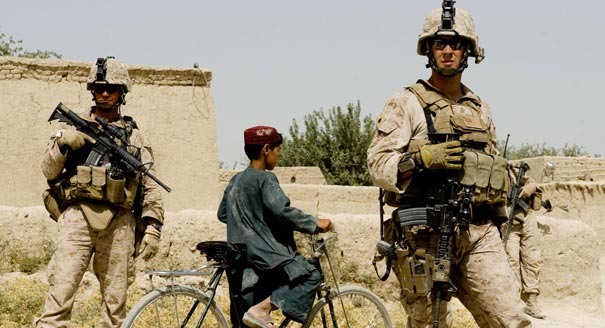
Improving global security depends on understanding that not all violence stems from state weakness. U.S. Security Assistance policy should evaluate strategy and recipients accordingly.
Source: Just Security
I just had the pleasure of speaking alongside Colonel Carl Kelly, Chief of Staff for the U.S. Army’s Special Forces Command, at the opening plenary of a conference on Security Assistance and Human Security at the University of North Carolina. I was pleasantly surprised to see how much we agreed on – and dismayed to think about how little difference it would make.
The conference was under the Chatham House Rule, so I won’t attribute comments to anyone but myself. But there was widespread head nodding to my broad point that security assistance is highly effective at training troops to execute missions and tactics – while failing to do anything to actually improve security when a country’s security goals were not aligned with our own.
That’s a polite way of saying that the U.S. gives security assistance to about 124 states – all but 13 on the Fragile States Index – and the vast majority of these states are not weak due to a lack of money or ignorance, but because the governments are complicit in supporting non-state violent actors and governmental violence that is ravaging their citizenry. This is stunningly obvious in, for instance, Yemen, where years of U.S. assistance have made the U.S. complicit in an Abu Ghraib-style torture scandal that is getting lost in the circus that is the Trump media cycle.
The “weak states” thesis that prevailed after 9/11 conveniently merges countries that lack the ability to protect their citizens with those that lack the will. My fabulous research assistant, Elena Barham, and I are in the midst of crunching numbers that will show that there is a large category of countries which have the ability to deliver public goods – but whose delivery of state services is highly skewed towards some parts of the population. In these same states, minority rights are systematically violated, and journalists mysteriously turn up dead.
These countries aren’t too weak to deliver services. Nor are they too weak to, for instance, successfully target and kill their journalists (In Mexico, for instance, one of the most dangerous countries in the world for journalists, state security forces are the greatest killers). From Mexico to Nigeria and Pakistan, these security services function just fine for their goals. The problem is that they are not intended to do what the U.S. wants – fight cartels, terrorists, or insurgents. Instead, they are built to smuggle drugs and kick the money up the chain and on to various politicians, or to provide jobs to a politically-connected ethnic, religious, tribal, or regional group, or keep insurgencies on a low enough simmer that they continue to receive foreign aid to “help”.
Now that the U.S. increasingly relies on other countries’ security services to fight for our security in their regions, this is a problem we need to tackle not only because of the human rights violations, but because we cannot achieve our own security goals with these forces. Individuals can be trained to execute tactically, they can change their hearts and minds in U.S. military schools and IMET – and then they go back to structures that are systematically built to perpetuate anger, insurgency, and terror. (According to the Global Terrorism Index, 92% of all terrorist attacks since 1989 occurred in countries whose governments conduct widespread violence against their citizens, while states at peace with good human rights records faced fewer than .6% of all terrorist attacks.)
Dan Mahanty just wrote a fabulous, detailed piece on what works, and what doesn’t, in the controversial Leahy Law meant to keep the U.S. from inadvertently supporting human rights abuse. He hints, however, at the bigger problem. The Leahy Law, for all its onerous vetting requirements that earn so much hatred from many at State and DOD, is meant to deal with the problem of “a few bad apples” in a force, or a unit used as a death squad.
The Leahy Law is not meant to address the systematic twisting of a country’s security forces for other purposes. Nor can it address governments that choose to give up the monopoly of force to non-state violent groups – a common tactic in these so-called weak, but actually complicit, countries. Instead, the constant fight over the Leahy Law impedes a far more useful conversation about where our security is effective, where it is not, and what can be done to improve it.
Getting security assistance right should be a bipartisan love-fest. It would mean better U.S. security, less wasted taxpayer money, and less U.S. support to countries that abuse their citizens. True, the State Department would lose its ability to treat the U.S. military as a “party favor” that gets doled out as a deliverable during diplomatic missions, and the DOD would be curtailed somewhat in building relationships with foreign militaries – though such relationship building could certainly continue in a less harmful, less costly, and more effective form. So both sides, stuck in an old mindset of protecting turf and money, fight against legislation that would improve the situation.
But Congress should be able to see their way towards a better policy, one that meets U.S. national interests and makes the world more stable. Who will be the brave Member to jumpstart better legislation?
Senior Fellow, Democracy, Conflict, and Governance Program
Rachel Kleinfeld is a senior fellow in Carnegie’s Democracy, Conflict, and Governance Program, where she focuses on issues of rule of law, security, and governance in democracies experiencing polarization, violence, and other governance problems.
Recent Work
Political Violence Researchers, Rachel Kleinfeld, ed., Dalya Berkowitz, ed.
Rachel Kleinfeld
Carnegie does not take institutional positions on public policy issues; the views represented herein are those of the author(s) and do not necessarily reflect the views of Carnegie, its staff, or its trustees.

But their "principal to principal" model will only be as effective as the political strength of each leader back home.

Damien Ma

U.S. unpredictability has allowed China to capitalize on its positioning as the “responsible great power”. Paradoxically, the more China wins the perception game, the more likely expectations will rise for Beijing to deliver not just words but to demonstrate with its deeds.

Chong Ja Ian

Hanoi and Beijing have long treated each other as distant cousins rather than comrades in arms. That might be changing as both sides draw closer to hedge against uncertainty and America’s erratic behavior.

Nguyễn Khắc Giang

Across Asia, China is better positioned to withstand energy shocks from the fallout of the Iran war. Its abundant coal capacity can ensure stability in the near term. Yet at the same time, the country’s energy transition away from coal will make it even less vulnerable during the next shock.
Damien Ma

Malaysia’s chairmanship sought to fend off short-term challenges while laying the groundwork for minimizing ASEAN’s longer-term exposure to external stresses.

Elina Noor