

Commentary
But their "principal to principal" model will only be as effective as the political strength of each leader back home.
Damien Ma
{
  "authors": [
    "Richard Sokolsky",
    "Aaron David Miller"
  ],
  "type": "legacyinthemedia",
  "centerAffiliationAll": "",
  "centers": [
    "Carnegie Endowment for International Peace",
    "Malcolm H. Kerr Carnegie Middle East Center"
  ],
  "collections": [],
  "englishNewsletterAll": "",
  "nonEnglishNewsletterAll": "",
  "primaryCenter": "Carnegie Endowment for International Peace",
  "programAffiliation": "",
  "programs": [],
  "projects": [],
  "regions": [
    "Middle East",
    "Saudi Arabia",
    "Gulf"
  ],
  "topics": [
    "Political Reform",
    "Foreign Policy"
  ]
}
Source: Getty
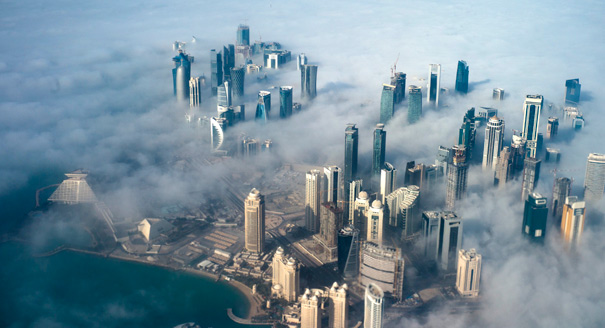
Even if Tillerson can manage an agreement that defuses the current crisis in Qatar, it won’t fix the problem. Saudi Arabia seems determined to turn Qatar into a semi-vassal state.
Source: CNN
For the past six months, Secretary of State Rex Tillerson has been treading water. On Tuesday, the US diplomat begins his maiden voyage into the stormy seas of Middle East shuttle diplomacy We're about to find out whether he can navigate them.
The matter at hand is a bitter conflict pitting Saudi Arabia, the UAE, Bahrain, and Egypt against Qatar. All these countries are U.S. security partners, vital to achieving the Trump Administration's Middle East goals.
Tillerson has a thankless assignment . He faces long odds against a definitive resolution, but also has the possibility to broker a temporary fix.
If Tillerson is to have any hope of achieving that outcome he needs to have the right answers to the following five questions.
The Secretary shouldn't have traveled if the answer is no -- and right now the answer is unclear.
From the beginning of this crisis, it's been apparent that Tillerson wanted to mediate fairly.
President Trump, on the other hand, under the spell of the King and the new crown prince, came down squarely on the Saudi's side.
Success will be beyond Tillerson's reach if the White House and Foggy Bottom are not on the same page. At a minimum, the President should call the Saudis, Qataris, and Emiratis to make certain they know that he's empowered Tillerson to reach a deal and expects them to be flexible. Any other presidential message during Tillerson's mission will be fatal. The Saudis won't bend if they believe Trump has their back instead of his own Secretary of State's.
It's not clear. The ideal solution would be one reached by the parties or by a regional mediator. So far, the Kuwaitis have not been able to mediate successfully.
In any negotiation, timing is critical to a mediator's success. It is doubtful that either side is feeling enough pain to make serious compromises.
If there is no sense of shared urgency the secretary of state won't be coming home any time soon, or will return home empty handed after a week of being diddled and used by both sides. It is surely possible, however, that Tillerson has received signals that both sides are willing to compromise but will only make concessions to the US and not to one another.
Probably not much. Senate Foreign Relations Committee Chairman Bob Corker has made it clear that he's not prepared to go ahead with arms sales to our partners in the Gulf until this dispute is resolved.
But it's doubtful that the Trump administration is willing to put its relationship with both countries on the line by squeezing either of them. Al Udeid air base in Qatar is simply too important to US military operations in the region to put at risk.
As for the Saudis, Trump's apparent infatuation with them means he is unlikely to play hardball. This leaves Tillerson with few cards to play and the prospect of a lengthy negotiation.
The impulsive new Saudi crown prince has a lot at stake in cutting Qatar down to size and will not bend easily to compromise. This means that unless Tillerson is prepared to publicly shame either or both parties (his only source of leverage), it's hard to see the use of coercion rather than persuasion as the way to reach any agreement.
Any agreement will have to be monitored and enforced if it is to remain durable. The Gulf states have a long history of reaching agreements and then fumbling on implementation.
In fact, that is largely what happened in 2014, when all the other Gulf Arab states downgraded their diplomatic relations with the Qataris over essentially the same issues that are on the table now.
It took nine months for these countries to return their ambassadors to Doha after the two sides papered over their differences with pledges that were not effectively implemented. The US will most likely have to do some of the monitoring particularly when it comes to terror financing.
Maybe a partial or temporary one. The Saudi/UAE-Qatari confrontation is longstanding, reflecting two realities.
The first is Saudi Arabia''s desire to be master of the Arab Gulf and the Gulf Cooperation Council and to cut Qatar down to size, by denying it freedom of action, as well as the ability to choose its own allies -- such as Iran and the Muslim Brotherhood. The Saudis, Emiratis and Egyptians view these other Islamic groups as major threats.
The second is Qatar's fierce determination to protect its very identity, which is inextricably linked to its independence and freewheeling style.
Some of the grievances against Qatar are legitimate and perhaps can be addressed by Tillerson -- for example, using the US to monitor terror financing -- and wrapped into a package to defuse this round of tensions.
But even if Tillerson can manage an agreement that defuses the current crisis, it won't fix the problem. Saudi Arabia, particularly under the leadership of the crown prince, seems determined to turn Qatar into a semi-vassal state, and if he could, he would engineer regime change.
However, even if Qatar agrees to tone down al-Jazeera programing and stop funding and hosting unfriendly Islamists, Doha won't abandon its independent foreign policy nor cut ties with Iran, with whom it shares a huge natural gas field.
Tillerson may end up in a truly thankless spot. If he fails in his first highly personalized diplomatic role, the media will hammer him as will his boss if he pushes the Saudis too hard. If he succeeds, the US might end up with a temporary fix that could easily come undone.
Tillerson appears to have initiated this mission on his own. We can admire his risk-readiness. But the Secretary may be about to discover that, as Lebanese historian Kamal Salibi has said, great powers meddle in the affairs of small tribes at their own risk.
Nonresident Senior Fellow, Russia and Eurasia Program
Richard Sokolsky is a nonresident senior fellow in Carnegie’s Russia and Eurasia Program. His work focuses on U.S. policy toward Russia in the wake of the Ukraine crisis.

Senior Fellow, American Statecraft Program
Aaron David Miller is a senior fellow at the Carnegie Endowment for International Peace, focusing on U.S. foreign policy.
Carnegie does not take institutional positions on public policy issues; the views represented herein are those of the author(s) and do not necessarily reflect the views of Carnegie, its staff, or its trustees.

But their "principal to principal" model will only be as effective as the political strength of each leader back home.

Damien Ma

U.S. unpredictability has allowed China to capitalize on its positioning as the “responsible great power”. Paradoxically, the more China wins the perception game, the more likely expectations will rise for Beijing to deliver not just words but to demonstrate with its deeds.

Chong Ja Ian

Hanoi and Beijing have long treated each other as distant cousins rather than comrades in arms. That might be changing as both sides draw closer to hedge against uncertainty and America’s erratic behavior.

Nguyễn Khắc Giang

Across Asia, China is better positioned to withstand energy shocks from the fallout of the Iran war. Its abundant coal capacity can ensure stability in the near term. Yet at the same time, the country’s energy transition away from coal will make it even less vulnerable during the next shock.
Damien Ma

Malaysia’s chairmanship sought to fend off short-term challenges while laying the groundwork for minimizing ASEAN’s longer-term exposure to external stresses.

Elina Noor