• Commentary
  • Research
  • Experts
  • Events
Carnegie China logoCarnegie lettermark logo
{
  "authors": [
    "Can Kasapoğlu",
    "Sinan Ülgen"
  ],
  "type": "other",
  "centerAffiliationAll": "dc",
  "centers": [
    "Carnegie Endowment for International Peace",
    "Carnegie Europe",
    "Malcolm H. Kerr Carnegie Middle East Center"
  ],
  "collections": [
    "Turkey’s Transformation",
    "Transatlantic Cooperation"
  ],
  "englishNewsletterAll": "ctw",
  "nonEnglishNewsletterAll": "",
  "primaryCenter": "Carnegie Europe",
  "programAffiliation": "EP",
  "programs": [
    "Europe"
  ],
  "projects": [],
  "regions": [
    "Europe",
    "North America",
    "Türkiye",
    "Middle East",
    "Iran"
  ],
  "topics": [
    "Security",
    "Political Reform",
    "Foreign Policy"
  ]
}
Source: Getty

Other
Carnegie Europe

Is Turkey Sleepwalking Out of the Alliance?

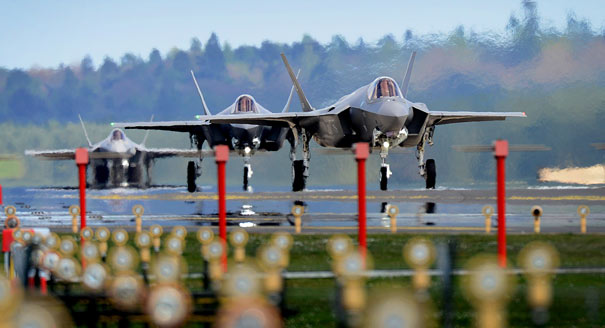
Turkey’s resolve to acquire the Russian strategic defensive weapon system S-400 Triumf raises the prospect of a severe damage to NATO and, by extension, to transatlantic security.

Link Copied
By Can Kasapoğlu and Sinan Ülgen
Published on Aug 14, 2018

Source: Centre for Economics and Foreign Policy Studies

EXECUTIVE SUMMARY

  • The Turkish – American bilateral relationship is in a deep crisis. An alliance that took shape in the early post-War years has entered a period of heavy turbulence with an ever-growing set of unresolved disputes. This unprecedented cumulation of bilateral disputes is burdening a relationship vital to transatlantic security. It is also compounding efforts to settle differences with linkages being established between unrelated topics leading to an ever more difficult environment for diplomatic negotiations. The way forward requires a willingness to disconnect these problems from each other so that some confidence building can be engineered by individually resolving these disagreements.

  • With this understanding, this report will focus on one of these disagreements. Turkey is planning to acquire an advanced Russian strategic defensive weapon system, known as the S-400 Triumf. There is however rising concern in the US about this purchase by a NATO ally. Indeed the fear is that, even if not networked, potential backdoors in the S-400 system could study critical operational data and electromagnetic signatures of the high-end aircraft, and transmit them to the Russian military intelligence.

  • The prospect of sanctions has therefore been raised in addition to Congressional initiatives to prevent deliveries of the F-35 Lightning II to Turkey due to the risks of operating the S-400 and the F-35 together. Yet Ankara’s resolve regarding its potential acquisition of the S-400 seems unaffected despite the rising political and military costs.

  • Both Ankara and Washington are so far acting in a way that is oblivious to the real consequences of such a scenario of divergence.

  • The case that we make in this detailed report is that a failure to eventually reach an understanding on the now interlinked S-400 & F-35 issue can potentially affect Turkey’s capability to act as an interoperable and capable NATO ally. In other words, this disagreement raises the prospect of a severe damage to the NATO Alliance, and by extension, to transatlantic security.

  • One mooted option has been for Turkey’s F-35s to be delivered through several degradations ensuring that the aircraft is handed over without connection to the ALIS cloud-based network. However, such a degradation will cut Turkey’s F-35s’ from rest of the global F-35 fleet around the world. Maintenance, life cycle, and operation costs will inevitably increase, and the Turkish military-industrial com-plex will have much less access to the engineering and supply chain.

  • Washington’s intent to link the supply of the F-35s to Turkey to political conditions, like the release of the jailed pastor Brunson is incongruous. The US would naturally work diplomatically to get the release of the jailed pastor as its citizen. But seeking to leverage the potential delivery of the F-35s for this purpose is greatly misplaced. The threat is incommensurate with its long-term implications. It underestimates the negative impact, not only for the Turkey-US relationship but also more generally for transatlantic security, of Turkey not being able to get the delivery of this fifth-generation multirole aircraft. The linkage with Turkey’s acquisition of the S-400 from Russia, however, is more relevant.

  • In our view, Ankara would need to adopt a political and diplomatic strategy that takes fully into account of this inevitable conclusion that the acquisition of the S-400s will have ramifications for the supply and operationalization of the F-35s. Either the US will need to be convinced that the delivery of the F-35s to a country that operates the Russia-made S-400s is not a real threat to the integrity of network-centric NATO platforms, or that the threat of cyber hacking –or digital espionage– emanating from the S-400s can categorically be eliminated, or Turkey would need to forego the acquisition – or at the very least the operationalization– of the S-400s. At present, there seem to be no real third options for Turkish policy-makers to sidestep these binary and mutually exclusive options.
Read Full Text

This analysis was originally published by the Centre for Economics and Foreign Policy Studies (EDAM).

About the Authors

Can Kasapoğlu

Sinan Ülgen

Senior Fellow, Carnegie Europe

Sinan Ülgen is a senior fellow at Carnegie Europe in Brussels, where his research focuses on Turkish foreign policy, transatlantic relations, international trade, economic security, and digital policy.

Authors

Can Kasapoğlu
Sinan Ülgen
Senior Fellow, Carnegie Europe
Sinan Ülgen
SecurityPolitical ReformForeign PolicyEuropeNorth AmericaTürkiyeMiddle EastIran

Carnegie does not take institutional positions on public policy issues; the views represented herein are those of the author(s) and do not necessarily reflect the views of Carnegie, its staff, or its trustees.

More Work from Carnegie China

  • Commentary
    Emissary
    Trump and Xi Are Angling for Three Years of Stability

    But their "principal to principal" model will only be as effective as the political strength of each leader back home.

      • Damien Ma

      Damien Ma

  • Commentary
    China Sells Stability Amid American Volatility

    U.S. unpredictability has allowed China to capitalize on its positioning as the “responsible great power”. Paradoxically, the more China wins the perception game, the more likely expectations will rise for Beijing to deliver not just words but to demonstrate with its deeds.

      Chong Ja Ian

  • Vietnam's Top Leader To Lam meets with young representatives from China and Vietnam participating in the "Red Study Tours" at the Great Hall of the People on April 15, 2026 in Beijing, China. T
    Commentary
    Why Vietnam Is Swinging in China’s Direction

    Hanoi and Beijing have long treated each other as distant cousins rather than comrades in arms. That might be changing as both sides draw closer to hedge against uncertainty and America’s erratic behavior.

      • Nguyen-khac-giang

      Nguyễn Khắc Giang

  • Commentary
    China’s Energy Security Doesn’t Run Through Hormuz but Through the Electrification of Everything

    Across Asia, China is better positioned to withstand energy shocks from the fallout of the Iran war. Its abundant coal capacity can ensure stability in the near term. Yet at the same time, the country’s energy transition away from coal will make it even less vulnerable during the next shock.


      • Damien Ma

      Damien Ma

  • Commentary
    Malaysia’s Year as ASEAN Chair: Managing Disorder

    Malaysia’s chairmanship sought to fend off short-term challenges while laying the groundwork for minimizing ASEAN’s longer-term exposure to external stresses.

      Elina Noor

Get more news and analysis from
Carnegie China
Carnegie China logo, white
Keck Seng Tower133 Cecil Street #10-01ASingapore, 069535Phone: +65 9650 7648
  • Research
  • About
  • Experts
  • Events
  • Contact
  • Careers
  • Privacy
  • For Media
Get more news and analysis from
Carnegie China
© 2026 Carnegie Endowment for International Peace. All rights reserved.



