

Article
C. Raja Mohan, Darshana M. Baruah
{
  "authors": [
    "C. Raja Mohan"
  ],
  "type": "legacyinthemedia",
  "centerAffiliationAll": "",
  "centers": [
    "Carnegie Endowment for International Peace",
    "Carnegie India"
  ],
  "collections": [],
  "englishNewsletterAll": "",
  "nonEnglishNewsletterAll": "",
  "primaryCenter": "Carnegie India",
  "programAffiliation": "",
  "programs": [],
  "projects": [
    "Security Studies"
  ],
  "regions": [
    "United States",
    "Afghanistan",
    "India",
    "Russia",
    "China"
  ],
  "topics": [
    "Foreign Policy"
  ]
}
Source: Getty
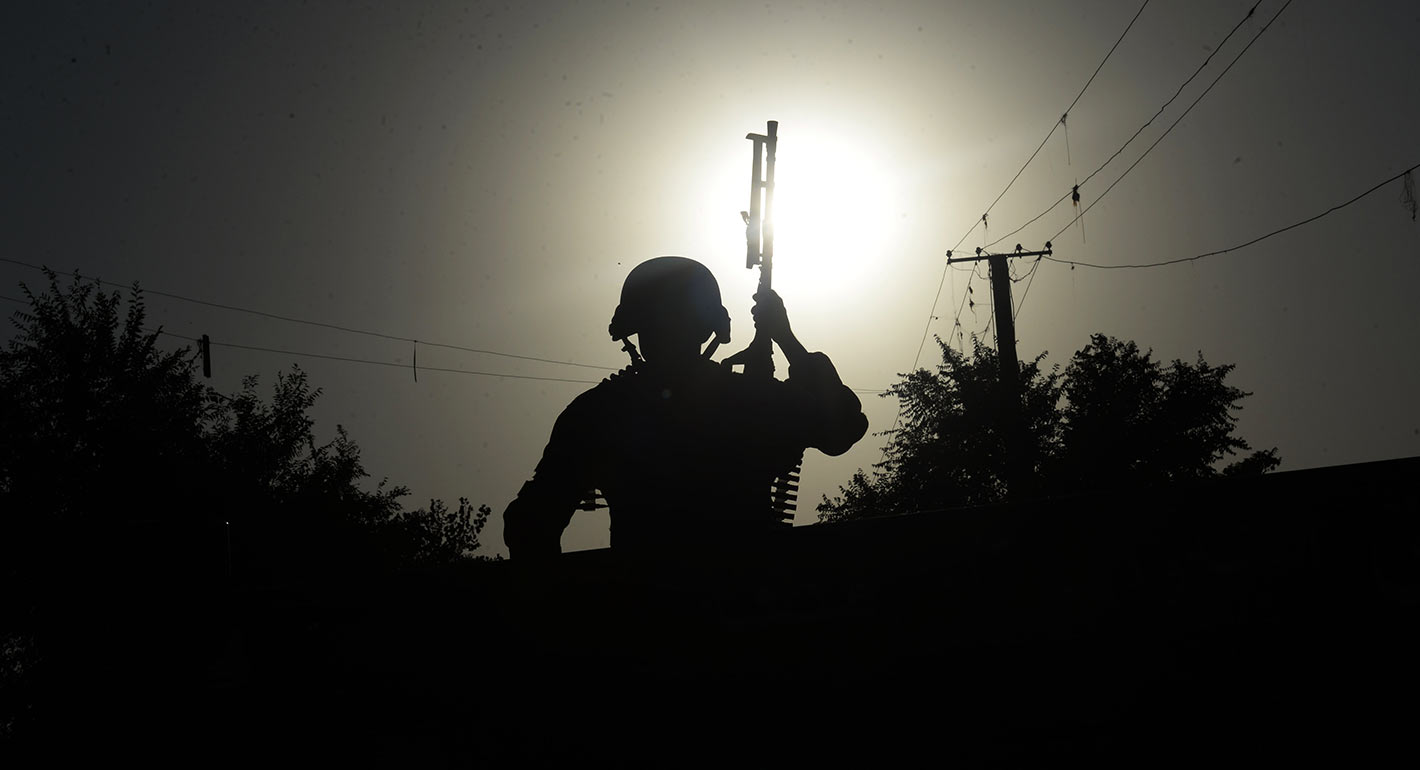
In a joint statement issued after the consultations, America, Russia, and China outlined agreement on a set of broad parameters for promoting peace in Afghanistan.
Source: Indian Express
A measure of political consensus on Afghanistan unveiled after the trilateral consultations in Moscow at the end of April between the US, China and Russia offer some hope for the construction of a sustainable framework for peace in a nation that has seen nothing but war over the last four decades. But sceptics might say that the great power talk on Afghanistan is indeed interesting but would keep their fingers crossed on their ability to cooperate on the ground.
In a joint statement issued after the consultations America, Russia and China outlined agreement on a set of broad parameters for promoting peace in Afghanistan. It is built around four axes–withdraw foreign forces, prevent Afghanistan from becoming a haven for terrorism, end the current violence and launch an intra-Afghan dialogue that will define a new political arrangement in Kabul.
These elements had already been identified in the US peace initiative led by Special Envoy to Afghanistan, Zalmay Khalilzad over the last few months. That Russia and China might be prepared to support the US peace initiative is quite welcome. After the international solidarity in the wake of the al Qaeda bombing of New York and Washington on September 11, 2001, slowly dissipated over the last two decades. Renewed great power cooperation might open the door for some concerted political action in the UN Security Council on Afghanistan.
Before the trilateral talks in Moscow, Khalilzad won similar endorsement from the European allies to the framework he has sought to develop in the engagement with the Taliban. As Khalilzad tweeted out after the Moscow talks, the agreement is ‘an important milestone’ on the road to peace in Afghanistan. But quite clearly, there is much more to do.
The Moscow declaration hopes to build regional consensus around this framework. As part of building wider consensus, Khalilzad is traveling to a number of regional capitals, including Islamabad and Delhi. From the Indian perspective at least three issues are of concern in the joint approach that the three powers have identified.
First is the question of ceasefire. In any conflict, ceasefire is the critical element that provides the conditions for the pursuit of a peaceful negotiations. Until now the Taliban has been reluctant to accept a ceasefire, let alone end its attack on innocent civilians in Afghanistan.
The trilateral statement certainly recognizes ‘the Afghan people’s strong desire for a comprehensive ceasefire”. “As a first step”, the three powers “call on all parties to agree on immediate and concrete steps to reduce violence.” The reference to ‘all parties’ is one of those escape clauses that hides the seeming reluctance to confront principal culprit in the production of Afghan violence and terror–the Taliban.
In urging ‘immediate and concrete steps to reduce violence’, one worries that the great powers might be willing to let the Taliban and its patrons slice and dice the question of a ceasefire. The imprecision and indirection might not be too damaging if Russia and China can impress upon the Taliban that its refusal to end violence will have consequences.
That brings us to the second issue–the question of Taliban’s sanctuaries in Pakistan. The joint statement avoids the issue completely. While Washington has often called on Pakistan to end its support to cross border destabilisation of Afghanistan, Moscow and Beijing have been hesitant to press Pakistan on the question of terror sanctuaries. Without a real effort by the major powers to dissuade Pakistan from supporting the Taliban, the prospects for Afghan peace will be limited.
A third issue of concern that Delhi has often articulated is the danger of delegitimising the Kabul government in a desperate effort to bring the Taliban to the negotiating table. In keeping Kabul out of his recent engagement with the Taliban, Khalilzad might already have done some damage. To be sure, the US continues to insist on a role for Kabul in the ‘intra-Afghan dialogue’ that will include all sections of the Afghan society, including the government and the Taliban.
The Taliban, on its part, has refused to engage the Kabul government in any form. In the Moscow statement, Russia and China have joined America in urging the Taliban “to participate in peace talks with a broad, representative Afghan delegation that includes the government as soon as possible.” Delhi, however, would want to know how the three powers would follow through on this demands, especially if the Taliban refuses to oblige.
While India’s concerns are real, the great power agreement on Afghanistan is something that Delhi would want to politically embrace and work with.
This article was originally published by the Indian Express.
Former Nonresident Senior Fellow, Carnegie India
A leading analyst of India’s foreign policy, Mohan is also an expert on South Asian security, great-power relations in Asia, and arms control.
Recent Work

C. Raja Mohan, Darshana M. Baruah


Alexander Gabuev, Paul Haenle, C. Raja Mohan, …
Carnegie does not take institutional positions on public policy issues; the views represented herein are those of the author(s) and do not necessarily reflect the views of Carnegie, its staff, or its trustees.

China’s banking crisis in the 2000s was resolved by transferring the costs to households through financial repression—a decision that recapitalized the banks while exacerbating the structural imbalances that continue to shape the Chinese economy today.

Michael Pettis

Chinese biotech companies have been on the receiving end of U.S. economic coercion. Yet their responses have differed significantly because firm and state interests are not uniformly aligned. For Washington, treating all Chinese tech firms the same, irrespective of their actual interests, risks pushing them farther into Beijing’s corner.

Xue Gong

China’s latest energy plan explicitly calls for integrating data centers into the electricity system, particularly connecting them to green energy. It appears Beijing wants to use compute as a source of domestic demand to absorb renewables excess capacity.

Damien Ma

But their "principal to principal" model will only be as effective as the political strength of each leader back home.
Damien Ma

U.S. unpredictability has allowed China to capitalize on its positioning as the “responsible great power”. Paradoxically, the more China wins the perception game, the more likely expectations will rise for Beijing to deliver not just words but to demonstrate with its deeds.

Chong Ja Ian