

Commentary
- +1
Paul Haenle, Xue Gong, Ngeow Chow Bing, …
{
  "authors": [
    "Paul Haenle"
  ],
  "type": "legacyinthemedia",
  "centerAffiliationAll": "",
  "centers": [
    "Carnegie Endowment for International Peace",
    "Carnegie China"
  ],
  "collections": [
    "U.S.-China Relations",
    "China’s Foreign Relations"
  ],
  "englishNewsletterAll": "",
  "nonEnglishNewsletterAll": "",
  "primaryCenter": "Carnegie China",
  "programAffiliation": "",
  "programs": [],
  "projects": [],
  "regions": [
    "North America",
    "United States",
    "East Asia",
    "China"
  ],
  "topics": [
    "Economy",
    "Foreign Policy"
  ]
}
Source: Getty
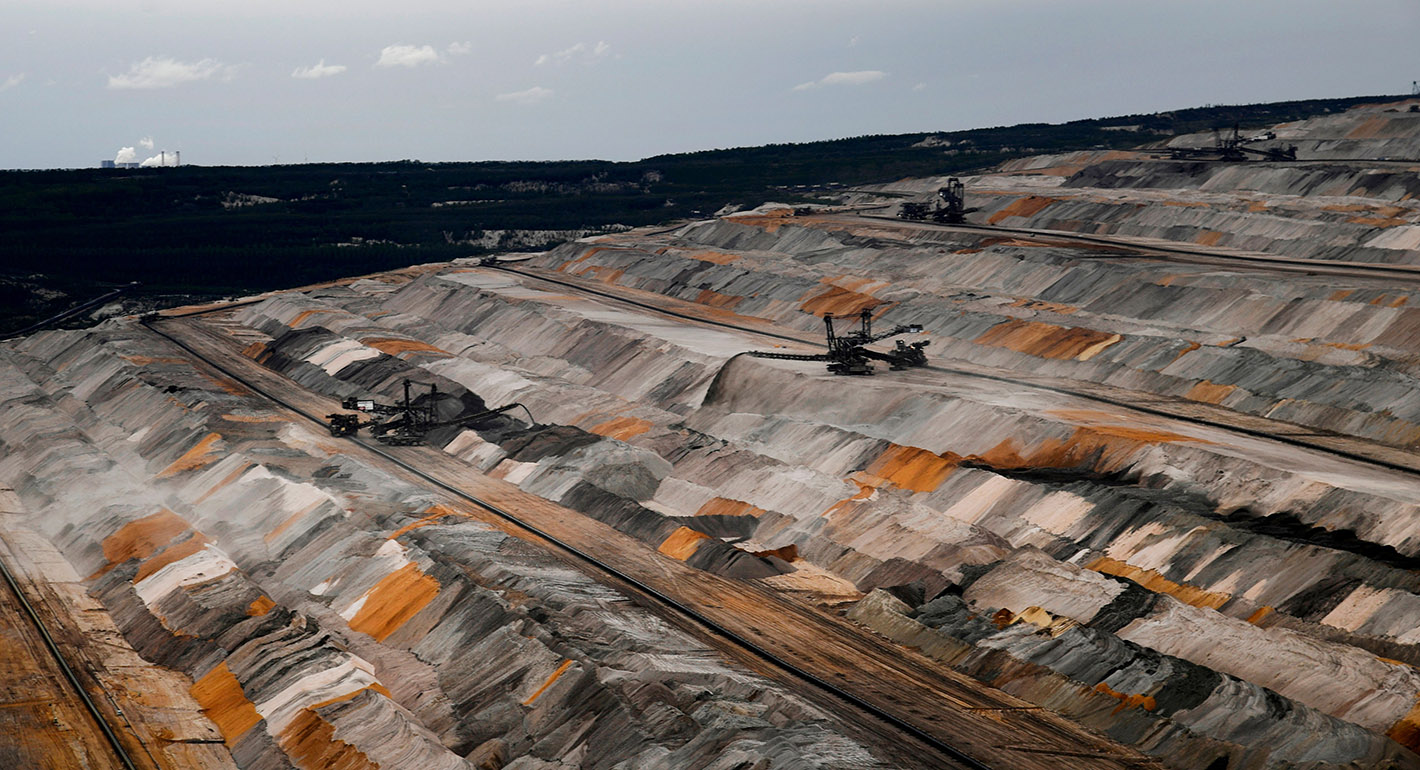
In threatening to restrict the export of rare earth metals to the United States, China wants to demonstrate that it has leverage over the United States and an ability to respond with commensurate countermeasures if the need arises.
Source: ChinaFile
The collapse of trade negotiations last month and the Commerce Department’s restrictions on U.S. suppliers of Huawei, as well as its placement on the entity list, have strengthened a view in China that the United States intends to contain China’s rise. China is gearing up for a long-term struggle with the United States over trade, technology, and economics, and wants to demonstrate that it’s ready. Noticeably, on the same trip that Xi Jinping made to JL MAG Rare-Earth Co. in Jiangxi province in mid-May, he also visited the starting point of the Long March, a foundational myth in the history of the Chinese Communist Party (C.C.P.) and symbol of the Party’s ability to withstand great hardship.
In threatening to restrict the export of rare earth metals to the United States, China wants to demonstrate that it has leverage over the United States and an ability to respond with commensurate countermeasures if the need arises. China knows that the United States depends on China for rare earth metals. The United States sources about 80 percent of its rare earths imports from China, and the metals have been noticeably absent from the U.S. tariffs on Chinese imports, including the pending U.S.$300 billion. In this way, Beijing wants to show that it cannot be backed into a corner, and that any attempts to pressure China will fail.
Threatening to restrict rare earths exports to the United States does send a message, but it might not be the message China wants to send. Some Chinese interlocutors in Beijing have told me a circulating theory that the United States requested Huawei CFO Meng Wanzhou’s detention to goad Beijing into overreacting. While not a mainstream view, it shows that even in China there is an understanding that these sorts of retaliations may backfire. Reactions like the arrest of the two Canadian citizens or a ban on rare earth metals exports transform China from the victim to the aggressor.
Although it is understandable why the C.C.P. wants to show that it can strike back, this reaction could prove counterproductive to China. The move is likely to further aggravate tensions, harden the lines dividing the two countries, and empower those in Washington calling for decoupling. None of this is in China’s interest.
This piece is part of a collection originally published by ChinaFile

Former Maurice R. Greenberg Director’s Chair, Carnegie China
Paul Haenle held the Maurice R. Greenberg Director’s Chair at the Carnegie Endowment for International Peace and is a visiting senior research fellow at the East Asian Institute, National University of Singapore. He served as the White House China director on the National Security Council staffs of former presidents George W. Bush and Barack Obama.
Recent Work


Paul Haenle, Xue Gong, Ngeow Chow Bing, …

Paul Haenle, Chong Ja Ian
Carnegie does not take institutional positions on public policy issues; the views represented herein are those of the author(s) and do not necessarily reflect the views of Carnegie, its staff, or its trustees.
China has showcased its engineering prowess with small modular reactor demonstration projects. But turning these technological achievements into commercial success will be a greater challenge.

Tong Zhao

The Plaza Accord was not an externally imposed punishment of Japan but part of a broader restructuring that Japanese economists and policymakers themselves recognized was necessary. Its effects were undermined, however, when Tokyo responded to the resulting slowdown with policies that exacerbated investment, credit expansion, and the very imbalances the adjustment was intended to resolve.

Michael Pettis

The nuclear relationship between China and the United States is increasingly shaped by widening perception gaps rather than deliberate strategic design.
Tong Zhao
China’s banking crisis in the 2000s was resolved by transferring the costs to households through financial repression—a decision that recapitalized the banks while exacerbating the structural imbalances that continue to shape the Chinese economy today.
Michael Pettis

Chinese biotech companies have been on the receiving end of U.S. economic coercion. Yet their responses have differed significantly because firm and state interests are not uniformly aligned. For Washington, treating all Chinese tech firms the same, irrespective of their actual interests, risks pushing them farther into Beijing’s corner.
Xue Gong