

Research
- +10
Jarrett Blanc, Thomas de Waal, Karim Sadjadpour, …
{
  "authors": [
    "Jarrett Blanc"
  ],
  "type": "legacyinthemedia",
  "centerAffiliationAll": "dc",
  "centers": [
    "Carnegie Endowment for International Peace",
    "Malcolm H. Kerr Carnegie Middle East Center"
  ],
  "collections": [
    "Iranian Proliferation"
  ],
  "englishNewsletterAll": "americanStatecraft",
  "nonEnglishNewsletterAll": "",
  "primaryCenter": "Carnegie Endowment for International Peace",
  "programAffiliation": "ASP",
  "programs": [
    "American Statecraft"
  ],
  "projects": [],
  "regions": [
    "North America",
    "United States",
    "Middle East",
    "Iran"
  ],
  "topics": [
    "Political Reform",
    "Security",
    "Foreign Policy",
    "Nuclear Policy"
  ]
}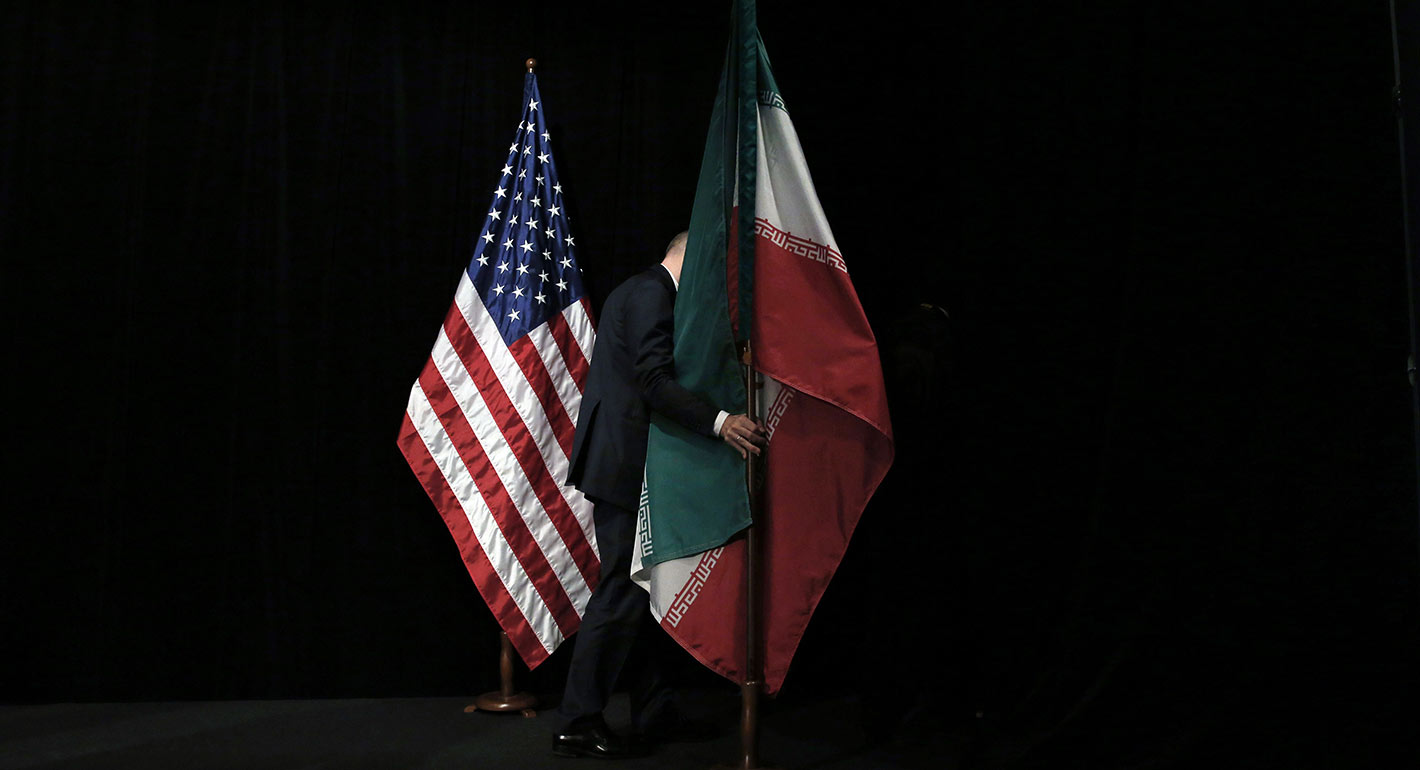
Source: Getty
The messages Trump is sending make negotiations with Tehran less and less likely and increase the chance of another ruinous war of choice in the Middle East.
Source: Politico
The Trump administration’s announcement this week of plans to impose new sanctions targeting Iranian leaders and organizations—including the Supreme Leader and his office, military commanders of the Islamic Revolutionary Guard Corps and Foreign Minister Javad Zarif—will have little practical effect, according to sanctions experts. Senior Iranian officials and their organizations are very unlikely to use international financial institutions or hold substantial assets abroad, and those are the major pathways through which the United States exerts coercive economic pressure. In other words, the new sanctions are more symbolic than effective.
This is not a bad thing. Symbolism is useful in international affairs, especially between adversarial countries like Iran and the United States, which lack formal diplomatic relations and need to find other ways to communicate. Intermediaries can be one option, symbolic measures another.
The problem with these new sanctions is not that they are symbolic, but that the messages they convey to Iran and the rest of the world are foolish and dangerous, and will fail to advance U.S. interests.
Here are three messages the Trump administration sent to Iran this week...
Former Senior Fellow, Geoeconomics and Strategy Program
Jarrett Blanc was a senior fellow in the Geoeconomics and Strategy Program at the Carnegie Endowment for International Peace.
Recent Work


Jarrett Blanc, Thomas de Waal, Karim Sadjadpour, …


Dan Baer, Rosa Balfour, Jarrett Blanc, …
Carnegie does not take institutional positions on public policy issues; the views represented herein are those of the author(s) and do not necessarily reflect the views of Carnegie, its staff, or its trustees.

The nuclear relationship between China and the United States is increasingly shaped by widening perception gaps rather than deliberate strategic design.

Tong Zhao

But their "principal to principal" model will only be as effective as the political strength of each leader back home.

Damien Ma

U.S. unpredictability has allowed China to capitalize on its positioning as the “responsible great power”. Paradoxically, the more China wins the perception game, the more likely expectations will rise for Beijing to deliver not just words but to demonstrate with its deeds.

Chong Ja Ian

Hanoi and Beijing have long treated each other as distant cousins rather than comrades in arms. That might be changing as both sides draw closer to hedge against uncertainty and America’s erratic behavior.

Nguyễn Khắc Giang

Across Asia, China is better positioned to withstand energy shocks from the fallout of the Iran war. Its abundant coal capacity can ensure stability in the near term. Yet at the same time, the country’s energy transition away from coal will make it even less vulnerable during the next shock.
Damien Ma