

Commentary
Judy Dempsey
{
  "authors": [
    "Judy Dempsey"
  ],
  "type": "legacyinthemedia",
  "centerAffiliationAll": "dc",
  "centers": [
    "Carnegie Endowment for International Peace",
    "Carnegie Europe"
  ],
  "collections": [],
  "englishNewsletterAll": "ctw",
  "nonEnglishNewsletterAll": "",
  "primaryCenter": "Carnegie Europe",
  "programAffiliation": "EP",
  "programs": [
    "Europe"
  ],
  "projects": [],
  "regions": [
    "Europe",
    "Western Europe",
    "Iran"
  ],
  "topics": [
    "EU"
  ]
}
Source: Getty
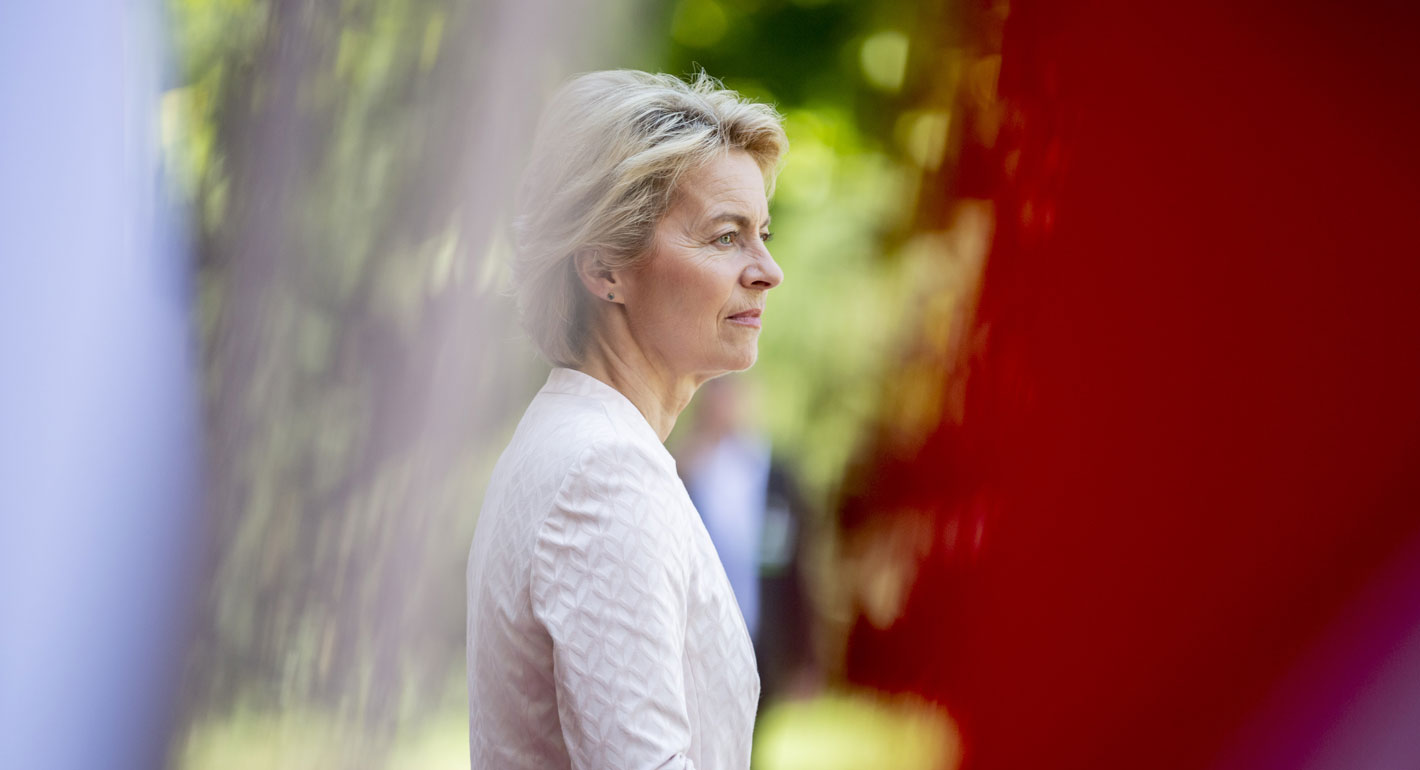
Relations between the U.S. and the EU are at an all-time low. European Commission President nominee Ursula Von der Leyen’s background makes her uniquely qualified to rise to the challenge posed by Trump.
Source: Washington Post
Relations between the United States and the European Union are at an all-time low. Since becoming president, Donald Trump has done everything possible to undermine the unity of the bloc and question its principles. He has walked away from agreements on climate change, the Iran nuclear deal and trade. He pours scorn on the E.U.'s antitrust regulations, claiming they are about hurting U.S. tech companies. He supports Brexit and praises the populist, anti-migration policies of Hungary and Poland.
Much of his criticism targets Germany and Chancellor Angela Merkel. He blames her for Europe’s migration crisis and accuses her of using trade policies to boost German exports, especially cars to the U.S. market. He continues to criticize NATO’s European allies — particularly Germany — for skimping on defense. And now the E.U. is struggling to define its positions on Trump’s trade war with China and his new sanctions against Iran. Attempts by some European leaders — most notably French President Emmanuel Macron — to repair relations between Brussels and Washington have gotten nowhere.
Can German Defense Minister Ursula von der Leyen succeed where others have failed? She is poised to become the new boss of the European Commission, the E.U.’s powerful executive, which is responsible for trade, energy and climate policy. Its leader also sets the tone for Europe’s relations with the rest of the world, especially the United States. Von der Leyen’s background makes her uniquely qualified to rise to the challenge posed by Trump.Unlike the incumbent Commission President Jean-Claude Juncker, she is a committed Atlanticist. She doesn’t buy into the anti-American rhetoric that Europe has to take care of its own security and defense. And von der Leyen knows that as long as NATO’s European allies refuse to spend more on defense, they will have no influence in Washington. Von der Leyen’s support for NATO and a Europe committed to more burden-sharing will serve her well in Washington.
In her nearly six years as Germany’s defense minister, von der Leyen cultivated many friends in Washington and throughout the NATO capitals. It certainly helps that she’s fluent in English (having studied in London and lived in California) as well as in French (she was born in Brussels, where her father was a top-notch European civil servant). This Euro-Atlantic background will serve her well not only with the United States but also among several European countries, particularly those from the Nordic and Baltic states and from Central Europe. They do not trust calls by some Europeans, such as Juncker, for Europe to have its own army. That would be the kiss of death for NATO. Instead, what they want is far more security and defense cooperation between the E.U. and NATO.
Her support for the alliance is bolstered by her record as defense minister, when she lobbied hard for increased German defense spending despite strong resistance from politicians and voters. She ultimately managed to persuade Merkel to boost spending — which should give her far greater credibility when it comes to dealing with the United States.
Defense may end up being the easiest of von der Leyen’s challenges when it comes to repairing the transatlantic relationship. Her biggest challenge will be finding ways to strengthen the multilateral institutions that Trump seeks to undermine.
Take the E.U.'s stance on climate change. For most European governments, it has jumped to the top of the political agenda. Von der Leyen could use the momentum surrounding climate change to take advantage of her authority and connections by reaching out to the U.S. business community and to governors and mayors. This is something the Juncker team didn’t do. Yet it would make sense for von der Leyen to build alliances in the United States outside Washington.
Second, the E.U. should be in a strong position to build more trade accords with third countries. Its deals with Canada, South Korea and Japan show that other countries want rules-based system based on accountability, democratic principles and transparency. The countries of Southeast Asia and the Pacific region are desperate to strengthen economic and political ties with the E.U. They don’t want China to set the agenda. Nor do they want to become victims of the trade war between Washington and Beijing. And since Trump pulled out of the Trans-Pacific Partnership accord, much to the dismay of the United States’ allies in the region, there’s no reason the E.U. couldn’t forge a relationship with the TPP countries. It would be another way of strengthening the multilateral architecture.
Above all, von der Leyen could use her transatlantic credentials to break the deadlock between the United States and China. The E.U. has been absent from playing any kind of mediating role even though the fallout from this dispute has global repercussions. Trump may be loath to consider the E.U. — and a woman — playing such a role. But Von der Leyen’s political career — including stints as minister of family affairs and labor in addition to defense — shows that she may be up to the task. Standing on the sidelines is not in her character.

Nonresident Senior Fellow, Carnegie Europe
Judy Dempsey is a nonresident senior fellow at Carnegie Europe
Recent Work
Judy Dempsey
Judy Dempsey
Carnegie does not take institutional positions on public policy issues; the views represented herein are those of the author(s) and do not necessarily reflect the views of Carnegie, its staff, or its trustees.
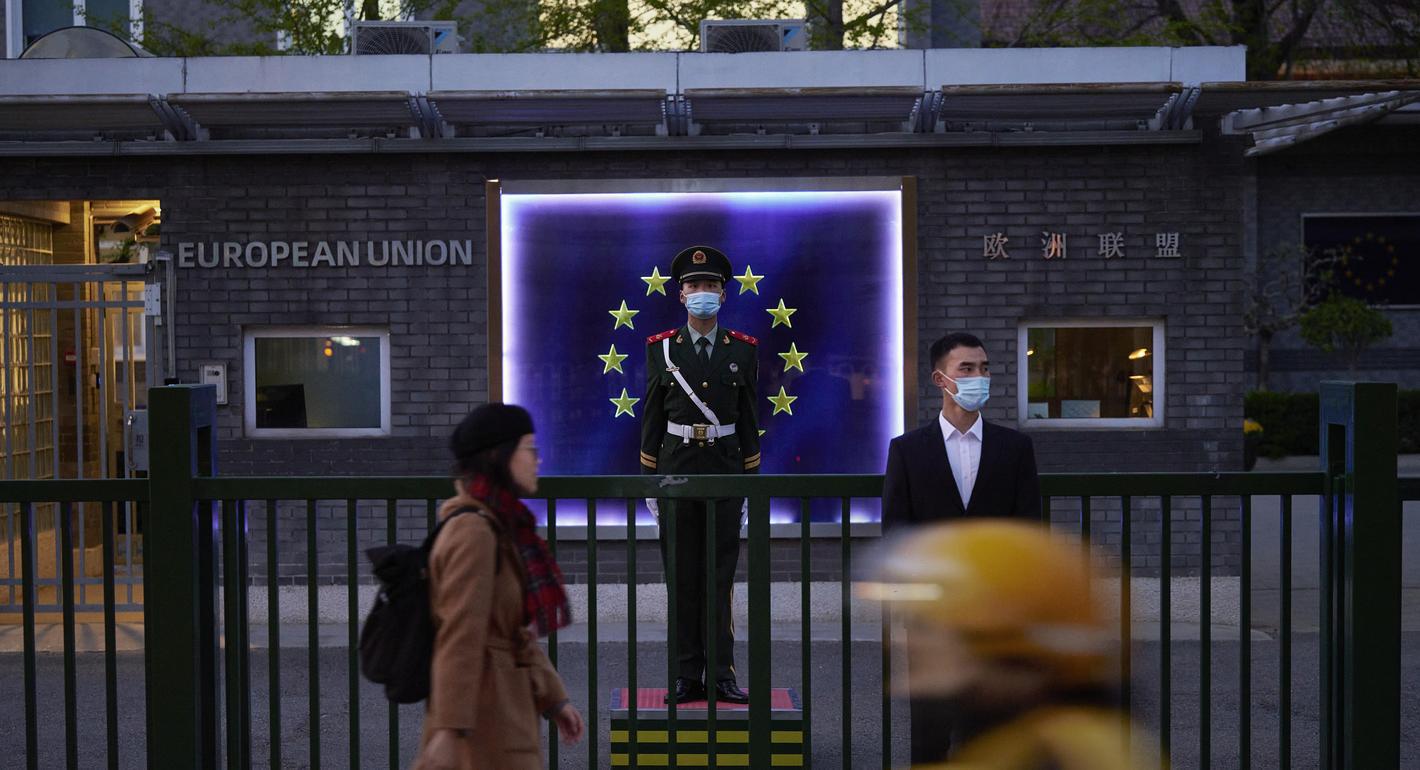
The Russian invasion of Ukraine is a turning point in the EU-China relationship, and evolution of the China-Russia relationship will continue to impact EU-China relations.


Yifan Ding, Alice Ekman
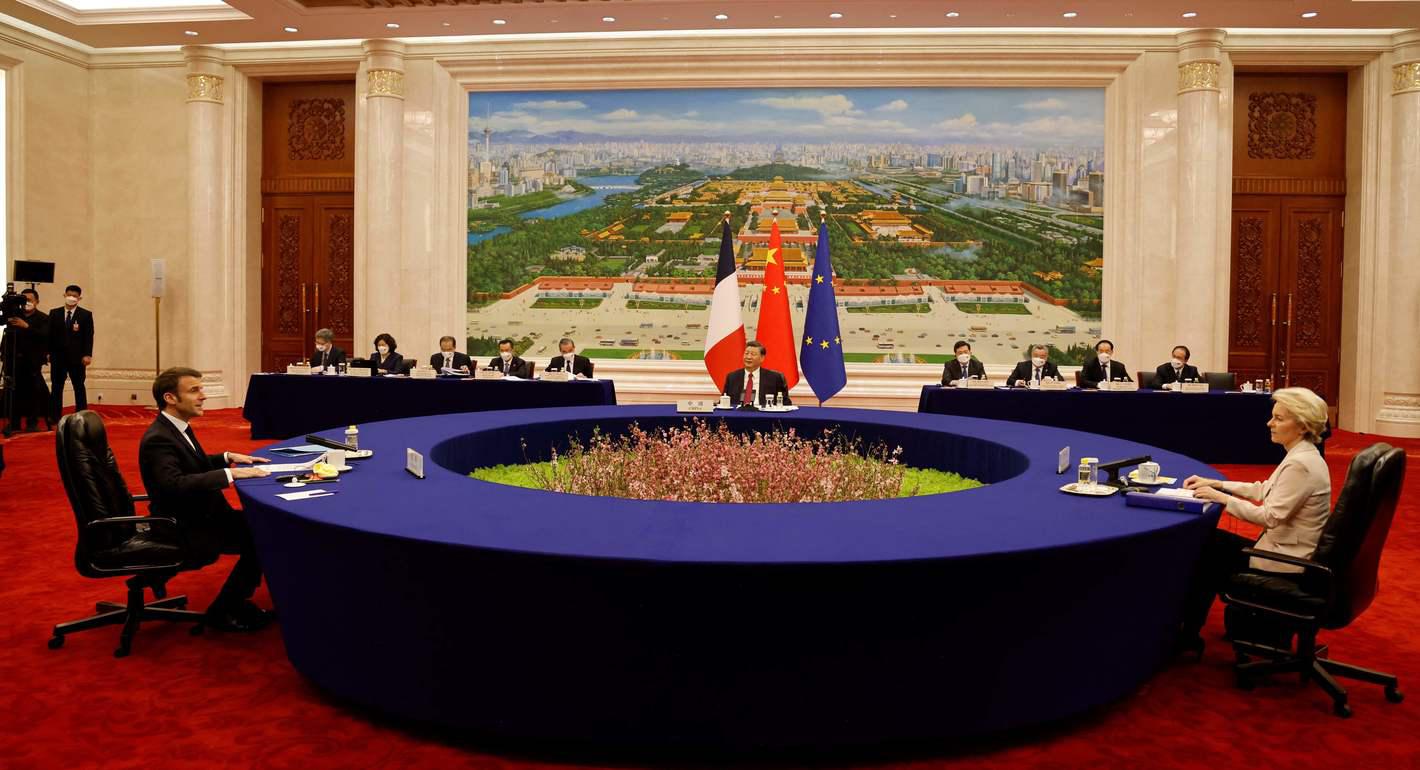
Recent visits by European officials highlight the EU’s lack of internal cohesion.



Paul Haenle, Chan Heng Chee, Liu Yawei, …
“It’s not so clear how we’re going to get out of this.”
Paul Haenle, Philippe Le Corre

It’s about managing oil prices, bread prices, and strategic partnerships.



Amr Hamzawy, Karim Sadjadpour, Aaron David Miller, …

With the potential of enabling not only significant economic growth but also the innovation of critical technologies in various fields, both the United States and China view 5G as one of the key influencing factors in the “great power competition.”
Lyu Jinghua