

Other
François Godement, Ashley J. Tellis
{
  "authors": [
    "François Godement"
  ],
  "type": "legacyinthemedia",
  "centerAffiliationAll": "dc",
  "centers": [
    "Carnegie Endowment for International Peace"
  ],
  "collections": [],
  "englishNewsletterAll": "asia",
  "nonEnglishNewsletterAll": "",
  "primaryCenter": "Carnegie Endowment for International Peace",
  "programAffiliation": "AP",
  "programs": [
    "Asia"
  ],
  "projects": [],
  "regions": [
    "East Asia",
    "China"
  ],
  "topics": [
    "Economy"
  ]
}
Source: Getty
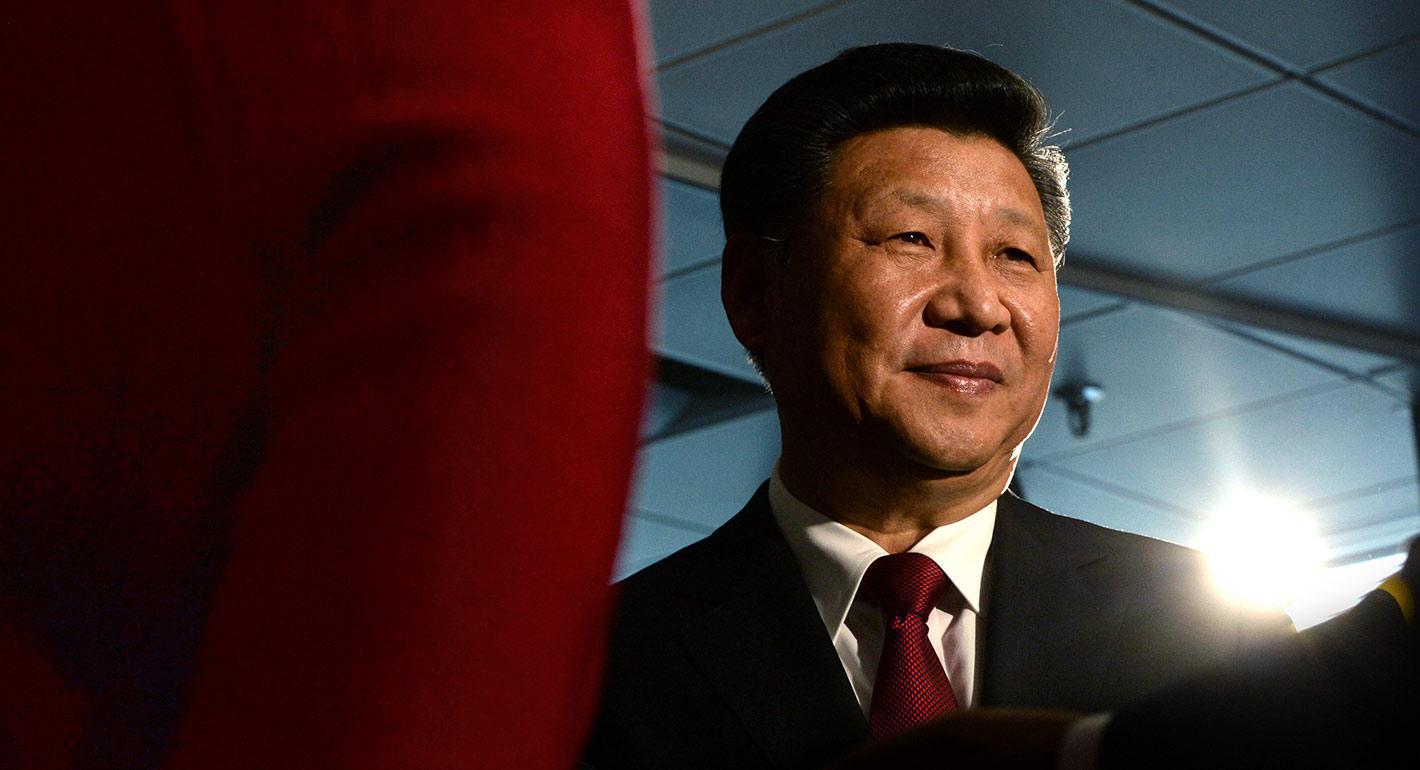
Xi Jinping bases his actions against the prophecy of CCP decline and what he saw as a drift to the West.
Source: Institut Montaigne
Two decades ago – it feels like a century – this writer heard a prediction by an observer of China: the Party would lose its grip because its communist DNA was fragmenting, while civil society exercised pressure from within China. We identified Communism with a society of scarcity and with very low productivity of capital. Since the West admitted China into WTO and made it a key component of the global value chain, it followed that Communism would melt inside the growing market economy. China’s central plans had never controlled the whole economy: they included only 150-200 products, when the Soviet Gosplan dealt with 1500 to 2000 products. Agrarian collectivization had lasted only 25 years in China – barely a generation, not enough to create a society of Socialist workers. The pull of Western ideas was always immense, from 19th-century reformers to the May 1919 modernizers, and to elites who went abroad under Deng Xiaoping. Occidendalists had to win the day against chauvinists.
Nothing could have been further from what has happened. It is indeed against the prophecy of CCP decline and what he saw as a drift to the West that Xi Jinping bases his action. True, he found some of his toolbox inside the surviving Party-state. Deng had refused the separation of the Party from the state. Zhu Rongji, who is still seen as a liberal reformer in the West, had in reality given back control of China’s budget to the state center. Even if the murderous mass campaigns of Mao’s era had disappeared, there were repressive movements launched throughout the Reform era.
But Xi Jinping has gone much further. After gaining power, he named Gorbachev as the arch-enemy. In his most recent known speech, he uses the word "struggle" 56 times, and also the expression "great struggle", which has been resurrected from the Cultural Revolution since 2012. His official CV never fails to mention his degree in Marxist studies – actually, a reportedly tepid dissertation on agrarian economics.
This article was originally published by Institut Montaigne.

Former Nonresident Senior Fellow, Asia Program
Godement, an expert on Chinese and East Asian strategic and international affairs, was a nonresident senior fellow in the Asia Program at the Carnegie Endowment for International Peace.
Recent Work
François Godement, Ashley J. Tellis

François Godement, Abigaël Vasselier

The Plaza Accord was not an externally imposed punishment of Japan but part of a broader restructuring that Japanese economists and policymakers themselves recognized was necessary. Its effects were undermined, however, when Tokyo responded to the resulting slowdown with policies that exacerbated investment, credit expansion, and the very imbalances the adjustment was intended to resolve.

Michael Pettis

The nuclear relationship between China and the United States is increasingly shaped by widening perception gaps rather than deliberate strategic design.

Tong Zhao
China’s banking crisis in the 2000s was resolved by transferring the costs to households through financial repression—a decision that recapitalized the banks while exacerbating the structural imbalances that continue to shape the Chinese economy today.
Michael Pettis

Chinese biotech companies have been on the receiving end of U.S. economic coercion. Yet their responses have differed significantly because firm and state interests are not uniformly aligned. For Washington, treating all Chinese tech firms the same, irrespective of their actual interests, risks pushing them farther into Beijing’s corner.

Xue Gong
China’s latest energy plan explicitly calls for integrating data centers into the electricity system, particularly connecting them to green energy. It appears Beijing wants to use compute as a source of domestic demand to absorb renewables excess capacity.

Damien Ma