

Article
- +1
Rudra Chaudhuri, Tejas Bharadwaj, Konark Bhandari, …
{
  "authors": [
    "Shruti Sharma"
  ],
  "type": "commentary",
  "centerAffiliationAll": "",
  "centers": [
    "Carnegie Endowment for International Peace",
    "Carnegie India"
  ],
  "collections": [
    "Coronavirus"
  ],
  "englishNewsletterAll": "",
  "nonEnglishNewsletterAll": "",
  "primaryCenter": "Carnegie India",
  "programAffiliation": "",
  "programs": [],
  "projects": [
    "Technology and Society"
  ],
  "regions": [
    "South Asia",
    "India",
    "East Asia",
    "China"
  ],
  "topics": [
    "Domestic Politics",
    "Technology"
  ]
}
Source: Getty
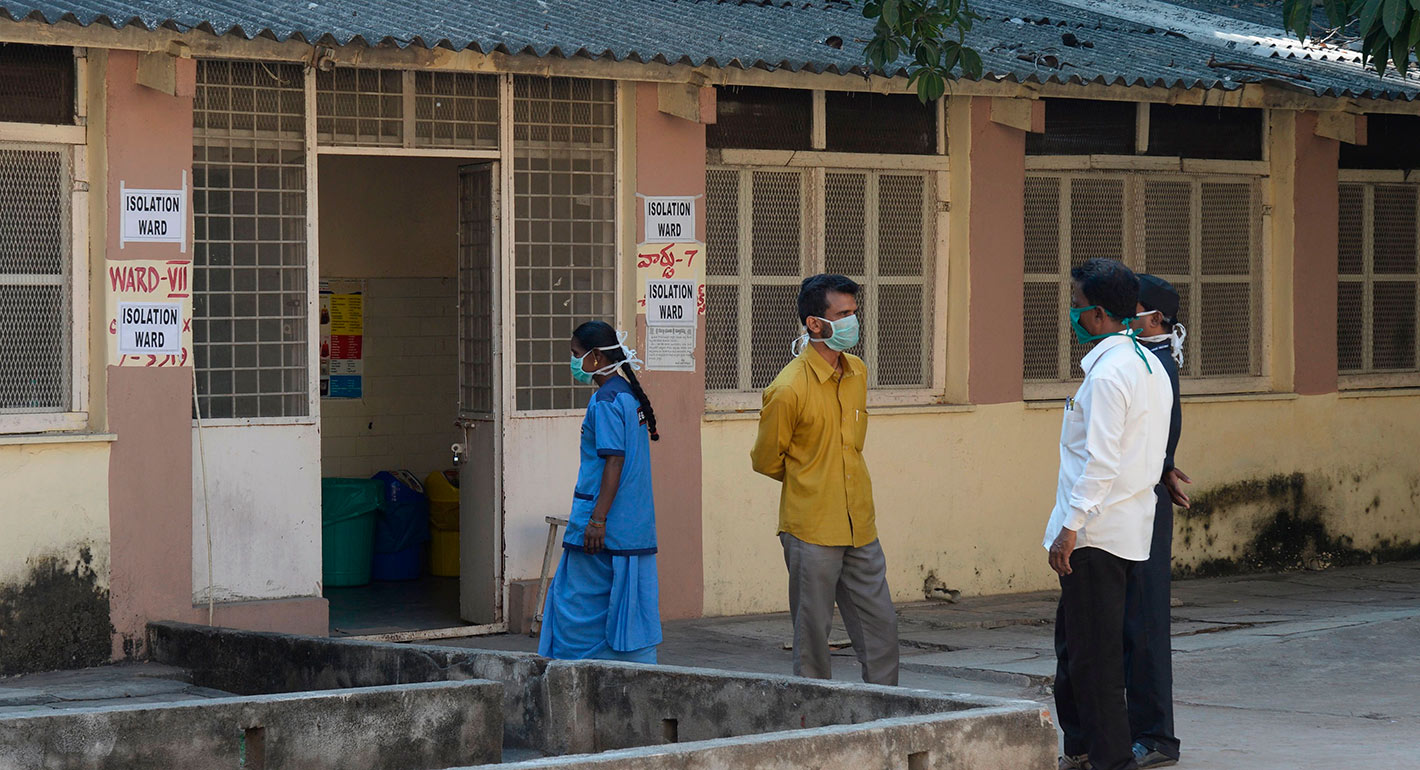
India’s teeming population, rickety public health system, and shared border with China make it vulnerable to the deadly coronavirus. How should the country prepare?
The December 2019 outbreak of the coronavirus originated in a city in central China called Wuhan, and the strain has now spread to more than ten countries. In China, over 4,500 people are known to be infected, and 106 have been reported dead; these numbers are rising rapidly every day. The global spread of this outbreak should serve as a wake-up call for governments around the world, particularly India, which not only shares a border with China and is densely populated but also has a fragile public health infrastructure.
Wuhan and several other Chinese cities have been quarantined to contain the disease. But amid the Chinese New Year celebrations, millions of people elsewhere in the country have been traveling, exacerbating the risk that the virus has continued to spread.
Since the Wuhan outbreak, India has taken some steps to ramp up its vigilance and preparedness. But it needs a stronger strategy to deal with any infections. So far, a travel advisory has been issued and at least twenty airports in major metropolitan areas have been instructed to screen passengers coming from China. Several laboratories under the Indian Council of Medical Research, including the National Institute of Virology, have been equipped to test samples of the virus. India’s Health Secretary has also told all states and union territories “to review their preparedness, identify gaps and strengthen core capacities needed to prepare for, detect, and respond to possible outbreaks.”
However, India’s efforts to prevent, detect, and respond to previous infections in remote impoverished areas have been hindered by weak or non-existent health systems. Poor transportation and communication networks, few skilled local health workers, and limited laboratory capacity have made it harder to stop the spread of disease in rural India. Other issues include poor interagency communication between animal and public health networks, inadequate involvement of private health practitioners, and suboptimal national reporting systems. These delay the recognition, diagnosis, and control of zoonotic infections (which may spread from animals to humans).
With more than 250 Indian students waiting anxiously to come back during the holiday season, and other potential visitors, the Indian Health Ministry should consider expanding capacity to more laboratories that can diagnose the new coronavirus. It should also focus on infection prevention and control measures. Such measures include quarantining patients, using personal protective equipment, and following decontamination strategies.
Since there is not yet an existing vaccine or drug available to counter this medical emergency, the number of fatalities is likely to increase globally. India should work with other interested countries to develop a vaccine or cure and ensure it has the domestic capacity to mass-produce any countermeasures once scientists have developed them. This may require relaxing restrictive regulations that otherwise hamper commercialization of pharma products in India. Such a move would improve India’s capacity to stop this pandemic threat and help the country become a global powerhouse for producing necessary drugs and vaccines.
While there have been no confirmed cases of the coronavirus in India so far, Delhi’s decision to evacuate the trapped Indian students in Wuhan increases the country’s vulnerability to the infection. India should therefore strengthen its capabilities to effectively prevent, detect, and respond to this looming threat.
Note: This piece has been updated to reflect the latest numbers as of January 28, 2020.

Former Associate Director, Fellow, and Chief Coordinator, Global Technology Summit, Technology and Society Program
Shruti Sharma was an associate director and a fellow with the Technology and Society Program at Carnegie India, where she is currently working on exploring the challenges and opportunities in leveraging biotechnology to improve public health capacity in India. Additionally, she is the Chief Coordinator of Carnegie India's Global Technology Summit.
Recent Work



Rudra Chaudhuri, Tejas Bharadwaj, Konark Bhandari, …
Shruti Sharma
Carnegie does not take institutional positions on public policy issues; the views represented herein are those of the author(s) and do not necessarily reflect the views of Carnegie, its staff, or its trustees.

China’s banking crisis in the 2000s was resolved by transferring the costs to households through financial repression—a decision that recapitalized the banks while exacerbating the structural imbalances that continue to shape the Chinese economy today.

Michael Pettis

Chinese biotech companies have been on the receiving end of U.S. economic coercion. Yet their responses have differed significantly because firm and state interests are not uniformly aligned. For Washington, treating all Chinese tech firms the same, irrespective of their actual interests, risks pushing them farther into Beijing’s corner.

Xue Gong

China’s latest energy plan explicitly calls for integrating data centers into the electricity system, particularly connecting them to green energy. It appears Beijing wants to use compute as a source of domestic demand to absorb renewables excess capacity.

Damien Ma

But their "principal to principal" model will only be as effective as the political strength of each leader back home.
Damien Ma

U.S. unpredictability has allowed China to capitalize on its positioning as the “responsible great power”. Paradoxically, the more China wins the perception game, the more likely expectations will rise for Beijing to deliver not just words but to demonstrate with its deeds.

Chong Ja Ian