Humankind entered a new era in lunar space exploration on August 23, 2023, when the Indian Space Research Organisation’s (ISRO) Chandrayaan-3 robotic lander Vikram soft-landed on the moon. At 69.37°S, 32.32°E, the lander ended its journey approximately 350 meters from the intended spot after its hazard avoidance system deemed the original landing target too risky. India became the fourth nation to achieve the feat of a soft lunar landing and the first country to do so near the lunar south pole.
Even though humans have made half a dozen successful manned voyages to the moon, it is remarkable that half a century later, merely getting to the moon in an unmanned vehicle has proven consistently difficult. In the past five years, four out of the last six lunar landing attempts have ended in failure. The most recent of these was Russia’s Luna-25, which, on August 19, joined the league of recently-crashed lunar spacecrafts, including Israel’s Beresheet, India’s Chandrayaan-2, and the Japanese Hakuto-R. In the decade preceding Chandrayaan-3, China made three successful lunar landings, but none close to the south pole.
A Unique Vision
ISRO is no stranger to making history. In 2018, Chandrayaan-1 was, sensationally, the first to definitively confirm the presence of water ice on the moon in the darkest and coldest parts of its polar regions. In 2014, India became the first nation to have reached Mars' orbit successfully in its maiden attempt. On September 2, 2023, barely ten days after the lunar landing, ISRO launched Aditya-L1, a mission to the sun with a suite of payloads, all developed indigenously. ISRO’s noteworthy accomplishments, all the more remarkable given their modest budgets, are not limited to planetary missions.
In 2017, ISRO successfully launched 104 satellites on a single Polar Satellite Launch Vehicle (PSLV) rocket, overtaking the previous record of thirty-seven satellites launched by Russia in 2014. India's expendable rockets have notched fifty-four successful launches in fifty-seven attempts since 2011. This puts them among the world’s most reliable launch vehicles, with a success rate of nearly 95 percent. ISRO's launch vehicles are used by the organization to deploy its own satellites as well as payloads from international customers.
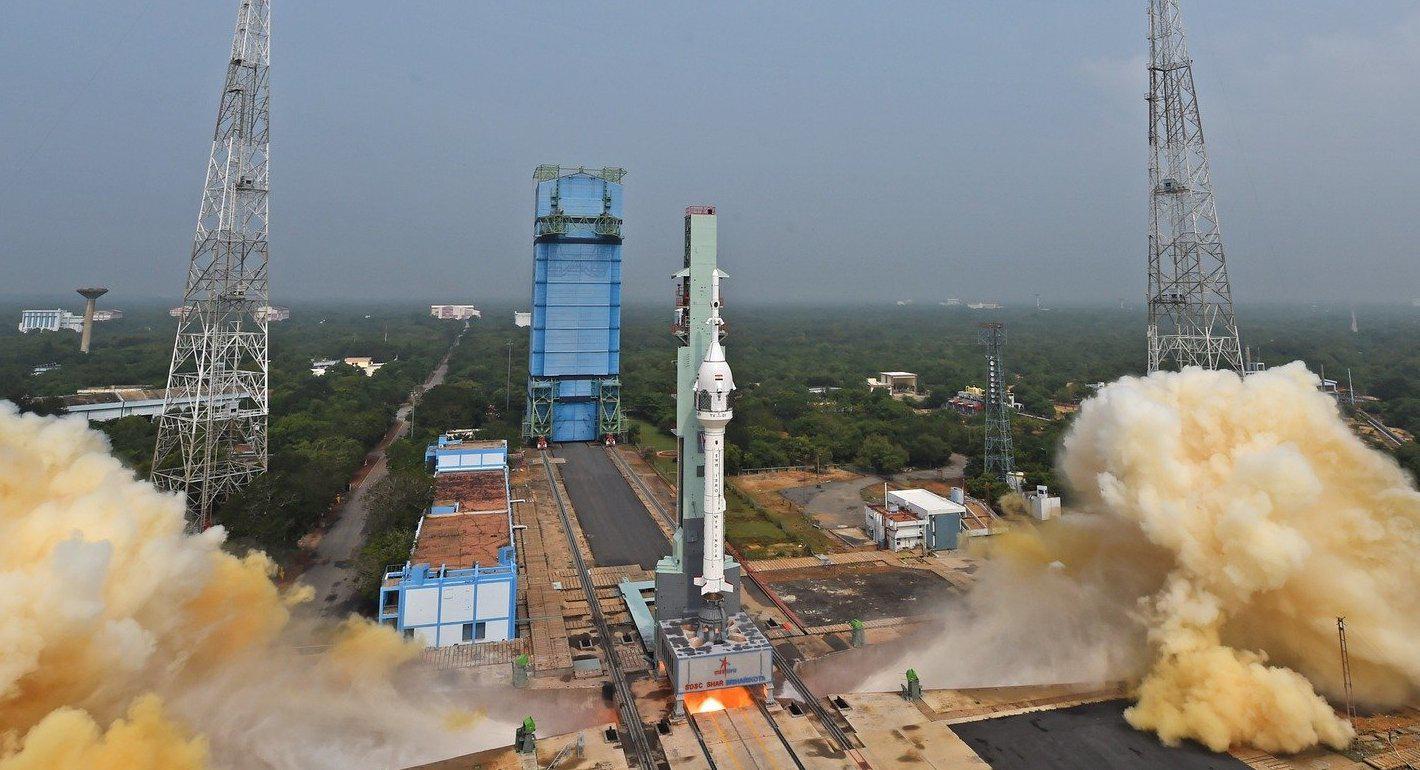
In 2016, ISRO successfully tested a scaled version of the space shuttle that it calls its Reusable Launch Vehicle (RLV). In addition, ISRO has been quietly working on its human spaceflight program for over a decade and plans to test launch Gaganyaan-1, its indigenously developed human ferry, in 2024. As a lead-up to that, ISRO launched the Flight Test Vehicle Abort Mission-1 (TV-D1) on October 21, 2023.
The Indian space program, which began in the early 1960s, is among the world’s oldest. The first sounding rocket launch from the Thumba Equatorial Rocket Launch Station (TERLS) in November 1963 marked the beginning of ISRO’s journey. TERLS was housed in a church in a fishing hamlet by the sea in Kerala. Since then, India's list of space accomplishments has only grown. Stephen Clark's recent Ars Technica piece is an excellent primer on these achievements.
India’s space program is not a by-product of any military program. It was built from the ground up to meet a newly independent nation’s developmental goals. ISRO's founder, Dr. Vikram Sarabhai, had a socioeconomic development-centric vision for the organization. One of the early experimental projects conducted by ISRO serves as an excellent case study of this. In 1975, the organization conducted the Satellite Instructional Television Experiment (SITE) to demonstrate the power of space applications. The experiment ran for a year, during which SITE broadcast informational television programs produced by All India Radio to 2,400 extremely remote Indian villages using NASA’s Applications Technology Satellite-6 (ATS-6). The experiment demonstrated how space broadcasting could reach remote areas at a reasonable cost. It also helped ISRO gain technical experience in the field of satellite communications, which paved the way for the organization’s Indian National Satellite System series (INSAT).
Organizational Factors Behind ISRO’s Success
ISRO’s recent successes are an outcome of several decades of patience, perseverance, and commitment from a long line of scientists and visionary leaders. For instance, ISRO’s lunar missions owe themselves to former chairman Dr. Kasturirangan. In 1999, he directed a pioneer in earth observation, Dr. George Joseph, to study the rationale and requirements for a future lunar exploration program for India.
Two decades later, Chandrayaan-3’s success is the most compelling evidence yet of the country’s deep intellectual and technical reserves. Unlike some of the pioneers, many of ISRO’s current cadre of scientists and engineers are predominantly trained in India and, most notably, haven’t studied at the rather well-known Indian Institutes of Technology (IIT). ISRO is able to systematically bring out their cadre’s best.
India stands somewhat apart, if not tall, in the world of space chiefs. ISRO chairpersons have always been scientists and engineers from among its staff, never administrators or bureaucrats foisted upon the institution. Besides, India doesn’t change the ISRO chief with election cycles. This minimizes disruption, ensures continuity, boosts morale, and saves time and money.
Mathieu Weiss, who has been heading the French space agency’s liaison office in Bangalore for over a decade, has his own take on what makes India’s approach unique. He believes that the Indians take a simpler and more pragmatic approach to design. In a conversation with me, he said, “What is fascinating is the way Indian engineers design space projects. In Europe and the United States, we design spacecrafts on the principle of Formula 1. Here in India, they do so in the spirit of the Jeep. Indians build robust and efficient systems with the same reliability as ours.” Weiss adds that “beyond the fact that Indians favor simplicity and pragmatism, the time factor plays a big role. A Chandrayaan-3-type mission would require five to ten years of preparation in Europe or the United States, compared to eighteen to thirty months in India.”
Milestone by milestone, ISRO has charted a steady course toward self-sufficiency and technological independence. ISRO has focused on indigenization to build everything a nation needs for comprehensive space infrastructure—antennas, ground stations, launch vehicles, software for applications, satellites for telecommunications, earth observation, meteorology, and navigation. In geopolitical terms, this allows India to exercise strategic autonomy in developing, deploying, and utilizing space for a variety of applications, both civilian and military, while keeping the door ajar for international cooperation.