

Commentary
Sufyan Alissa

REQUIRED IMAGE
Jordan’s King Abdullah II has stated that economic reform is one of his top priorities, yet it remains hindered by two major obstacles: a lack of public support, and the government’s inability to implement deep reform.
Source: Carnegie Endowment
Jordan’s King Abdullah II has stated that economic reform is one of his top priorities, yet it remains hindered by two major obstacles: a lack of public support, and the government’s inability to implement deep reform.
In Rethinking Economic Reform in Jordan: Confronting Socioeconomic Realities, Sufyan Alissa argues that the general public is skeptical about reforms because previous efforts failed to address the major social and economic problems affecting the majority of its citizens. Likewise, reform efforts face severe resistance from elites who benefit from the status quo.
Key Findings:
• Initiated under severe economic crisis conditions, the reform process in Jordan has been slow, selective, and uncoordinated. Jordan has stabilized its economy and engaged in a process of trade and financial liberalization and privatization, but has failed to find long-lasting solutions to the major social and economic challenges facing it. Informal safety nets have helped Jordanians cope with rising prices and reduced the impact of poverty and unemployment, delaying a stronger push for deep economic reform.
• Jordan needs to confront its major social and economic realities, including poverty, unemployment, public debt, and high dependency on foreign aid. Failure to address these challenges may pose a real threat to social and political stability in the country, especially given the political frustration linked to unresolved problems in the region such as the Arab–Israeli conflict and the war on Iraq.
• The design and implementation of economic reforms are generally limited to the ruling elite. Given the high turnover in Jordan’s government, there is little incentive for it to implement controversial reforms. Young elites who champion reform are often disconnected from the socioeconomic realities the population faces, and as such, lack public support for their efforts.
• Civil society, political parties, and unions in Jordan are weak, and their role in supporting or blocking reform is limited. Hence the state did not perceive these groups as influential stakeholders to be considered in the process of designing and introducing reform measures.
• The international donor community should support deeper reform and sustainable and equitable growth. They should give more attention to building institutional capacity and social safety net, and should develop more programs for poor communities and to empower the youth.
“Jordan faces key social and economic challenges, but these challenges have not yet reached the breaking point,” writes Sufyan Alissa. “The impact of such challenges on the social and economic conditions of the populations and the political stability of Jordan has been cushioned by current availability of external rents—namely remittances from abroad and foreign aid—and economic and political manipulation by the regime.”
Click on icon above for the full text of this Carnegie Paper.
A limited number of print copies of this Carnegie Paper are available.
Request a copy
About the Author
Sufyan Alissa is an associate at the Carnegie Endowment's Middle East Center. An economist and specialist on Middle Eastern affairs, he previously served at Nuffield College-University of Oxford, the School of Oriental and African Studies-University of London and City University in London. He worked as a consultant for many international institutions, including the International Labor Organization and United Nations Development Program. He received his PhD from SOAS, University of London.

Former Associate, Middle East Center
Recent Work
Sufyan Alissa
Carnegie does not take institutional positions on public policy issues; the views represented herein are those of the author(s) and do not necessarily reflect the views of Carnegie, its staff, or its trustees.

China’s political future will be shaped between now and next October. As the Communist Party enters its intense “campaign season” to prepare for a major political transition in 2027, reading Beijing's actions and responses may become more difficult as domestic politics weigh on its behavior more than usual.

Damien Ma
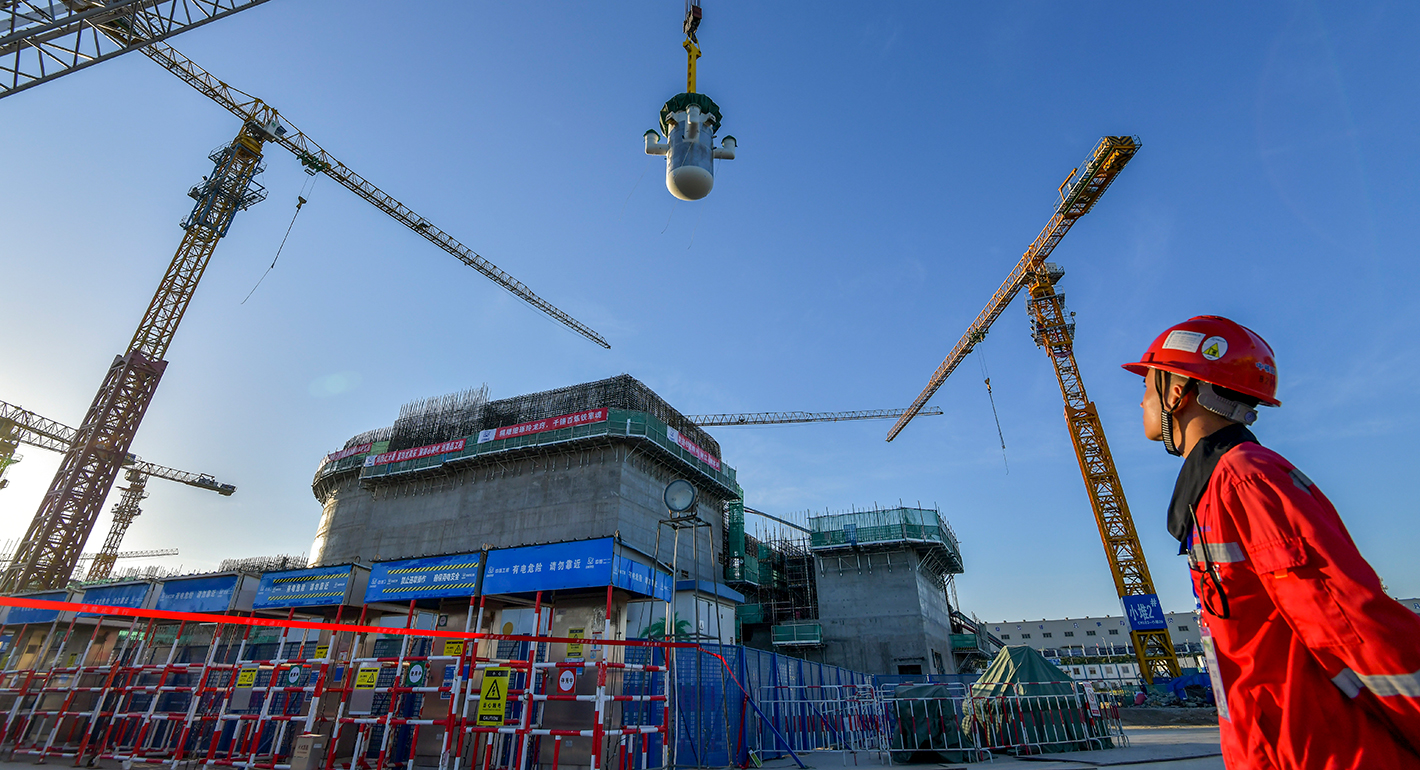
China has showcased its engineering prowess with small modular reactor demonstration projects. But turning these technological achievements into commercial success will be a greater challenge.

Tong Zhao

The Plaza Accord was not an externally imposed punishment of Japan but part of a broader restructuring that Japanese economists and policymakers themselves recognized was necessary. Its effects were undermined, however, when Tokyo responded to the resulting slowdown with policies that exacerbated investment, credit expansion, and the very imbalances the adjustment was intended to resolve.

Michael Pettis
China’s banking crisis in the 2000s was resolved by transferring the costs to households through financial repression—a decision that recapitalized the banks while exacerbating the structural imbalances that continue to shape the Chinese economy today.
Michael Pettis

In the latest Five-Year Plan, the Chinese president cements the shift to an innovation-driven economy over a consumption-driven one.
Damien Ma