Source: Carnegie
Russia's Glass Is Half Full and Leaking
By Michael McFaul
Originally published by Radio Free Europe/Radio
Liberty, March 15, 2004
Because the 14 March presidential election in Russia lacked any drama, analysts
used the run-up to the vote to ask the larger questions about Russia's long-term
trajectory. Predictably, views polarized between the "optimists" and "pessimists," with
extremists in both camps assigning ulterior motives to those on the other side
of the barricades. Some optimists paint the opposite camp as Cold War warriors
and ethnic Russia bashers, while voices from the pessimist camp like to focus
on money being made by President Vladimir Putin's apologists.
This overly simplistic dichotomy has to be abandoned. Good things and bad things
are happening inside Russia at the same time. Both sides need to recognize this
obvious truth. The real question is what if any is the relationship between these
two trends.
Since becoming president, Putin has done much to accelerate Russian economic
reforms. Putin's government and the new pro-Putin Duma have passed into law a
series of fundamental reforms, including a flat income tax of 13 percent, a reduced
profit tax (from 35 to 24 percent), a new Land Code, and new legislation on currency
liberalization. Under Putin, the government has also balanced the budget for
several years in a row and sharply reduced international borrowing.
In parallel to these reforms, the economy has boomed. Sparked by the August
1998 de facto devaluation and fueled steadily since by high world oil prices,
the economy has grown every year since 1999. Russia's stock market is soaring;
foreign direct investment hit an all-time high in 2003; hard-currency reserves
are bursting; inflation is modest; and real per capita incomes have grown by
more than one-third since Putin came to power. This is a good news story that
cannot be denied by the "pessimists."
In parallel to these positive indicators of economic reform and growth, Russia's
political system has become less pluralistic on Putin's watch. Putin did not
inherit from former President Boris Yeltsin a consolidated democracy. On the
contrary, at the end of Yeltsin's rule, democratic institutions were weak and
fragile. In his first term as president, Putin has done nothing to strengthen
democratic institutions and much to weaken them still further.
In is first term in office, Putin continued a brutal and ineffective war in
Chechnya, acquired de facto control of all major national television networks,
turned both the Federation Council and State Duma into rubber stamps, and tamed
regional barons who once served as a powerful balance to Yeltsin's presidential
rule. He has arbitrarily used law enforcement structures to jail or send into
exile political foes. He has removed candidates from ballots and rigged regional
elections; harassed and arrested human rights activists, outspoken journalists,
and environmental leaders; and weakened Russia's independent political parties
and civil society.
The 14 March presidential vote was the least competitive election in Russia's
post-communist history. If, as alleged, more than 1 million voters disappeared
from the registers between December and 14 March, it will also rank as one
of the least fair.
When observed in isolation, each of these steps in Putin's plan can be interpreted
as something besides general democratic backsliding. The government in Chechnya
did not work, and terrorists did and do reside there. Former oligarchs Boris
Berezovskii and Vladimir Gusinskii have many skeletons in their closets. Some
of the regional barons that Putin has reigned in actually behaved as tyrants
in their own fiefdoms. Former Yukos CEO Mikhial Khodorkovskii cannot really
be compared to Soviet-era human rights dissident Andrei Sakharov. And what
president in the world does not want to enjoy a parliamentary majority?
More generally, everyone believes that Russia needs a more effective state
to develop both markets and democracy. But when analyzed together, the thread
uniting these events is clear -- the elimination or weakening of independent
sources of power. This is a bad news story that cannot be denied by the "optimists."
After recognizing the obvious -- good things and bad things are happening
at the same time -- the real question that both sides of this debate should
be addressing is what is the relationship between these two different dynamics?
For instance, some argue that Putin's antidemocratic policies are a necessary
evil for achieving positive economic growth. These apologists cite successful
autocratic reformers in South Korea and Chile in the recent past and in China
today as positive analogies for Putin's Russia.
Without question, reforming economies need functioning states to succeed.
Lawless states or regimes captured by oligarchs do not provide conditions for
growth. Dictatorships, however, do not always provide these conditions either.
On the contrary, for every autocrat that pushes through reform, attracts investment,
and spurs growth, there is another that blocks reform, steals assets, and impedes
economic development. For every China, South Korea, and Chile, there is a Myanmar,
a Pakistan, and an Angola.
The experience in the postcommunist world is clear: The fastest democratizers
are also the fastest economic reformers and the most successful economies.
Poland did not need an iron hand to spur economic growth. The correlation between
growing authoritarianism and economic growth in Russia might be spurious, not
causally related.
It is difficult to connect the dots between Putin's antidemocratic actions
and economic growth. How exactly did the destruction of Media-MOST help Russian
GDP grow? Does the arrest of antiwar activists leading a demonstration in downtown
Moscow actually add to Russia's hard-currency reserves? Is there any evidence
to suggest a positive relationship between the war in Chechnya and Russian
government surpluses? In fact, one might even speculate how much higher Russia's
growth numbers would have been over the last four years if Russian democracy
had been developing rather than eroding.
The burden of causation, however, also falls on the "pessimists." Many
of them argue abstractly that the erosion of democracy in Russia will scare
away investment, slow down economic growth, and lead to more antagonistic relations
with the United States and Europe. They cite anecdotal evidence of rising corruption
during Putin's first term and the Kremlin's hostility to Western strategic
investors in the oil-and-gas sector as signs of bad times to come for the economy
if oil prices drop, and to growing animosity between the European Union and
Russia as an inevitable consequence of Russia's autocratic drift.
Yet, if Russia were a consolidated democracy, would corruption decrease? Would
direct foreign investment grow, and would Russia enjoy better relations with
the European Union? My hunch is "yes." Strong executives in control
of vast resources who are not held accountable by an independent press or opposition
parties tend to be corrupt. They tend not to diversify the economy and not
to push for "structural" or "administrative" reforms. They
tend to consolidate dictatorships, which by definition cannot join clubs like
the EU. My evidence for making this causal claim with respect to Russia today,
though, is still weak.
In trying to understand Russia, we should be asking these questions about
the relationship between political and economic change. At a minimum, we have
to recognize that good things and bad things can happen simultaneously. The
glass can be both half full and leaking.
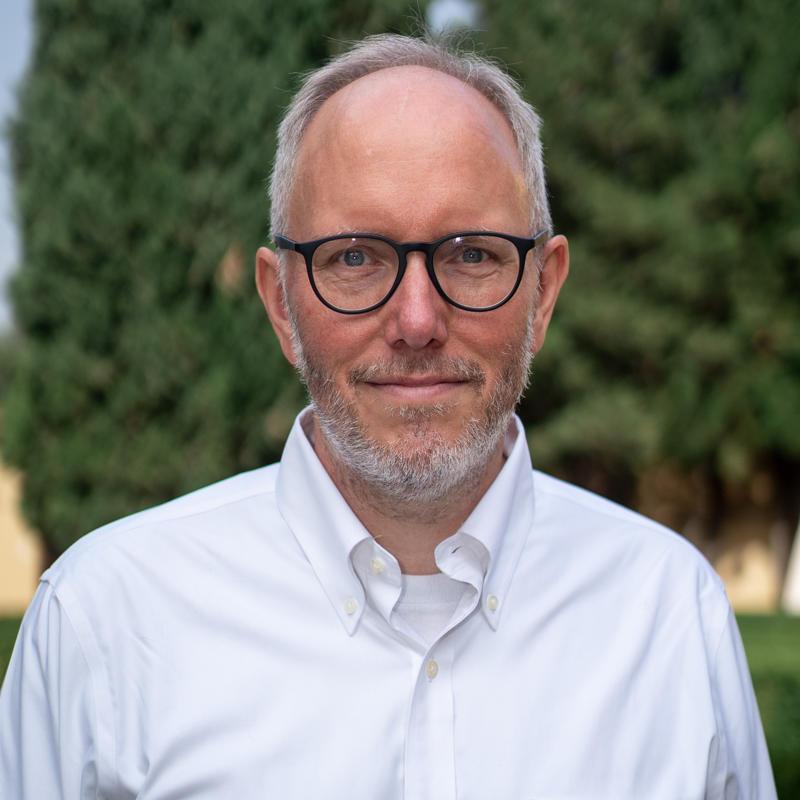
Michael McFaul is an associate professor of political science and a Hoover
fellow at Stanford University. He recently published, with Timothy Colton, "Popular
Choice and Managed Democracy: The Russian Elections of 1999 and 2000."