• Research
  • Strategic Europe
  • About
  • Experts
Carnegie Europe logoCarnegie lettermark logo
EUUkraine
  • Donate
{
  "authors": [],
  "type": "other",
  "centerAffiliationAll": "",
  "centers": [
    "Carnegie Endowment for International Peace"
  ],
  "collections": [],
  "englishNewsletterAll": "",
  "nonEnglishNewsletterAll": "",
  "primaryCenter": "Carnegie Endowment for International Peace",
  "programAffiliation": "",
  "programs": [],
  "projects": [],
  "regions": [
    "North Africa",
    "Egypt"
  ],
  "topics": []
}
Other

Egyptian Current

A backgrounder on the Egyptian Current Party.

Link Copied
Published on Sep 21, 2011

This resource was published on 09/21/2011 and is not updated to reflected changing circumstances.

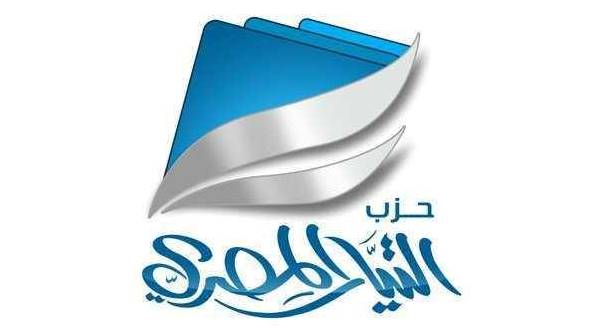
A moderate Islamist party, the Egyptian Current Party was founded by prominent members of the Muslim Brotherhood youth wing who had become disgruntled with the group’s old guard and were unwilling to join the Freedom and Justice Party.  The Egyptian Current Party was a member of the Completing the Revolution Alliance during the 2011-2012 parliamentary elections. It later joined the Moderate Current Coalition.

Major Party Figures

Mohamed al-Kassas: Founder
Islam Lotfy: Founder
Ahmed Abd al-Gawad: Founder

Background

In June 2011, amidst tensions between the youth and leadership of the Muslim Brotherhood, Mohamed al-Kassas, leader of the movement’s youth wing, declined to join the Brotherhood’s official Freedom and Justice Party, announcing his intention to form the Egyptian Current Party.  Shortly after the announcement, the Brotherhood expelled al-Kassas. Ahmed Abd al-Gawad, another member of the Brotherhood’s youth wing, joined the party and was also promptly expelled from the Brotherhood. Mutazz Abd al-Fattah and Sayf al-Din Abd al-Fattah, two moderate Islamist intellectuals, are leading members of the party—al-Fattah has stressed the need for Egypt to “be like Turkey.” The party currently has roughly 5,000 members, including 200 dissident Muslim Brotherhood members.

Al-Tayar al-Masry supports a civil state and the protection of individual civil liberties, embracing Islamic values without the enforcement of Islamic law. Its slogan is “freedom, building, and pioneering,” and one of its founders, Islam Lofty, has described the party as “pragmatic and nonideological.” Although on paper the position of the Egyptian Current is very similar to that of the Freedom and Justice Party, its leaders have criticized the Muslim Brotherhood for its archaic values and for opposing diversity.

Platform

Political Issues

  • Embracing democracy for and political participation of all Egyptians
  • Providing equal rights to all citizens regardless of creed, race, or social status
  • Calling for a civil state in Egypt with Islamic values, not an Islamic state
  • Advocating for good governance and the development of civil society
  • Ending  military trials of civilians

Socioeconomic Issues

  • Making Egypt one of the ten wealthiest and most scientifically advanced countries in the world  by 2030
  • Advocating for social justice and the fair redistribution of wealth
  • Investing in education to increase social capital
  • Guaranteeing equal opportunities to all Egyptians regardless of background
  • Providing adequate housing and universal health insurance for all Egyptians
  • Decreasing poverty

Foreign Policy Issues

  • Affirming Egypt’s identity as Islamic, Arab, and African, and working to strengthen its ties with its sister countries
  • Giving priority to promoting reform in the Islamic, Arab, and African worlds
North AfricaEgypt

Carnegie does not take institutional positions on public policy issues; the views represented herein are those of the author(s) and do not necessarily reflect the views of Carnegie, its staff, or its trustees.

More Work from Carnegie Europe

  • Commentary
    Strategic Europe
    Taking the Pulse: What Issue Is Europe Ignoring at Its Peril in 2026?

    2026 has started in crisis, as the actions of unpredictable leaders shape an increasingly volatile global environment. To shift from crisis response to strategic foresight, what under-the-radar issues should the EU prepare for in the coming year?

      Thomas de Waal
  • Commentary
    Can Europe and Africa Mend Fences?

    Despite the strategic importance of relations between the EU and the African Union, deep divisions remain between the blocs. At their upcoming summit, both partners should strive to build a mutually beneficial cooperation.

      Marta Martinelli

  • EU Pact for Mediterranean
    Article
    The EU’s Dead-on-Arrival Pact for the Mediterranean

    The EU’s new Pact for the Mediterranean aims to reshape the bloc’s relations with its Southern neighborhood. But the initiative lacks concrete measures to address societal divides and the region’s pressing challenges.

      Richard Youngs

  • The EU Needs Values-Based Engagement in the Southern Mediterranean
    Commentary
    Strategic Europe
    The EU Needs Values-Based Engagement in the Southern Mediterranean

    As the EU prepares a new pact for its Southern neighborhood, the union should balance economic and security interests with support for civil society, political reforms, and inclusive governance.

      • Hussein Baoumi headshot

      Hussein Baoumi

  • Paper
    Understanding the Energy Drivers of Turkey’s Foreign Policy

    Turkey’s dependence on energy imports has an impact on the country’s economic and geopolitical orientation. Turkish leaders should devise energy policies that respond to domestic priorities, regional ambitions, and the challenges posed by climate change.

      • Francesco Siccardi

      Francesco Siccardi

Get more news and analysis from
Carnegie Europe
Carnegie Europe logo, white
Rue du Congrès, 151000 Brussels, Belgium
  • Research
  • Strategic Europe
  • About
  • Experts
  • Projects
  • Events
  • Contact
  • Careers
  • Privacy
  • For Media
  • Gender Equality Plan
Get more news and analysis from
Carnegie Europe
© 2026 Carnegie Endowment for International Peace. All rights reserved.