

Commentary
Tech giants are increasingly able to wield significant geopolitical influence. To ensure digital sovereignty, governments must insist on transparency and accountability.
Raluca Csernatoni
{
  "authors": [
    "Tim Maurer"
  ],
  "type": "other",
  "centerAffiliationAll": "",
  "centers": [
    "Carnegie Endowment for International Peace"
  ],
  "collections": [
    "Cyber and Digital Policy"
  ],
  "englishNewsletterAll": "",
  "nonEnglishNewsletterAll": "",
  "primaryCenter": "Carnegie Endowment for International Peace",
  "programAffiliation": "",
  "programs": [
    "Technology and International Affairs"
  ],
  "projects": [],
  "regions": [
    "Iran"
  ],
  "topics": [
    "Technology"
  ]
}
There is growing empirical evidence that new technologies are being sold by companies in North America and Europe to customers in countries that use them to violate human rights.
Source: Helsinki Commission
Chairman Smith, Co-chairman Wicker, Members of the Commission,
It is an honor to testify before you today. Thank you for the opportunity to address the important issue of the role of export controls and internet freedom.
I am an associate at the Carnegie Endowment for International Peace, where I co-lead Carnegie’s Cyber Policy Initiative. For the last six years I have been working at the intersection of human rights, cybersecurity, and internet governance. I currently serve as a member of the Freedom Online Coalition’s cybersecurity working group “An Internet Free and Secure,” am a member of the Research Advisory Network of the Global Commission on Internet Governance.
Export controls are among the most complicated policy issues to address. Export controls combine law, technology, and policy with national- and international-level implications and in this case also sit directly at the intersection of human rights, security, and business. Striking the right balance between benefits and costs is a common challenge across all export control categories for dual-use items. This is especially difficult in the context of new technologies and emerging markets which still lack comprehensive empirical data.
In December 2013, the 41 member states of the Wassenaar Arrangement on Export Controls for Conventional Arms and Dual-Use Goods and Technologies agreed to create two new export controls focusing on “cybersecurity items.1 The proposed implementation of these two new controls by the U.S. government sparked significant controversy last year and touch on four dimensions that are important to consider:My remarks will focus on the first of these four dimensions, controlling exports of technologies that can be used to violate human rights in the context of Internet Freedom, given the focus of this briefing but each of them raises important questions and challenges worth exploring further. In addition to the substantive considerations, process is another important factor to consider. The controversy over the past year and the significant pushback against the U.S. government’s proposed implementation of the two new controls are signs that processes need to be improved. Only two days ago, Secretary Pritzker announced in a letter that
“In response to these concerns...the United States has proposed in this year’s Wassenaar Arrangement to eliminate the controls on technology required for the development of ‘intrusion software’. We will also continue discussions both domestically and at Wassenaar aimed at resolving the serious scope and implementation issues raised by the cybersecurity community concerning remaining controls and hardware tools for the command and delivery of ‘intrusion software.’”
As we enter this new phase in this discussion following Secretary Pritzker’s letter, it is helpful to start by looking back at the original problem that led to these new controls. This is worth highlighting because this history and underlying human rights problem were occasionally lost in the controversy over the past year and has yet to be addressed. It is also worth noting that export controls are only one mechanism among a variety of tools to effectively address this first dimension but an important one which is why this briefing is particularly timely.
The driving force originally pushing for updated export controls were human rights groups who had grown increasingly concerned2 that repressive governments were using new technologies to spy on their citizens.3 These new technologies can be used for different purposes and have been sold on an emerging and growing market. This market first entered into the spotlight after the 2011 Arab uprisings; when the archives of fallen Arab regimes opened to the public, they provided a unique insight into those regimes’ inner workings and trade relationships. This included shedding light on companies in North America and Europe who had exported technologies to security and intelligence agencies in countries ranging from Muammar Gadhafi’s Libya4 to Bahrain.5 In 2011, the Wall Street Journal published a catalog6 shedding light on this burgeoning industry.
One particularly prominent example of the type of company and products that have been at the center of this debate is Hacking Team, an Italy-based company selling technologies designed to access computer networks and collect data. On July 5, 2015, Hacking Team was hacked. The intruder not only changed the firm’s Twitter account to “Hacked Team” but exposed some 400Gb of proprietary data to the public. Subsequent media analysis shed light on Hacking Team’s client relationships with security agencies in more than 20 countries, including some with dubious human rights records such as Sudan.7 Another example illustrates that certain governments use these technologies not only within their own borders. A federal court in Washington is currently weighing a lawsuit8 alleging that the Ethiopian government remotely spied on a U.S. citizen in Maryland. To do so, the Ethiopian government used commercial internet-based technology sold by Gamma International, a company based in the United Kingdom and Germany. This activity was discovered not by the U.S. government, but by Citizen Lab, an academic research center based at the Munk School of Global Affairs at the University of Toronto.
These news reports and research publications also revealed that existing export control regulations did not cover some of the technologies of concern to human rights advocates. Therefore, the French9 and British governments, which were both particularly criticized for allowing the export of technologies to authoritarian governments that eventually used them for surveillance, each submitted a proposal to amend the list of the Wassenaar Arrangement leading to the adoption of two new controls by its full membership in December 2013.
The creation of these two new controls set a precedent by adding a human rights component to the Wassenaar Arrangement. The stated mission of the Wassenaar Arrangement is “to contribute to regional and international security and stability, by promoting transparency and greater responsibility in transfers of conventional arms and dual-use goods and technologies, thus preventing destabilizing accumulations.”10 Unlike its predecessor, the Cold War-era Coordinating Committee for Multilateral Export Controls (COCOM), the Wassenaar Arrangement does not target any state or group of states, nor can members exercise veto power over other members’ export decisions. Rather, the arrangement aims to create a framework for harmonizing national approaches to export controls and to offer a forum for information-sharing.11
In December 2013, Wassenaar signatories, including the United States, the member states of the European Union, Japan, and Russia, reached a consensus on adding the two new aforementioned export controls focusing on “intrusion software” and “IP network surveillance systems” to the arrangement’s list of regulated technologies. These are technologies used to gain access and to monitor data. Some12 have described this addition as an attempt to bring “cyberweapons” into the fold of international arms-control agreements and the U.S. government would later describe them as “cybersecurity items.”13
Because the Wassennaar Arrangement is voluntary and nonbinding, it has no direct effect on national or international law; states must integrate its terms into their respective national frameworks for controlloing exports. Over the nearly two years since the passage of the 2013 amendments, the 41 signatory states have focused on implementing the change. So far, implementation across these 41 states remains uneven and while the majority of the membership including Japan and the member states of the European Union implemented the new controls, implementation by the U.S. has been lagging behind.
Because the Wassenaar Arrangement is updated annually, its signatories have generally well-established mechanisms to implement any amendments, and the United States is no exception. Usually the U.S. interagency process takes six months to implement changes agreed to in the multilateral Wassenaar dual-use-technologies export-control list given the consultative process with industry beforehand through the Department of Commerce’s Technical Advisory Committees.14 However, this time it took until May 2015, nearly three times longer than usual, for the U.S. government to publish its decision through the Department of Commerce’s Bureau of Industry and Security.
This long delay occurred for two reasons. First, there was a prolonged interagency discussion about the implementation of these two new controls. The outcome was not, as it usually is, a final rule but a proposed rule, which enabled the public to provide feedback during a two-month period. This was unusual and an encouraging demonstration of the government’s willingness to engage the public. In fact, Secretary Pritzker’s letter now states that this practice will become institutionalized and a standard mechanism moving forward, a decision to be applauded. This can produce more effective outcomes in the future and help build trust among the actors involved, as long as it is used to meaningfully engage in dialogue rather than used to block action.
The second reason for the delay was that despite the administration’s long internal deliberations, the proposed rule for implementing the new controls met with stiff resistance from major multinational companies as well as from members of the cybersecurity research community once it was made public. During the subsequent two-month public comment period following the publication of the proposed rule, many businesses, industry groups, and security researchers argued that the bureau’s proposal interpreted the Wassenaar language too broadly, echoing more general concern over the wording the Wassenaar Arrangement itself. Companies including Google,15 Cisco and Symantec,16 and firms under the umbrella Coalition for Responsible Cybersecurity17 organized against the government’s formulation. They expressed concern about the potential cost to the industry, the potential effect of slowing down cybersecurity information sharing, and the uneven implementation of the new controls across the Wassenaar membership. Even some of the civil society organizations who had been advocating for an update of export controls18 voiced concern about the possible effects of the changes and broad language on cybersecurity research offering specific recommendations for how to narrow and tailor their implementation.
The reaction made clear that addressing the problem and updating the export-control regime would be complicated for both historical and technical reasons. Historically, much of this debate is reminiscent of the heated discussions around the Computer Fraud and Abuse Act (CFAA) and encryption controls, known as the “Crypto Wars” of the 1990s, which left scars and entrenched positions among those involved. Moreover, in several cases over the past two decades, federal prosecutors stretching the law’s language have used the CFAA to pursue harsh court sentences.19 Cybersecurity researchers worry that an overly vague or broad regulation could be similarly used in the future. It is therefore no surprise that the U.S. government’s proposed implementation of the new controls resurfaced old grievances and revealed significant levels of mistrust among some of the actors involved.
Moreover, the proposed rule exceeded the original language of the 2013 amendment to the Wassenaar Arrangement. That wording had focused more narrowly on network-surveillance systems and intrusion software that is usually developed by companies for sale to governments, not by individual researchers. By contrast, the U.S. proposal outlines a policy of “presumptive denial” and is therefore inclined to deny rather than approve exports and specifically references “zero-day exploits,” the vulnerabilities in software that remain undetected and have been known for zero days. Cyber researchers often seek out such vulnerabilities to test a system’s security and to alert developers to weaknesses. There are also so-called bug bounty programs and an active market where such vulnerabilities are traded. As the Electronic Frontier Foundation20 argues, “the only difference between an academic proof of concept and a 0-day for sale is the existence of a price tag.” The concern is that the new regulations could have a chilling effect on researchers fearful of being found in violation of the letter of the law, even though their objective is the exact opposite. Department of Commerce representatives have stated21 that the proposed controls are not intended to limit security research or even the legal trade in zero-day vulnerabilities, but critics worry that such a chilling effect will occur.
As a result of this feedback, the Department of Commerce, in an unusual departure22 from its normal implementation process, first indicated that it would revise its proposal23 and eventually the U.S. government followed up with the aforementioned letter by Secretary Pritzker on March 1, 2016.
It is clear that addressing this problem can only be successful if coordinated multilaterally and informed by technical analysis.24 Initially, human rights groups expected that the United States would be a leader in implementing these export controls given its prominent Internet Freedom agenda. Now, the United States is part of the minority of countries that have yet to implement the new controls and is reacting to other countries’ implementation rather than proactively shaping the standard itself. As others have already observed, the United States is “home to most of the world's cybersecurity companies, holding the number one provider position in the global market - which topped $75 billion in 2015 and could reach $170 billion by 2020.”25 U.S. leadership on this issue and full investment in striking the right balance can therefore have a significant impact and set an example for others. One of the positive outcomes of the controversy of the past several months is a heightened awareness among all actors involved. The underlying human rights problem that led to the development of the new controls has yet to be addressed.
Export controls can be an effective tool to influence corporate behavior.26 The challenge is designing them so they only target the type of behavior deemed of concern without affecting the rest. Weighing these interests and weighing human rights and security concerns is not a novelty in the context of export controls especially for dual-use technologies.27 However, this is a new and growing industry with a limited amount of data available therefore making this process more complicated.
Moving forward, I therefore recommend focusing on the following two strategic priorities:
With regard to the immediate task of implementing the two new controls in the United States, I recommend two parallel tracks:
At the multilateral level, it has become clear that while the 41 member states agreed to the same language in December 2013, implementation of the new controls has varied widely.31 As Cheri McGuire, vice president for global government affairs & cybersecurity policy at the Symantec Corporation has pointed out in her testimony on January 12, 2016, “[t]he Hacking Team’s public business model was to sell offensive intrusion and surveillance capabilities – the exact technology the Wassenaar Arrangement attempted to target with the new controls. However, the Italian export authorities granted a blanket global license to the Hacking Team allowing them to freely export their products around the world to many of the countries that the Wassenaar rule is trying to prevent from obtaining these tools.”32 Moreover, Gamma’s actions in Switzerland are a powerful reminder that companies are likely to shop for favorable jurisdictions, and that the global impact of export controls will remain limited without a multilateral regime with uniform and global implementation. Therefore, I recommend:
One country particularly worth paying attention to in this context is Israel. Israel is not a member of the Wassenaar Arrangement yet implements Wassenaar controls voluntarily. Israel is therefore also implementing the two new controls, in fact, it has even broadened the language.33 This is particularly noteworthy given Israel’s significant cybersecurity industry, the Israeli government’s having made growing this industry a national priority including support from Prime Minister Benjamin Netanyahu at the top,34 and the unique security threats Israel is facing. Israel’s approach to implementing the new controls is likely to provide further insight into how to strike an appropriate balance between these various interests.
Export controls are only one mechanism in the tool kit to effectively address the underlying human rights issue, as I pointed out at the beginning. They will need to be part of the mix but we also need to consider other tools, namely:
Looking ahead, it will be important to make these new controls meaningful and effective. Otherwise, governments could rely on other existing controls, namely encryption controls, as a substitute to address the unresolved underlying human rights problem. Given that another objective of many civil society and industry actors is a further liberalization of encryption controls in the future building on the historic tend, further liberalizing encryption controls will become significantly more complicated and harder to disentangle if encryption controls will also be used to protect human rights in the future. Relatedly, if encryption controls will be used as a substitute some companies might start developing products without encryption automatically built into them to avoid export controls that might still be of concern from a human rights perspective.
1https://www.gpo.gov/fdsys/pkg/FR-2015-05-20/pdf/2015-11642.pdf
3 Parts of this written statement are based on previous publications I have written and co-authored, for example: http://www.worldpoliticsreview.com/authors/1798/tim-maurer
http://www.isn.ethz.ch/Digital-Library/Articles/Detail/?id=182246
4http://www.wsj.com/articles/SB10001424053111904199404576538721260166388
6http://graphics.wsj.com/surveillance-catalog/
8https://www.eff.org/cases/kidane-v-ethiopia
9http://business-humanrights.org/en/amesys-lawsuit-re-libya-0#c18496
10http://www.wassenaar.org/introduction/index.html
11https://www.gpo.gov/fdsys/pkg/FR-2015-05-20/pdf/2015-11642.pdf
13https://www.gpo.gov/fdsys/pkg/FR-2015-05-20/pdf/2015-11642.pdf
15https://googleonlinesecurity.blogspot.com/2015/07/google-wassenaar-arrangement-and.html
16http://passcode.csmonitor.com/wassenaar-comments#chapter-235070
17http://www.responsiblecybersecurity.org
18https://cdt.org/files/2015/07/JointWassenaarComments-FINAL.pdf
19https://www.eff.org/de/issues/cfaa
20https://www.eff.org/deeplinks/2015/05/we-must-fight-proposed-us-wassenaar-implementation
21http://www.bis.doc.gov/index.php/policy-guidance/faqs#subcat200
22http://digital-era.net/unusual-re-do-of-us-wassenaar-rules-applauded/
23http://www.reuters.com/article/2015/07/29/us-software-exports-regulation-idUSKCN0Q32OQ20150729
26 Eric Rabe, the chief communications counsel for Hacking Team, provided the interesting insight stating in an email to me that Hacking Team attempts to learn about any possible abuse by vetting clients, monitoring reports of abuses, “require[ing] certain behaviors which we outline in our contract,” and “may decided [sic] to suspend support for that client’s system rendering it quickly ineffective.” His latter comment suggests that it is possible for some products to render such technology ineffective quickly even after the delivery of the system when the customer is found to contribute to human rights violations.
See also: http://www.slate.com/articles/technology/future_tense/2014/05/wassenaar_arrangement_u_s_export_control_reform_keeping_surveillance_tech.html
27http://www.theguardian.com/world/2012/jul/13/arms-trade-arab-and-middle-east-protests
29https://cdt.org/files/2015/07/JointWassenaarComments-FINAL.pdf
30 An alternative to creating this new list would be selecting or combining existing lists from the Commerce Country Charts: https://www.bis.doc.gov/index.php/forms-documents/doc_view/14-commerce-country-chart
31 http://www.worldpoliticsreview.com/authors/1798/tim-maurer
https://oversight.house.gov/wp-content/uploads/2016/01/McGuire-Symantec-Statement-1-12-Wassenaar.pdf
32https://oversight.house.gov/wp-content/uploads/2016/01/McGuire-Symantec-Statement-1-12-Wassenaar.pdf
33https://www.lawfareblog.com/can-export-controls-tame-cyber-technology-israeli-approach
35http://www.guardian.co.uk/technology/2011/nov/01/governments-hacking-techniques-surveillance
37https://www.globalnetworkinitiative.org/
38 Yet, as long as there are companies whose business does not depend on brand reputation and who refuse to follow due diligence with respect to human rights, three is need for a regulatory framework to provide a legal basis for governments to act if necessary.
40http://eur-lex.europa.eu/LexUriServ/LexUriServ.do?uri=OJ:L:2012:016:0001:0032:EN:PDF
41https://www.treasury.gov/resource-center/sanctions/OFAC-Enforcement/Pages/20120423_33.aspx
Carnegie does not take institutional positions on public policy issues; the views represented herein are those of the author(s) and do not necessarily reflect the views of Carnegie, its staff, or its trustees.

Tech giants are increasingly able to wield significant geopolitical influence. To ensure digital sovereignty, governments must insist on transparency and accountability.

Raluca Csernatoni
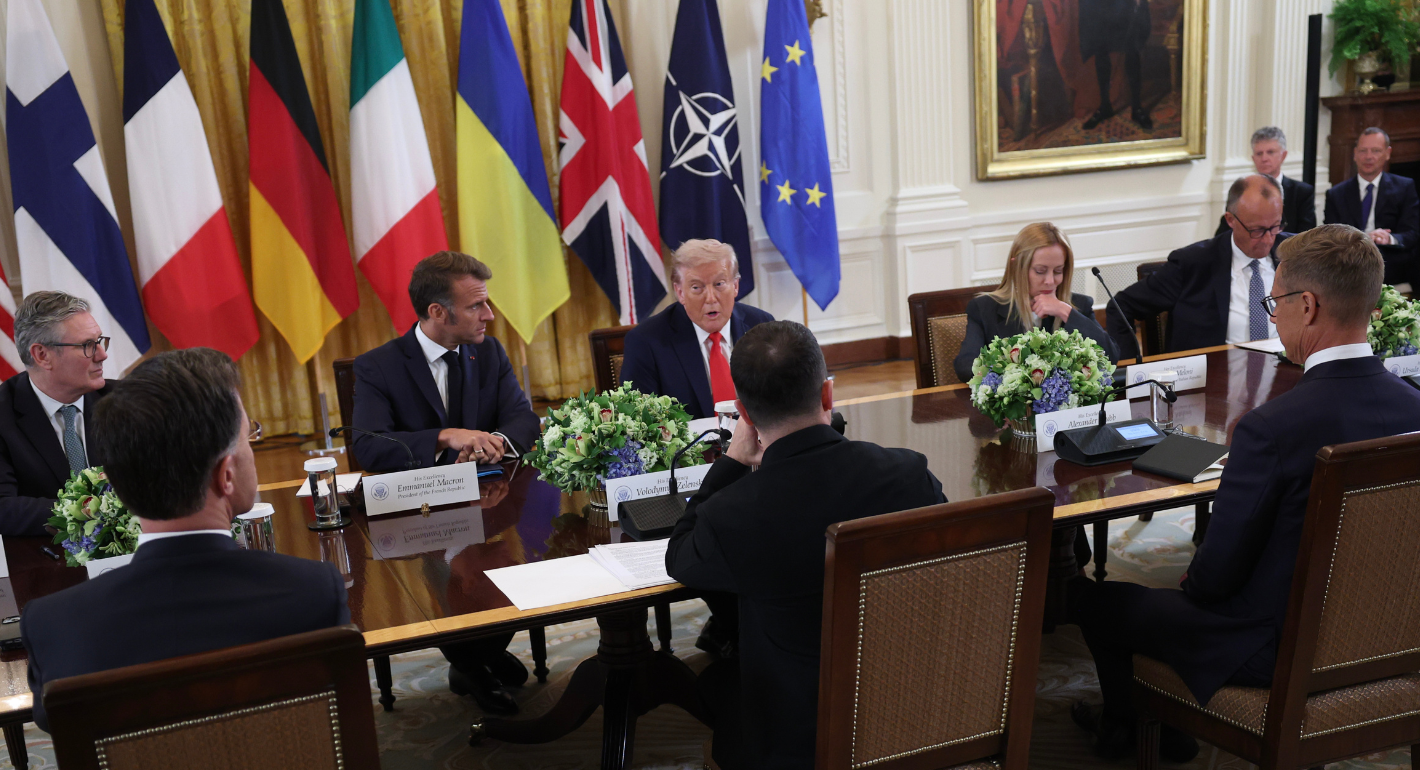
The second Trump administration has shifted the cornerstones of the liberal international order. How the EU responds will determine not only its global standing but also the very integrity of the European project.

Rym Momtaz

To turn U.S. strikes on Iran’s nuclear program into a long-term resolution, Washington should seize the moment and cooperate with France, Germany, and the UK on diplomatic talks.
Rym Momtaz

The EU’s pursuit of tech sovereignty has often sidelined the role of democracy in the digital sphere. The union should adopt a tech citizenship strategy that promotes citizen engagement, democratic innovation, and accountability.

Richard Youngs

The EU’s quest for strategic autonomy in the digital domain is challenged by national interests. Brussels can set a bold direction on tech sovereignty, but its success will require a robust framework and delicate compromises.

Raluca Csernatoni, Sinan Ülgen