

Commentary
Israeli-Lebanese talks have stalled, and the reason is that the United States and Israel want to impose normalization.
Michael Young
{
  "authors": [
    "Yezid Sayigh"
  ],
  "type": "commentary",
  "blog": "Diwan",
  "centerAffiliationAll": "",
  "centers": [
    "Carnegie Endowment for International Peace",
    "Malcolm H. Kerr Carnegie Middle East Center"
  ],
  "englishNewsletterAll": "",
  "nonEnglishNewsletterAll": "",
  "primaryCenter": "Malcolm H. Kerr Carnegie Middle East Center",
  "programAffiliation": "",
  "regions": [
    "Palestine",
    "Israel",
    "United States"
  ]
}
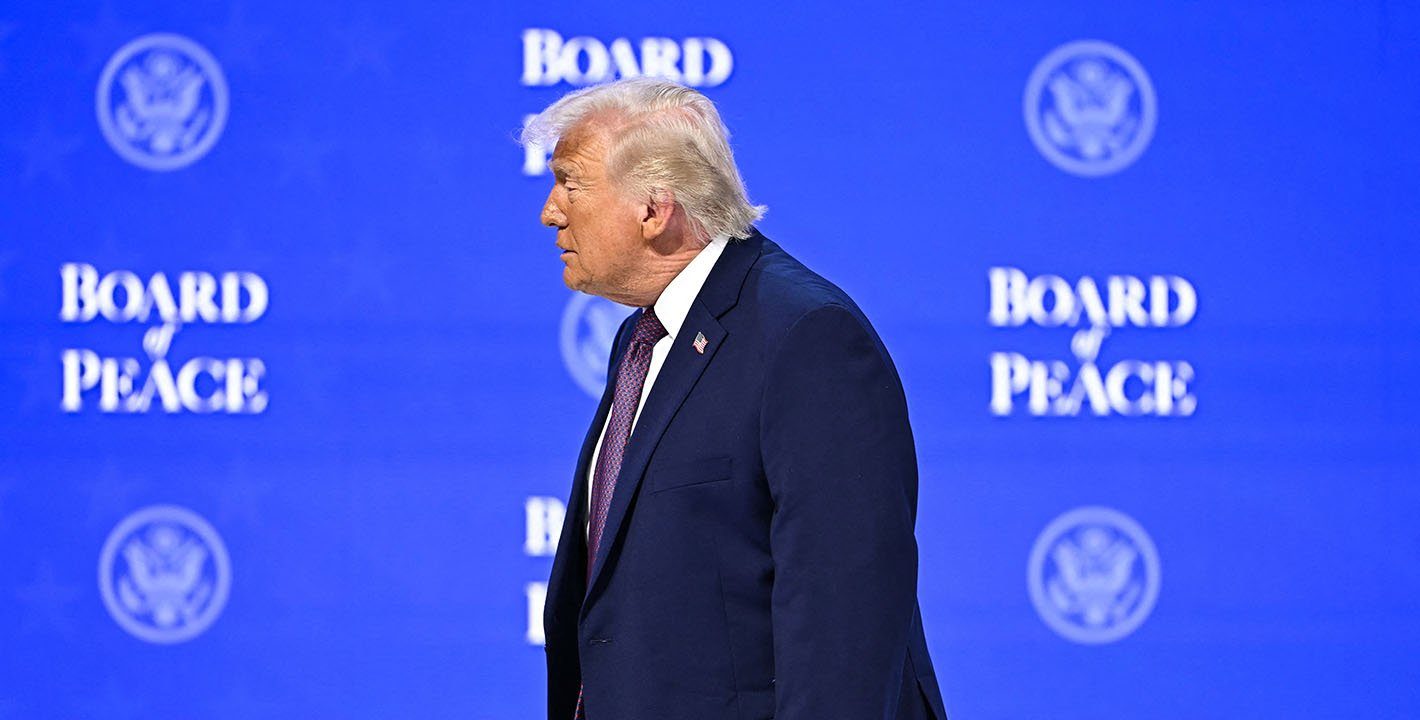
Implementing Phase 2 of Trump’s plan for the territory only makes sense if all in Phase 1 is implemented.
Commenting on the formation of a Palestinian technocratic committee that is tasked with administering Gaza, a “regional diplomat” quoted in the Financial Times on January 13 said, “We need to show they can deliver.” This is the wrong answer. It is the Board of Peace set up and headed by President Donald Trump to oversee Gaza, along with all countries that voted in favour of United Nations Security Council Resolution 2803 approving Trump’s 20-point peace plan for Gaza last November, that have the obligation to ensure the conditions enabling the Palestinian committee to deliver.
Both Trump’s plan for Gaza and his much-vaunted Board of Peace are everything their critics and detractors say about them. As Sara Roy writes, the exclusion of Palestinians as political agents with any control over decisionmaking deprives them of the right to determine their own future. “The best they can hope for is to exchange self-determination for construction projects and accept apartheid in place of genocide.” Looking at a range of “day after” plans for Gaza put forward by Western agencies with no Palestinian involvement, Nur Arafeh and Mandy Turner conclude that they all enable “disaster capitalism: the establishment of a governance structure that denies Palestinians political agency and control over their future; a process of land grabbing, resource extraction, and reconstruction profiteering; and the imposition of security arrangements to enforce the conditions necessary for sustained political and economic control by Israel and its allies.” The bizarre arrangement for Gaza has moreover gained global significance by birthing an even grander Board of Peace that appears designed to displace the UN.
The need for a frank and thorough debate among Palestinians about how they got here, and how they should pursue their struggle for freedom going forward, is urgent. But for now, an immediate starting point is to mobilize political pressure on those assigning themselves trusteeship over Gaza to create conditions for the Palestinian technocratic committee to acquire a meaningful presence on the ground and deliver effective administration and basic services to its population.
There are four primary conditions. First and foremost, the entire civilian service delivery apparatus needs to be protected from Israeli attacks. It will be unable to function if Israel claims the right to attack any service delivery location, infrastructure facility, or individual government personnel on the grounds that it is attacking Hamas members or facilities. The Ukrainian government has maintained civilian service delivery despite four years of Russian attacks, but only thanks to massive financial and military assistance from NATO countries. The National Committee for the Administration of Gaza (NCAG), as it is formally known, will have to do without this kind or level of support. The heavy guns it needs are for the Board of Peace, and especially Trump himself, to bring direct and sustained political pressure to bear on the Israeli government to ensure it allows the NCAG to fulfil its mandate without Israeli attacks.
It follows, second, that all parties must accept the fact that the NCAG has absolutely no hope of setting up an effective administrative structure without employing thousands of public service providers—including teachers and health workers, water, sanitation, and electricity workers, municipal administrators, and other civil servants—who worked under the previous Hamas government. The Palestinian Authority and its dominant Fatah movement in the West Bank ordered the thousands of Gazans on their payrolls to stay home following the 2007 Hamas takeover of Gaza, and simply cannot fill the gap anymore. A large majority of the NCAG’s personnel on the ground will necessarily have to come from the existing cadre of civil servants, therefore, and Israel cannot be allowed to claim the right to vet, let alone assassinate, any of them. Along with this, UN agencies and international aid organizations must be allowed to regain full operational capacity and resume service delivery throughout Gaza, as they have always borne a significant share of this role.
Third, the NCAG must be able to import machinery, fuel, and other goods such as medication, water filters, and so on in order to restore basic civilian services and to start repairing and rebuilding schools, hospitals, and housing, as well as reviving local markets. The task is mammoth. Israel has damaged or destroyed more than 90 percent of Gaza’s homes, twenty-two of thirty-six hospitals, thousands of schools and all twelve universities, and around 89 percent of water and sanitation facilities and waste disposal systems—only 1.5 percent of agricultural land is currently both useable and accessible. The estimated 61 million tons of rubble will take many years to clear, not least due to unexploded ordnance, contaminated materials, and human remains. Trump’s 20-point plan asserted that the Gaza population would be able to move freely in and out of the Strip and promised full aid and the entry “of necessary equipment” to rehabilitate infrastructure and remove rubble and open roads—all “immediately” upon implementation of the ceasefire in October 2025—which Israel continues to block. Trump and the Board of Peace must now deliver on these commitments.
Even then, the viability of Trump’s approach to restoring peace and security to Gaza, and to rebuilding it, requires expanding the NGAC’s zone of territorial control to the entirety of Gaza. This means finally deploying the International Stabilization Force (ISF) that was supposed to put boots on the ground immediately following the ceasefire agreement. There is no sign of this, although American sources privately expect an announcement “in two weeks.” ISF deployment constitutes the fourth primary condition for the success of the NCAG.
The flaws of Trump’s plan and his Board of Peace are many and dangerous, but for this very reason, the above four conditions form a necessary agenda for political action and leverage. The Arab and European states involved in talks about Phase 2, which are being asked to provide peacekeepers and fund reconstruction, must act with urgency if they are to salvage the peace plan. Failure to do so defeats the whole purpose of forming the NCAG, and endangers the entire process going forward—leaving Gaza a hellhole for years to come.
This article is a slightly modified version of an article that first appeared at Yezid Sayigh’s Substack, which can be accessed at: https://sayighyezid.substack.com.
Carnegie does not take institutional positions on public policy issues; the views represented herein are those of the author(s) and do not necessarily reflect the views of Carnegie, its staff, or its trustees.
Israeli-Lebanese talks have stalled, and the reason is that the United States and Israel want to impose normalization.
Michael Young
Beirut and Baghdad are both watching how the other seeks to give the state a monopoly of weapons.
Hasan Hamra

The country’s leadership is increasingly uneasy about multiple challenges from the Levant to the South Caucasus.
Armenak Tokmajyan
The U.S. is trying to force Lebanon and Syria to normalize with Israel, but neither country sees an advantage in this.
Michael Young
The objective is to lock Hamas out of political life, but the net effect may be negative indeed.

Nathan J. Brown