

Commentary
A coalition of states is seeking to avert a U.S. attack, and Israel is in the forefront of their mind.
Michael Young
{
  "authors": [
    "David J. Kramer",
    "Lilia Shevtsova"
  ],
  "type": "legacyinthemedia",
  "centerAffiliationAll": "",
  "centers": [
    "Carnegie Endowment for International Peace",
    "Carnegie Russia Eurasia Center"
  ],
  "collections": [],
  "englishNewsletterAll": "",
  "nonEnglishNewsletterAll": "",
  "primaryCenter": "Carnegie Russia Eurasia Center",
  "programAffiliation": "",
  "programs": [
    "Russia and Eurasia"
  ],
  "projects": [],
  "regions": [
    "North America",
    "United States",
    "Russia"
  ],
  "topics": [
    "Foreign Policy"
  ]
}
Source: Getty
While the United States has made mistakes, the current state of Russian-American relations stems mostly from the Kremlin’s creation of imitation democracy and its attempts to exploit the West and anti-Americanism for political survival.
Source: American Interest
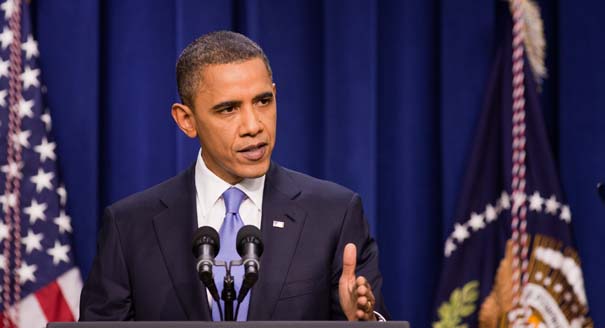
Nearing the end of his second term, George W. Bush sought to salvage Russian-American relations with a visit to Sochi in April 2008, but then a few months later, Russia’s invasion of Georgia brought the bilateral relationship to its lowest point in twenty years. President Obama came to office intent on repairing the relationship and working together with Moscow on a range of global issues. At the start of his second term, however, despite four years of the reset policy, Obama, too, faces a very strained relationship with Russia.
True, the United States has made its mistakes. But the current state of Russian-American relations stems mostly from the Kremlin’s creation of imitation democracy and its attempts to exploit the West and anti-Americanism for political survival. The Kremlin’s imitation game has complicated American and Western policies toward Russia and forced the West to pretend, just as the Russian elite does. The “Let’s Pretend” game allowed both sides to ignore core differences and to find tactical compromises on a host of issues ranging from the war on terror to nuclear safety. This concerted imitation has also had strategic consequences, however. It has facilitated the survival of Russia’s personalized-power system and discredited liberal ideals in the eyes of Russian society. It has also created a powerful pro-Russia Western lobby that is facilitating the export of Russia’s corruption to developed countries.Despite numerous U.S. attempts to avoid irritating the Kremlin, relations between Moscow and Washington always seem to end up either in mutual suspicion or in full-blown crisis. That is what happened under the Clinton and George W. Bush Administrations, and that is what happened after Barack Obama’s first term in office. Each period of disappointment and rupture in relations, which has always been preceded by a period of optimism, has been followed by another campaign by both Moscow and Washington to revive relations. Who is behind these campaigns? For a quarter of a century, it has been the same consolidated cohort of experts in both capitals, most of whom have serious and established reputations and vast stores of experience. (There are a few new additions to the cohort, but they walk in lockstep with the old hands.) After every new crisis, these experts implore politicians on both sides to “think big.” Each time, “big thinking” on the Western side includes encouragement to avoid issues that would antagonize the Kremlin. Thus U.S. administrations looked the other way as the Kremlin created a corrupt, authoritarian regime.
Like the movie Groundhog Day, this is happening all over again. We are falling for the same Kremlin trap. The demise of the reset policy has begotten another campaign to forge yet another new era in Russian-American relations, this time under the banner of “strategic cooperation.” Those advocating this approach present nothing new but simply repeat the same old warnings against ignoring Russia and downgrading relations. Proponents of this approach address only Washington and Western policymakers; for some reason, they never seem to prod Putin and his circle, even though Putin’s actions and behavior have made the development of relations and cooperation increasingly difficult. None of these “strategists” maintains that Russia deserves to be treated differently because it could become an engine of social and economic progress; rather, they believe Russia cannot be ignored because it could act as a spoiler, causing massive problems for the West.
Strategists who look for explanations for previous failures in relations attribute them to Washington’s meddling in Russia’s internal affairs; the U.S. missile defense program, which frightens the Kremlin; or the push to enlarge NATO. But these explanations overlook the Kremlin’s contribution to the breakdown, ostensibly believing that their criticism of the Kremlin will undermine efforts to introduce a strategic approach. ...
Read the full text of this article in American Interest.
Carnegie does not take institutional positions on public policy issues; the views represented herein are those of the author(s) and do not necessarily reflect the views of Carnegie, its staff, or its trustees.

A coalition of states is seeking to avert a U.S. attack, and Israel is in the forefront of their mind.

Michael Young
Implementing Phase 2 of Trump’s plan for the territory only makes sense if all in Phase 1 is implemented.

Yezid Sayigh
Israeli-Lebanese talks have stalled, and the reason is that the United States and Israel want to impose normalization.
Michael Young

Baku may allow radical nationalists to publicly discuss “reunification” with Azeri Iranians, but the president and key officials prefer not to comment publicly on the protests in Iran.

Bashir Kitachaev

The country’s leadership is increasingly uneasy about multiple challenges from the Levant to the South Caucasus.

Armenak Tokmajyan