

Commentary
In an interview, Ishac Diwan looks at the merits and flaws in the draft legislation distributing losses from the financial collapse.
Michael Young
{
  "authors": [
    "Yuhan Zhang"
  ],
  "type": "commentary",
  "centerAffiliationAll": "",
  "centers": [
    "Carnegie Endowment for International Peace",
    "Carnegie China"
  ],
  "collections": [
    "Carnegie China Commentaries"
  ],
  "englishNewsletterAll": "",
  "nonEnglishNewsletterAll": "",
  "primaryCenter": "Carnegie China",
  "programAffiliation": "",
  "programs": [],
  "projects": [
    "China’s Reform Imperative"
  ],
  "regions": [
    "China"
  ],
  "topics": [
    "Economy"
  ]
}
While China's investment story seems contradictory from the outside, the real answers to Beijing's high-quality growth ambitions are hiding in plain sight across the nation's cities.
China’s top leadership has increasingly emphasized the need to transition toward “high-quality growth.” Its big push for “new quality productive forces,” such as advanced manufacturing, renewables, new materials, next-generation information technology, AI, and semiconductors—reflects a strategic redirection aimed at upgrading the country’s growth model.
Yet, the current investment landscape at the local level suggests that the old playbook—prioritizing capacity expansion in anticipation of future demand and growth—remains deeply entrenched in many cities.
Across a sample of 40 Chinese cities,1 investment intensity, defined as the share of investment in GDP, was significantly higher in third- and fourth-tier cities, averaging 58 percent in 2024—well above the national average of around 40 percent. This evidences that heavy fixed asset investment remains the dominant economic driver.
Second-tier cities demonstrate investment intensity that aligns more closely with the national average. These cities have a reduced reliance on capital-intensive, heavy investment growth as compared to their lower-tier counterparts, yet they are not entirely reoriented toward more targeted and productive investment around new quality productive forces, nor have they fully transitioned to a consumption-led growth model.
First-tier cities and some second-tier cities such as Nanjing have reported remarkably low investment-to-GDP and investment-to-employment ratios. This implies that those cities have a different developmental focus vis-à-vis second and lower tier cities – labour intensity, rather than capital intensity, plays a larger role in their economic growth.
The observed heavy investment push—particularly in lower-tier cities—appears to be a direct response to the ongoing real estate downturn. As housing prices fall, many local governments have ramped up industrial and infrastructure investment to compensate for the loss of fiscal revenues from real estate development.
However, more investment has not necessarily translated into higher productivity. The correlation between investment intensity and labor productivity is moderately negative (-0.21), and the relationship is even starker when it comes to total factor productivity (TFP), where the coefficient is -0.62. These figures suggest that many local governments are prioritizing GDP growth through “capital deepening,” even when the underlying economic returns are both uncertain and questionable, given the existing industrial base.
Although many of these investments nominally appear to align with national priorities, overlapping industrial strategies across cities have led to underutilized capacity and intense price competition. These patterns undermine the goal of building innovation ecosystems and raise concerns about inefficient clustering and the “involution” of industrial development.
The consequences of high investment intensity are also visible on the demand side. In non–Tier-1 cities, there is a strong negative correlation (-0.7) between investment intensity and household consumption, as proxied by retail sales of consumer goods. Localities prioritizing fixed asset investment appear to do so, potentially limiting the growth of consumer demand—a dynamic that has long hampered China’s rebalancing goals.
The ongoing real estate downturn further weighs on consumption and exacerbates the investment skew. Declining property values lower consumer confidence, thereby limiting household spending, especially amid the widespread economic uncertainty found today.
Tier-1 cities present a markedly different picture. With more mature service economies, deeper talent pools, and globally integrated supply chains, cities like Beijing and Shanghai have transitioned away from heavy investment.
Interestingly, labor productivity in these Tier-1 cities is lower than expected—not due to inefficiency, but because of the large share of employment in public and service sectors such as education, public administration, logistics, and sanitation. Still, these cities outperform on TFP, with Beijing reaching the efficiency frontier, highlighting the importance of institutional quality, ecosystem development, and human capital in driving sustainable growth.
The diverging trajectories of China’s Tier-1, Tier-2, and lower-tier cities carry significant implications for multinational companies. As regional disparities widen, national-level strategies are no longer sufficient. Success increasingly depends on a company’s ability to calibrate its market entry and investment decisions at the city level.
Tier-1 cities remain optimal destinations for high-value activities such as research and development, regulatory engagement, and premium consumer offerings. Their strong institutional frameworks, access to skilled labor, and alignment with national innovation goals make them natural hubs for long-term strategic positioning.
Select Tier-2 cities—including Nanjing, Wuhan, Hangzhou, and Jinan—are emerging as compelling alternatives. These cities pair growing consumer markets with improving capital efficiency and are well-positioned to absorb new technologies and support scalable operations across key sectors.
By contrast, many lower-tier cities still carry elevated risk profiles. Despite exhibiting some progress toward better targeting investments in sectors such as renewables and clean tech, these localities tend toward over-investment that crowds out consumption and yields excess capacity. For foreign firms, these markets require more cautious and selective engagement.
Over the longer term, the investment outcomes in each city will be shaped not only by sectoral focus but also by the pace of structural reform. For multinational companies, three areas deserve close attention.
First, cities are more likely to allocate resources effectively and encourage sustainable, innovation-led growth if they move toward market-oriented credit allocation, where commercial risk, instead of administrative directives, determines financing.
Second, operating costs and investment risk will be directly affected by enhancements to institutional quality and regulatory transparency such as streamlined licensing, legal predictability and intellectual property protection.
Third, local governments that prioritize household income growth and expand social safety nets will be better positioned to activate consumer demand and reduce dependence on state-led investment.
In principle, China’s policy direction is increasingly clear: move away from massive capital accumulation toward a more balanced, innovation-led growth model, productivity, improved worker compensation, and increased consumption. The framework of “new quality productive forces” reflects this ambition.
But progress will depend heavily on local execution. Complementary improvements in human capital, innovation capacity, and disciplined, market-driven resource allocation will be crucial to ensure that investments achieve their intended outcomes.

In an interview, Ishac Diwan looks at the merits and flaws in the draft legislation distributing losses from the financial collapse.

Michael Young
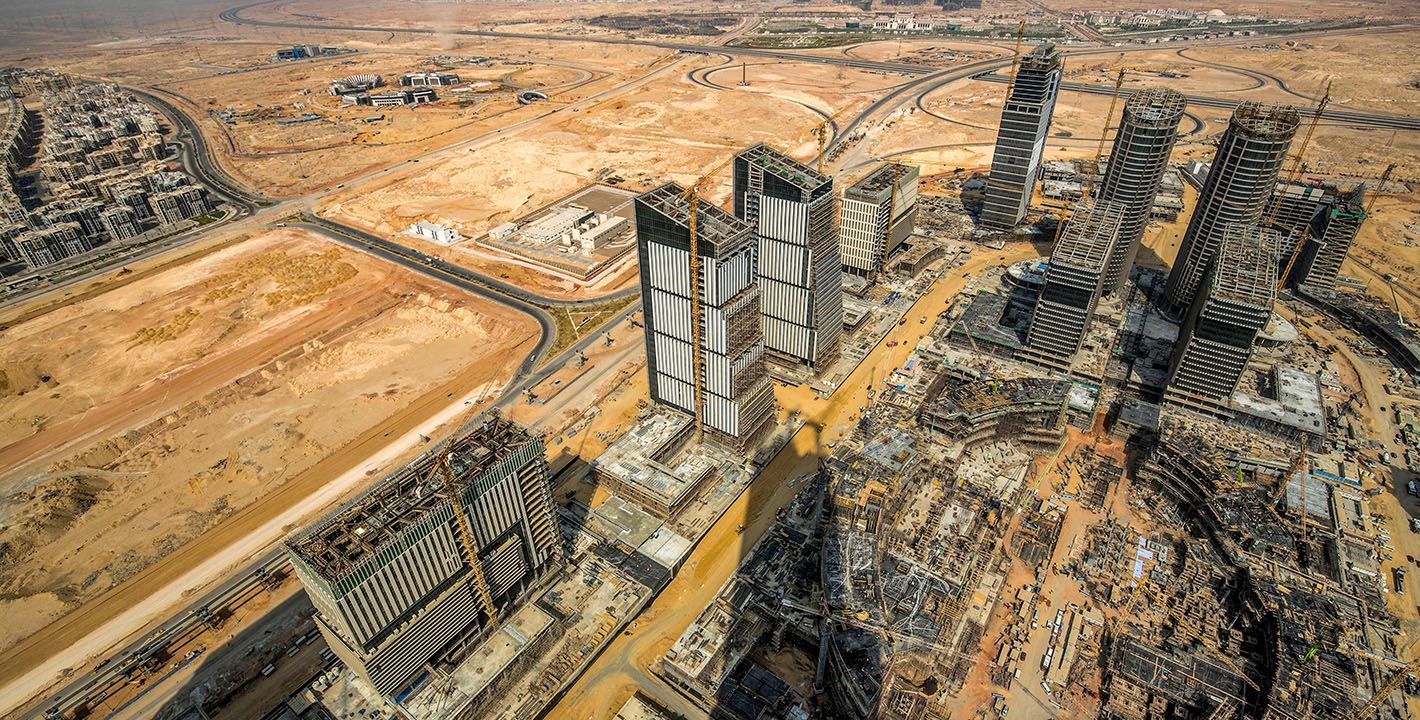
Mustaqbal Misr has expanded its portfolio with remarkable speed, but a lack of transparency remains.

Yezid Sayigh

Arab diaspora business communities in Egypt often mirror the same systemic challenges facing Egyptian businesses.

Nur Arafeh, Yezid Sayigh, Qaboul al-Absi, …

Largely characterized thus far by a single-minded focus on extractivism, Riyadh must commit to greater equitability in its approach to investment and development deals with Sudan, Ethiopia, and Eritrea.
Hesham Alghannam

Once Israel’s war in the territory is brought to an end, the foundational principles guiding reconstruction should be Palestinian self-determination, local agency, and sovereignty.
Nur Arafeh, Mandy Turner