

Commentary
Western negotiators often believe territory is just a bargaining chip when it comes to peace in Ukraine, but Putin is obsessed with empire-building.
Andrey Pertsev
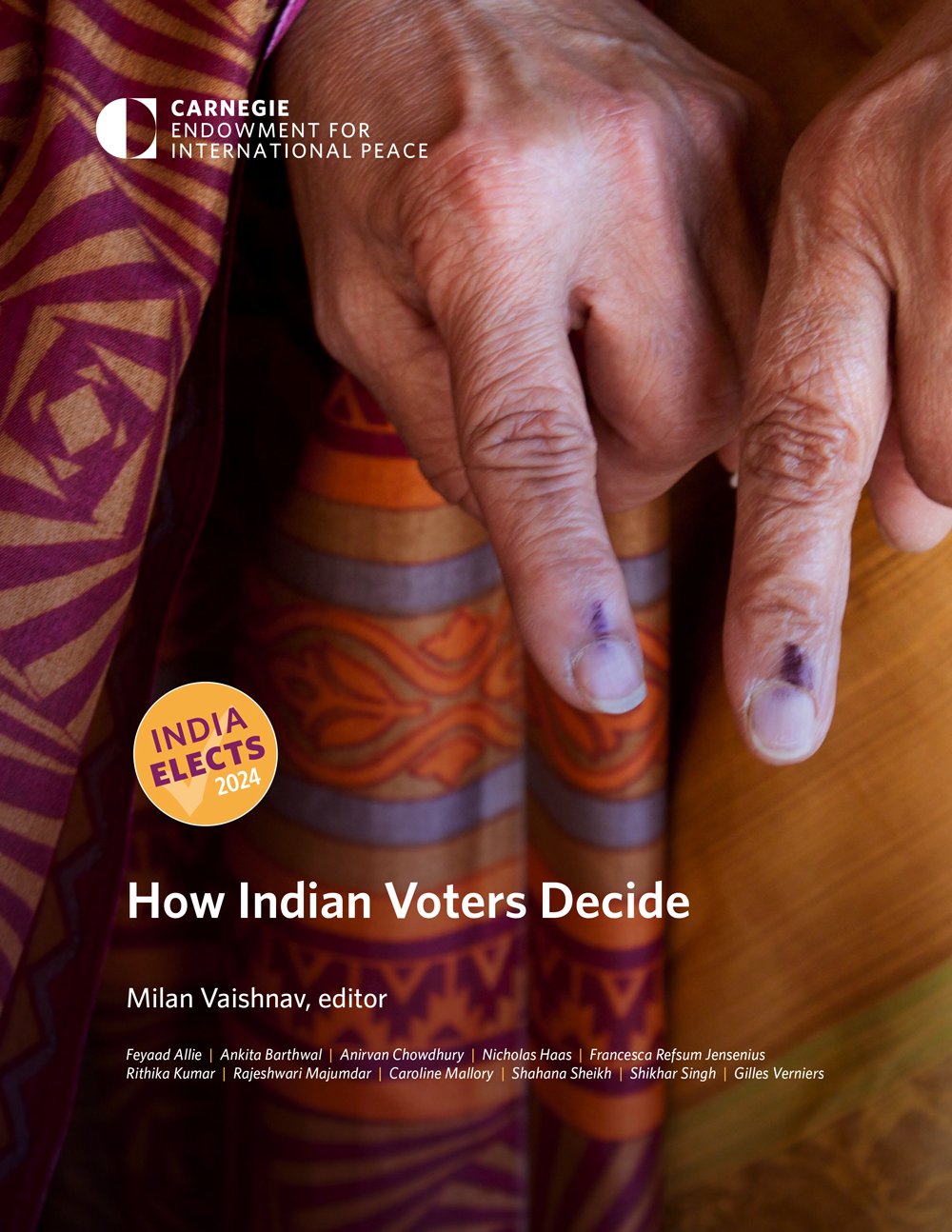
In April and May 2024, India held the largest elections in recorded history. What do recent trends tell us about what makes Indian voters tick?
In April and May 2024, India held the largest elections in recorded history. Over six weeks and seven separate polling days, nearly 950 million Indians were eligible to cast their votes to determine the composition of the next government and the fate of incumbent Prime Minister Narendra Modi and his ruling Bharatiya Janata Party (BJP).
Pre-election surveys indicated that the BJP was headed toward its third consecutive single-party majority in the Lok Sabha (lower house of parliament). The BJP’s own campaign rhetoric, brimming with confidence that its alliance would win 400 seats (out of 543), further fueled a sense of inevitability. Even exit polls published hours before the counting of votes predicted a BJP landslide.
In the end, the famously fickle Indian electorate bucked these popular expectations. Though the BJP formed the government, and Modi retained his position as prime minister for a third term, the ruling party only emerged victorious due to the support of coalition partners. In the end, the BJP won 240 seats, a sharp decline from the 303 seats it notched in 2019. The BJP’s National Democratic Alliance (NDA) partners chipped in an additional 53 seats. On the other side of the political spectrum, the Indian National Congress (more simply known as the Congress Party) nearly doubled its seat tally, claiming 99 seats. The broader opposition coalition, known as the Indian National Developmental Inclusive Alliance(INDIA), won 234 seats.
Although the results were a setback for the BJP, the party still represents the strongest “core”party of any Indian governing coalition on record. Subsequent state assembly elections held in the six months after the general election have strengthened the BJP’s hand and poured cold water on the opposition’s narrative that the BJP’s popularity had peaked.
In the weeks and months since the general election, political scientists, election observers, and pundits have tried to pinpoint the reasons behind the surprise verdict. But to understand the shifting sands of Indian politics, the explanation goes beyond any one election.
This was the objective of a Carnegie Endowment initiative, “India Elects 2024,” launched in December 2023. India Elects 2024 spotlighted sober, data-driven research and analysis from the world’s best young India scholars on the diverse drivers animating Indian electoral politics. The initiative took readers beyond the horse race, focusing on deeper questions about India’s political economy.
This compilation presents ten essays published as part of this initiative between December2023 and September 2024. The essays, written by a diverse set of authors armed with a wide-ranging set of methodological tools, all use unique sources of primary data to uncover the deeper (and often unexpected) drivers of political behavior in India.
For instance, conventional wisdom has long held that ideology holds little salience in the rough-and-tumble arena of Indian politics. Instead, India is considered an exemplar of a classic “patronage democracy,” in which identity and clientelism dictate political choices, as opposed to ideas and values. The essay by Nicolas Haas and Rajeshwari Majumdar offers a useful corrective to the received wisdom; the authors show that not only can ideology in Indian politics be conceptualized and measured, but it can also help explain the BJP’s relative dominance since 2014.
If ideology has been an unspoken driver of political behavior, welfare has been repeatedly cited as a key determinant of voters’ preferences. However, as the essay by Shikhar Singh notes, we know relatively little about how transformative changes in India’s welfare state have tangibly influenced voting behavior. Singh finds that the recent shift toward rule-based selection of welfare beneficiaries has upset the prevailing ethnic-clientelist equilibrium. Yet, this has not necessarily sounded the death knell of identity-based voting. Certain identity groups continue to believe that local politicians from their community are more likely to shower them with state largesse than “outsiders.”
Indian Muslims, who make up roughly 15 percent of the country’s population, constitute one community whose voting preferences were heavily scrutinized in 2024. Muslims have long been viewed as a coherent, almost monolithic voting bloc fundamentally opposed to the Hindu nationalist politics of the BJP. Feyaad Allie’s essay interrogates this assumption and finds that while Muslims do appear to be strategically consolidating their vote behind parties likely to keep the BJP at bay, the political salience of caste within the Muslim community has simultaneously increased. The emergence of these sub-identities has created space for the BJP to make a pitch for Pasmanda (or Other Backward Class) Muslims as part of the party’s efforts to court so-called “backward” voters.
Two essays in this collection examine the role of women, who have become highly sought-after voters in recent years as their political participation has grown. Rithika Kumar finds that, irrespective of the reasons for rising female voter turnout, political parties across the ideological spectrum have made renewed efforts to win their votes. But voting, at the end of the day, is just one element of political participation. Kumar finds that women enjoy much greater autonomy over voting than over other forms of political engagement, such as registering for a voting card or attending a village meeting. However, even when it comes to voting, women exercise much less agency over their decisions than men in their households.
Rhetorically, no party has put women more front and center than the BJP, which has helped reverse the party’s traditional gender gap. Anirvan Chowdhury unpacks the ways in which the BJP has made inroads with women voters. He argues that the BJP has successfully incorporated women into political spaces through its emphasis on seva—or selfless service. Seva, Chowdhury argues, is a gendered norm that characterizes the burdens women assume as part of their everyday household duties. In this context, the BJP’s emphasis on seva helps to frame politics as role-congruent for Indian women.
Whether they are campaigning on the basis of ideology, welfare, or identity, parties are rapidly changing the methods they use to mobilize voters as access to technology deepens. As Shahana Sheikh argues, while online modes of campaigning are gaining steam, parties have not given up on mass in-person rallies. Sheikh introduces the concept of “content-complementarity,” or the two-way relationship between online and in-person campaigning. Drawing on unique data from surveys and social media usage, she highlights the symbiotic relationship between the two.
To be sure, how much parties themselves matter has long been a subject of debate. Some scholars have argued that the partisan attachments of Indian voters are quite thin compared to the connections between individual candidates and their constituents. Ankita Barthwal and Francesca Refsum Jensenius find, to the contrary, that partisanship in India has not only been high and stable over time, but it has also shaped political behavior in significant ways. One of their innovations is to establish an operational measure of partisanship, which they deploy through surveys to develop an intuitive metric of partisan identification. They find that levels of partisanship in India have stabilized, with potentially positive benefits for trust in parties and politics. However, in many societies, deepening partisanship is also linked to a greater degree of interpersonal animus between groups.
Even as partisanship has taken on a more predictable role in Indian politics, individual candidates are far from irrelevant. But, as Gilles Verniers shows, incumbent candidates in India continue to struggle, defying the popular conception in democracies of an “incumbency advantage.” Although there is significant variation by region and party, Verniers finds that a surprisingly large share of incumbents choose not to stand for reelection. While high turnover has its benefits in bringing in fresh voices, it also limits cumulative legislative experience. The end result is a relatively small professional political class, one that is increasingly dominated by the BJP.
Foreign policy has not traditionally been thought of as a pertinent issue for the average voter in India. Most observers have treated questions of foreign policy and national security as“elite” issues which are of little relevance to the masses when compared to subjects like inflation, jobs, and welfare schemes. Milan Vaishnav and Caroline Mallory argue that Modi’s leadership has helped to bring foreign policy to the general public, with attendant benefits for the ruling party. The authors point to factors like the fragmentation of the international order and the BJP’s unique ideologically driven worldview as catalysts driving this change. However, the domestication of foreign policy is not without its potential challenges, including the risks of overreach and adventurism abroad.
The final essay in this compilation, also by Milan Vaishnav and Caroline Mallory, was published after the election. It places the 2024 verdict within the larger framework of India’s evolving party system. The 2014 election that first brought Modi and the BJP to power heralded the era of a new “fourth party system” in India in which politics was once more dominated by a strong national party. Some observers questioned whether the 2024 resultmight augur a return to a coalition era like the kind India experienced between 1989 and2014. Drawing on a wealth of electoral data, the authors argue that while the 2024 verdict represents a curtailing of the BJP’s dominance, many attributes of the new party system persist.
This series would not have been possible without the excellent research and editorial assistance provided by Caroline Mallory. Aislinn Familetti and Annabel Richter of the Carnegie South Asia Program also provided additional support. Special thanks to the Carnegie Communications team, especially Amanda Branom, Alana Brase, Haley Clasen, Anjuli Das, Amy Mellon, and Jocelyn Soly.
Carnegie does not take institutional positions on public policy issues; the views represented herein are those of the author(s) and do not necessarily reflect the views of Carnegie, its staff, or its trustees.

Western negotiators often believe territory is just a bargaining chip when it comes to peace in Ukraine, but Putin is obsessed with empire-building.

Andrey Pertsev
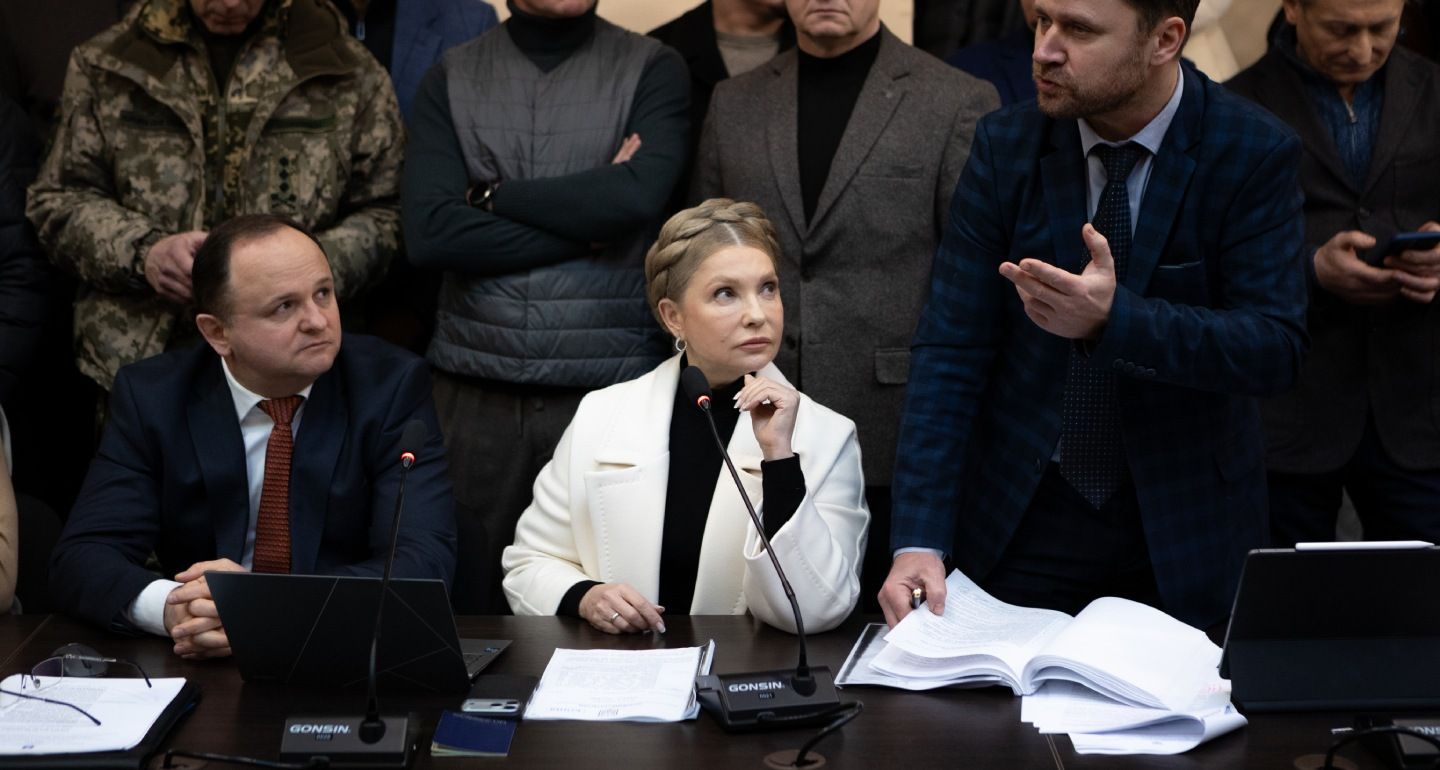
The story of a has-been politician apparently caught red-handed is intersecting with the larger forces at work in the Ukrainian parliament.

Konstantin Skorkin
For years, the Russian government has promoted “sovereign” digital services as an alternative to Western ones and introduced more and more online restrictions “for security purposes.” In practice, these homegrown solutions leave people vulnerable to data leaks and fraud.

Maria Kolomychenko

While appointing Kyrylo Budanov will help shore up Zelensky’s political authority and balance the president’s inner circle, the spy chief’s political ambitions mean he could be a threat.
Konstantin Skorkin
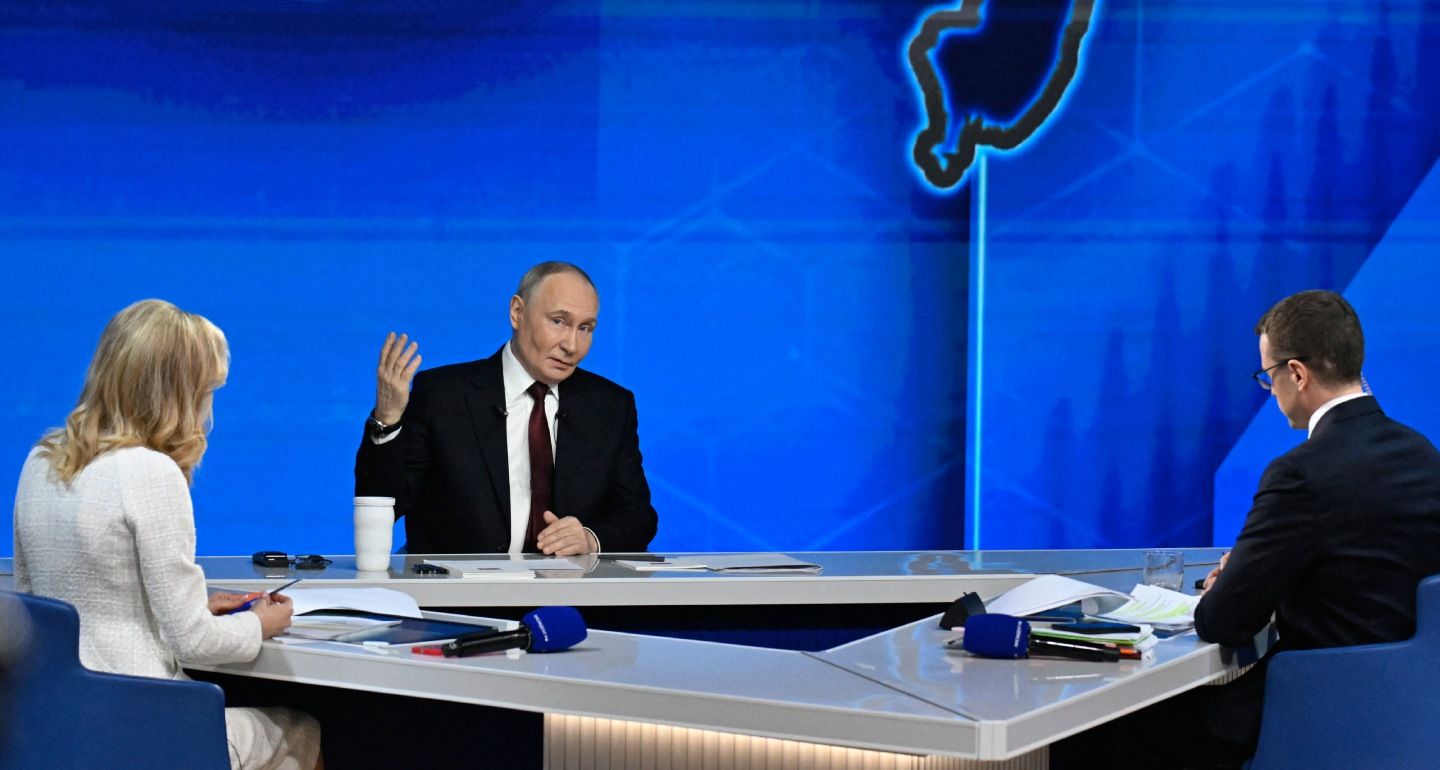
Putin used his annual Q&A to make it perfectly clear: he will not agree to an end to the war until he at least gets control of the entire Donbas.

Vladislav Gorin