After the record election year of 2024, last year brought fewer electoral contests in Africa. But it was nonetheless a deeply impactful year for democracy across the continent, marked by long-standing and newer incumbents clinging to power, newly elected governments seeking to deliver on their campaign promises, and post-coup military regimes consolidating their rule. Youth-led protest movements proliferated but faced challenges transforming their street mobilization into policy influence. And in some places, democracy took a decisive turn for the worse.
At the start of 2026, Africa’s democratic landscape defies a single story of systemic backsliding or reform—and instead is best understood as a collection of diverging and still unsettled trajectories. This article surfaces key trends of the past year and outlines what to watch in the year ahead.
Africa’s democratic landscape defies a single story of systemic backsliding or reform—and instead is best understood as a collection of diverging and still unsettled trajectories.
Incumbents Clinging to Power
A worrying trend for democracy on the continent featured the continued efforts by incumbents to cling to power. The playbook had several familiar hallmarks: exclusion of opposition candidates from political contests, constraints on media and association in the pre-election period, opposition boycotts, allegations of irregularities, and violence and prosecution to repress protest before and after the vote.
Some of these cases were a depressing continuation of business as usual. In Cameroon’s election, to the surprise of no one, ninety-two-year-old President Paul Biya extended his decades-long rule for another seven-year term—remarkably, his eighth. The election took place after the disqualification of the main opposition candidate, Maurice Kamto, and the detention of dozens of his supporters. Citizens who protested the results, alleging fraud, were met with violence and arrests. Along the same lines, in the Central African Republic, the incumbent Faustin-Archange Touadéra won a third consecutive term in December, having abolished term limits in 2023 and limited the opposition’s access to potential campaign venues throughout the election cycle. Uganda has also witnessed an intensifying crackdown on opposition, civil society, and independent media. In a political climate marked by violence, repression, and internet shutdowns, President Yoweri Museveni won his widely-expected seventh consecutive term in office this month. Opposition candidate Bobi Wine, who says he was abducted after the vote but managed to escape, has since gone into hiding, and one of his key allies has been arrested. General Muhoozi Kainerugaba, Museveni’s son and the head of Uganda’s armed forces, has said on social media that he wants Wine dead.
Meanwhile, in Côte d’Ivoire—where sustained economic growth and relative post-conflict stability in recent years made democratic progress appear more plausible—erosion deepened. The October presidential election ultimately echoed the familiar pattern of aging leaders manipulating the rules to stay in power. Eighty-three-year-old President Alassane Ouattara claimed his controversial fourth term, with a playing field that was tilted from the start: The main opposition candidates were banned from standing, and authorities cracked down on public gatherings and protests. In the subsequent parliamentary election, amid opposition boycotts and arrests, Ouattara’s Rassemblement des Houphouëtistes pour la Démocratie et la Paix further entrenched its rule with a landslide win. These results deepen uncertainty over Côte d’Ivoire’s post-Ouattara succession and will likely intensify young Ivorians’ frustration over their lack of meaningful political voice.
Yet the year’s most striking trend was Tanzania’s downward spiral. In the immediate aftermath of Samia Suluhu Hassan’s ascent to the presidency, which came after years of autocratic power consolidation under John Magufuli, the country had been viewed by many as a promising democratic “bright spot.” In the run-up to 2025’s election, however, Hassan escalated repression against her principal opponents, and then launched a brutal post-election crackdown unprecedented in the country’s postcolonial history. After youth protests erupted over her implausible nearly 98 percent victory, the government shut down the internet while security forces shot at unarmed protesters, leaving hundreds dead. The scale of the violence came as a shock, significantly eroding the reputation for political stability and government legitimacy that had endured even as the Chama Cha Mapinduzi (CCM) party has consolidated power.
What to Watch in 2026
Across these disparate cases, supporters of democracy should watch a few key trends in the year ahead. In Côte d’Ivoire and Tanzania, crackdowns on opposition and further executive consolidation of power are likely to erode governmental legitimacy in the public eye. Although both countries are strong economic performers, this pattern risks fueling profound governance challenges in the long run. In Tanzania, going back to business as usual is likely off the table. A key question is whether the CCM will be open to pursuing reconciliation through an inclusive national dialogue and constitutional review process—or whether it will be pushed onto a path of increasing repression to quell demands for change. It also remains to be seen how the crisis will change Tanzania’s oppositional politics in the years to come, potentially spurring more protest mobilization than the country has seen in the past.
In several other countries, the question of succession continues to loom large. Cameroon, Côte d’Ivoire and Uganda are all heading toward what we have elsewhere called “actuarially inescapable transitions.” What will happen when Biya, Ouattara, and Museveni are no longer at the helm, and will these leaders have the foresight to manage handovers before their eventual demise? When these inevitable transitions do occur, they could further embed dynastic governance and elite consolidation, spark instability and conflict, or—perhaps less likely—offer a narrow window for greater political competition. Inside the continent and out, democracy’s supporters should be prepared to seize the moment in support of democratic processes.
Cameroon, Côte d’Ivoire and Uganda are all heading toward what we have elsewhere called “actuarially inescapable transitions.” What will happen when Biya, Ouattara, and Museveni are no longer at the helm, and will these leaders have the foresight to manage handovers before their eventual demise?
A Mixed Track Record for Africa’s Newly Elected Governments
A key question going into 2025 was whether or how newly elected democratic governments would live up to their promises to ensure material improvements in citizens’ lives. The previous year had brought multiple peaceful electoral turnovers on the continent, with Botswana, Ghana, Mauritius, and Senegal all witnessing incumbent party losses, and South Africa welcoming in its first coalition government of the African National Congress–dominated post-apartheid era. Inevitably, these new governments faced pressure to deliver on governance, public services, and unemployment. But many also inherited challenging economic landscapes: declining diamond revenues in Botswana; high levels of public debt in Senegal, Ghana, and Mauritius; and crumbling infrastructure and service provision in South Africa.
While it is still too early to fully assess the track records of these governments, some trends have emerged. On the positive side, several have taken concrete steps toward reform. Senegal’s new leadership has made anti-corruption a stated priority, passing measures to protect whistleblowers and hold former ministers accountable for past corruption, among other steps. In Mauritius, the Alliance du Changement government halted a mass surveillance system introduced by its predecessor and launched a government program that emphasizes rebuilding democracy. Botswana’s new ruling coalition has prioritized economic diversification, but it has also taken steps to strengthen the independence of the Directorate on Corruption and Economic Crime and initiated plans for a new Constitutional Court. Ghana’s new government launched a constitutional reform process aimed at curbing executive power, strengthening judicial independence, and enhancing decentralization.
But there were also some early problems. In Senegal in particular, critics argue that anti-corruption efforts risk sliding into the targeting of political rivals and critics, especially after several journalists were arrested for criticizing the government. Moreover, a rift has opened between President Bassirou Diomaye Faye and Prime Minister Ousmane Sonko, with each trying to position himself as the country’s future leader. South Africa’s Government of National Unity (GNU) also suffered from factional infighting, especially over the country’s budget, in 2025. However, the coalition has so far managed to hold, which creates a continued opening for much-needed institutional reforms and bureaucratic professionalization.
What to Watch in 2026
Supporters of democracy will need to monitor how commitments to constitutional reform unfold in Botswana, Ghana, Mauritius, and Senegal; whether civic space continues to open in places where it has been restricted; and whether anti-corruption efforts proceed in an even-handed and transparent manner. In South Africa, the local elections set to take place toward the end of the year will be a noteworthy gauge of public satisfaction with the GNU.
Across the board, public satisfaction will be an important area to watch, especially as governments attempt to tackle economic problems amid significant fiscal constraints. Senegal, for instance, faces a worsening public debt crisis; Faye has been forced to raise taxes and curb spending even as teachers have gone on strike over low wages and student protesters repeatedly clashed with state security forces over delayed stipends. In Ghana, the government similarly faces mounting public discontent over the country’s debt.
Across the board, public satisfaction will be an important area to watch, especially as governments attempt to tackle economic problems amid significant fiscal constraints.
Supporters of democracy should also monitor the even more newly elected governments in Malawi and Seychelles. Recent turnovers in these countries, where opposition challengers who had come to power as reformers were pushed out by previous ruling parties (and, in the case of Malawi, a former president) illustrate how difficult it can be for new governments to deliver on promised changes. Their position appears particularly tenuous when costs of living remain high and previously dominant ruling parties retain a powerful political infrastructure.
How these newly elected governments fare also has implications for democracy well beyond their particular countries. For African voters—who remain largely supportive of democracy but dissatisfied with how it works in practice—seeing democratic exchanges of power prompt tangible change could build greater confidence in the democratic process. Disrupting the cycle of unmet expectations is particularly germane in the context of the coups that have wracked the continent, often prompted by a sense that democratic leaders were not delivering—a trend we will turn to next.
Military Takeovers Expanding and Consolidating
Last year witnessed the tenth and eleventh successful coups in Africa since 2020, as the wave of coups expanded beyond the conflict-afflicted Sahel to other countries with histories of military intervention in politics.
In Madagascar, youth protests over persistent water and power cuts broke out in September and quickly escalated into demands for systemic change. After soldiers sided with the demonstrators, the elite CAPSAT unit seized power, forcing president Andry Rajoelina—who himself came to power unconstitutionally in 2009—to flee. After being sworn in as president, Colonel Michael Randrianirina announced a military-led transitional government lasting eighteen to twenty-four months.
Likewise, in Guinea-Bissau, the military assumed power in November, days after a presidential election in which incumbent president Umaro Sissoco Embaló faced off against Fernando Dias da Costa. The election results were never released; instead, Embaló left the country while the military claimed it had acted to thwart a coup by unnamed politicians and drug traffickers. Opposition figures, civil society groups, and some regional leaders have questioned this account, suggesting that the takeover may have been orchestrated by Embaló himself. General Horta Inta-a Na Man is now serving as president for the duration of a purported one-year transition program (which the Economic Community of West African States has rejected) with an announced December 2026 election date.
Unsurprisingly, most countries that experienced coups in previous years saw a consolidation of military rule in 2025. The Sahelian coup states in particular saw tightened restrictions on pluralism and dissent: Mali’s junta banned all political parties, and leaders across Burkina Faso, Mali, and Niger announced multi-year extensions of power, with electoral timelines now slipping into the absurd. By contrast, elections in Gabon were actually held earlier than the country’s post-coup transition agreement prescribed, though former military leader Brice Oligui Nguema claimed a landslide victory. Critics have attributed his victory to the regime’s consolidation of power through a recent constitutional referendum, a revamped electoral code, and the systematic exclusion of opposition candidates, while others note that Gabon still offers a welcome contrast to the Sahelian states’ trajectories and has met basic democratic transition milestones. Guinea largely followed the Gabon playbook, with junta chief General Mamady Doumbouya winning the December 2025 presidential election, thereby breaking his earlier promise to hand over power to a civilian government.
Unsurprisingly, most countries that experienced coups in previous years saw a consolidation of military rule in 2025.
What to Watch in 2026
The primary open question is the one that has dogged these countries since their military takeovers: If the coups were driven in large part by dissatisfaction with the performance of democratically elected governments and welcomed by some as a reassertion of national sovereignty, are military governments faring better? Are they succeeding in improving citizens’ material conditions and delivering greater security? In the Sahel, on the economic side, the picture so far is inauspicious: Natural resources are fueling GDP growth in Burkina Faso and Niger, yet for most people, the daily reality is one of continued hardship. Insecurity also remains a major challenge. Per the UN, the Sahel now accounts for half of all terrorist deaths globally. Jihadist militant groups escalated their campaigns using both violence and economic warfare, weakening state control and encroaching on larger population centers. New Sahelian security partnerships with Russia have resulted in widespread civilian harm, with little independent monitoring or accountability—in Mali, jihad-related deaths have more than quadrupled since the arrival of Russia-linked forces, compared to the average yearly death toll over the previous decade. Continued military setbacks could erode regime cohesion and ultimately trigger renewed coup pressures.
If the coups were driven in large part by dissatisfaction with the performance of democratically elected governments and welcomed by some as a reassertion of national sovereignty, are military governments faring better? Are they succeeding in improving citizens’ material conditions and delivering greater security?
Moreover, given public discontent with governance and rising insecurity across Central and West Africa, future coup attempts in the region appear likely. Benin, Niger, and Nigeria’s borderlands have all emerged as hot spots. Benin, for instance, experienced a failed coup attempt in December and is headed for presidential elections in April; it has also suffered increasing violence as Jama’at Nusrat al-Islam wal-Muslimin has expanded its operations.
What Future for the Continent’s Youth Movements?
Finally, Africa was at the center of youth-led movements that have swept many parts of the globe over the past year, often driven by frustration with corruption, gerontocracy, police abuses, and a lack of socioeconomic opportunities. Yet across most countries, these movements were met with significant violence and repression and struggled to turn their mobilization muscle into political and institutional power.
In Kenya, youth protests that began in 2024 over a proposed tax hike continued over the past year, fueled by renewed police violence and lack of economic change. The movement has evolved into broader mobilization for systemic reform. In Nigeria, the #EndBadGovernance movement also persisted in various cities, particularly Lagos, where protesters campaigned for the release of detained activists. In Mozambique, large-scale youth protests broke out after the October 2024 general elections, in which the ruling party FRELIMO was declared victorious amid accusations of fraud from opposition supporters. The opposition candidate, Venâncio Mondlane, contested the results and was forced to flee; when he returned in January 2025, protests were reinvigorated. Since then, activists have continued organizing at the grassroots level, deploying volunteer teams to monitor the release of detained protesters and advocating for accountability for security force abuses.
New youth-led protests also broke out elsewhere on the continent. In Togo, thousands took to the streets in June to protest constitutional reforms that critics argue would allow President Faure Gnassingbé to maintain power indefinitely, as well as the detention of a prominent rapper critical of the regime. Also galvanized by problems of chronic power outages and rising electricity costs, these protests have consolidated into the “June 6 movement” to replace the traditional opposition, which has lost credibility in the eyes of many Togolese. In Morocco, meanwhile, nationwide protests led by the youth movement Gen Z 212 called for increased funding for public health care and education as well as an end to corruption.
In 2025, Madagascar was the only place on the continent where youth protests spurred a change in government. In a few countries, leaders offered partial concessions. King Mohammed VI of Morocco announced increases in health and education spending and proposed measures to increase youth political participation, whereas Mozambique’s parliament passed into a law a Political Commitment for an Inclusive Dialogue, which aims to set in motion constitutional and political reforms. Across the board, however, protesters faced police violence, arbitrary arrests, and harsh legal repression. In Kenya, for instance, authorities have relied on legal intimidation to chill further mobilization: Over 1,500 protesters were arrested and charged after July’s demonstrations.
What to Watch in 2026
In many ways, last year’s wave of Gen Z protests—in Africa and elsewhere—was emblematic of a recurring pattern: young people revolting against a corrupt, unequal, and stagnant status quo, particularly in countries where aging and entrenched elites are struggling to meet the expectations and hopes of a new generation.
As the year unfolds, open questions center on the strategic quandaries facing many of these youth movements. Can activists maintain nonviolent discipline and protect and grow their movements in the face of often brutal violence and legal intimidation? How can they translate their mobilization power into lasting political influence, and push politics in a more programmatic and accountable direction? The leaderless and decentralized nature of youth movements may make them more resilient to some forms of repression—yet it also makes it harder to gain institutional power, which requires electoral organizing and alliances with political parties.
The leaderless and decentralized nature of youth movements may make them more resilient to some forms of repression—yet it also makes it harder to gain institutional power.
Kenya provides a good illustration. A year and a half into the mobilization, differences have emerged about the movement’s long-term strategic agenda: Some activists continue to engage in street protests, while others have joined existing parties and political coalitions and now contend to influence policy from within. Yet, as a result, these institutionalists are accused of being co-opted and abandoning the movement, particularly since succeeding in Kenyan politics often requires adopting or at least accepting the very methods of financialized, ethnicized politics that the protesters are rejecting.
Democracy in Motion, Destination(s) Unknown
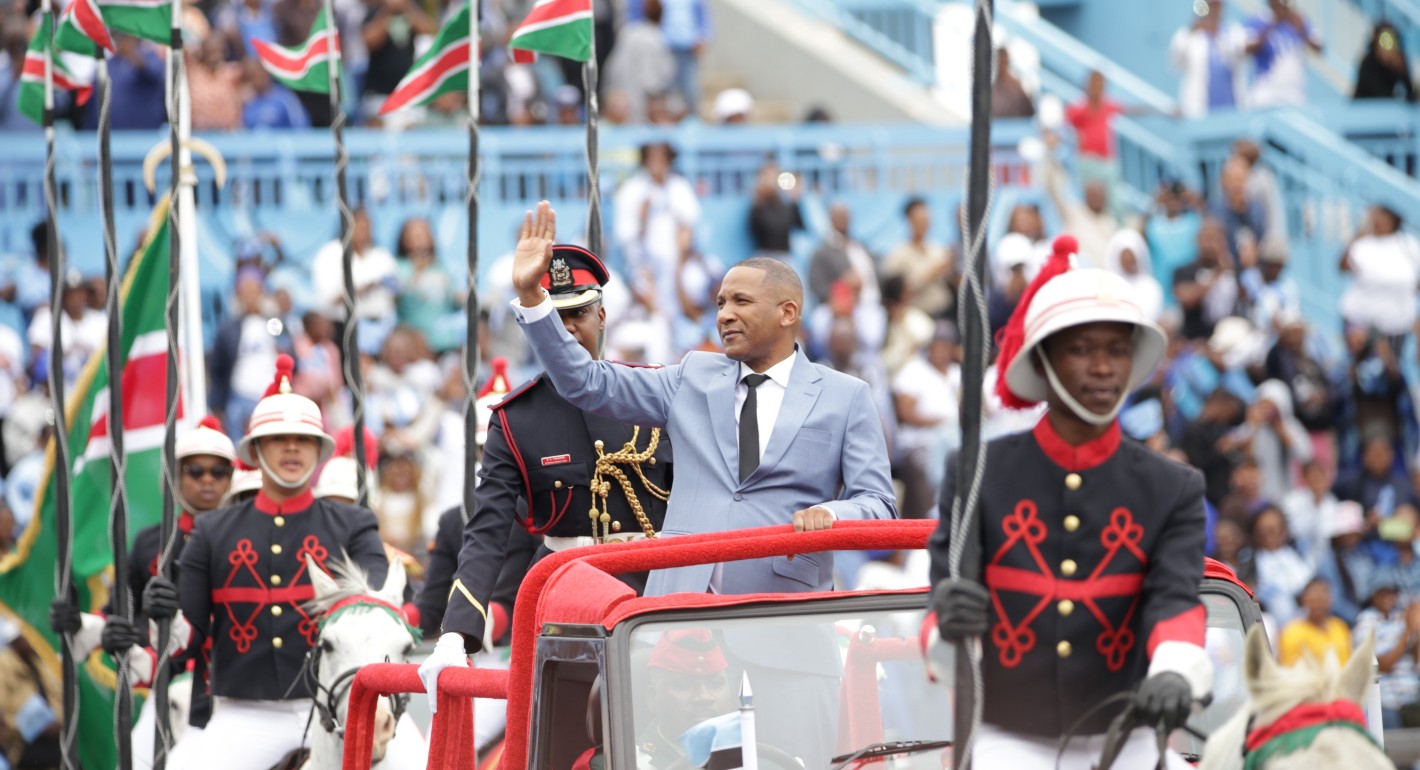
When Duma Boko was sworn in as Botswana’s new president in late 2024, he proclaimed, “This is democracy in motion; this is democracy exemplified, sent as an abiding lesson to the whole world to say to the African continent — it must happen, it can happen and when it does, it is one of the most beautiful experiences a country can go through.” Just over a year later, Boko, the surprise electoral victor, has faced much less surprising headwinds in governing. Yet messages like his inaugural speech, conveying determination and optimism, are still worth hearing and recalling.
With 2026 underway, Africa’s broader democracy story is moving in multiple directions—some more promising than others. Some countries, particularly in the Sahel, Central Africa, and parts of Western Africa, are caught in a vicious cycle of insecurity, state fragility, and authoritarian power grabs. Elected governments in these contexts proved fragile and ineffective, but military regimes are similarly struggling to provide security and economic opportunity. Other countries have now witnessed one or several successful electoral turnovers, gradually deepening norms of compromise and restraint. For these states, the next frontier is demonstrating to citizens that electoral accountability makes a positive difference.
Finally, in several key countries, the longer-term political trajectory appears more unsettled. Many have aging or embattled leaders, dissatisfied citizens, and no recent history of peaceful turnovers—but they also benefit from greater stability and state capacity, like Tanzania and Côte d’Ivoire. The future could hold greater authoritarian power consolidation, some form of hybrid governance with modest pluralism but limited accountability, or even a return to greater political openness.
This kaleidoscopic picture intersects with an exceptionally volatile global environment. Countries that have traditionally championed rights and democracy in their foreign policy have pulled back, and in some cases have even embraced an illiberal vision of their role in the world. These developments pose further challenges for democratic advocates on the African continent, but they may also open the door to new forms of cooperation and intra-African solidarity. Supporters of democracy—both inside and outside of the continent—will have to remain ready to seize windows of opportunity for progress. As Boko’s inaugural speech noted: It can happen.