

{
  "authors": [
    "Chaima Bouhlel",
    "Yassine Brahim",
    "Fayçal Gouia",
    "Marwan Muasher",
    "Sarah Yerkes",
    "Safwan Masri"
  ],
  "type": "event",
  "centerAffiliationAll": "dc",
  "centers": [
    "Carnegie Endowment for International Peace"
  ],
  "collections": [
    "Arab Awakening"
  ],
  "englishNewsletterAll": "menaTransitions",
  "nonEnglishNewsletterAll": "",
  "primaryCenter": "Carnegie Endowment for International Peace",
  "programAffiliation": "MEP",
  "programs": [
    "Middle East"
  ],
  "projects": [
    "Tunisia Monitor"
  ],
  "regions": [
    "North Africa",
    "Tunisia"
  ],
  "topics": [
    "Democracy",
    "Civil Society"
  ]
}
Tunisia’s Corruption Contagion, October, 25, 2017
Wed, October 25th, 2017
Washington, DC
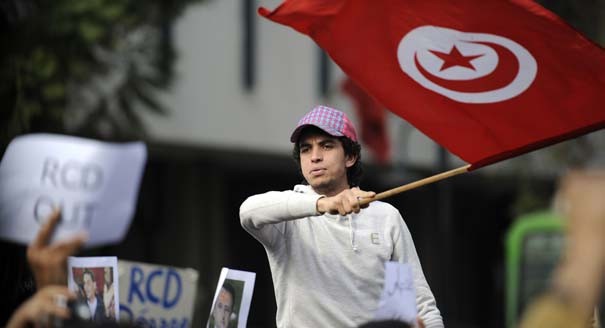
Corruption in Tunisia is perceived to be even more pervasive today than under former president Zine el Abidine ben Ali, despite numerous legal measures and civil society initiatives working to fight it. In their Carnegie paper, “Tunisia’s Corruption Contagion: A Transition at Risk,” Sarah Yerkes and Marwan Muasher argue that corruption has become endemic, as more and more people engage in and benefit from corrupt practices. For the democratic transition to survive, Tunisia must simultaneously address the kleptocracy of the previous regime and the emergence of widespread petty corruption. Can Tunisia’s government and civil society win this fight?
Yassine Brahim provided keynote remarks, and Chaima Bouhlel and Safwan Masri joined Carnegie’s Sarah Yerkes in a discussion of the paper’s findings moderated by Marwan Muasher. Tunisian Ambassador to the United States Fayçal Gouia provided closing remarks.
A light lunch was be served at 12:00 p.m. The discussion began at 12:30 p.m.
Chaima Bouhlel
Chaima Bouhlel is an independent consultant and the former president of Al Bawsala, a legislative monitoring and citizen education NGO.
Yassine Brahim
Yassine Brahim is the leader of the liberal-social Afek Tounes party and former minister of development, investment and international cooperation.
Fayçal Gouia
Fayçal Gouia is the ambassador of the Republic of Tunisia to the United States.
Safwan Masri
Safwan Masri is executive vice president for Global Centers and Global Development at Columbia University, and author of the new book Tunisia: An Arab Anomaly.
Marwan Muasher
Marwan Muasher is vice president for studies at Carnegie, where he oversees research in Washington and Beirut on the Middle East.
Sarah Yerkes
Sarah Yerkes is a fellow in Carnegie’s Middle East Program, where her research focuses on Tunisia’s political, economic, and security developments as well as state-society relations in the Middle East and North Africa.
Carnegie does not take institutional positions on public policy issues; the views represented herein are those of the author(s) and do not necessarily reflect the views of Carnegie, its staff, or its trustees.
Event Speakers
Chaima Bouhlel
Chaima Bouhlel is an independent consultant and the former president of Al Bawsala, a legislative monitoring and civic education NGO.
Yassine Brahim
Yassine Brahim is the leader of the secular liberal Afek Tounes party and former minister of development, investment and international Cooperation.
Fayçal Gouia
Fayçal Gouia is the ambssador of the Republic of Tunisia to the United States.
Vice President for Studies

Marwan Muasher is vice president for studies at Carnegie, where he oversees research in Washington and Beirut on the Middle East. Muasher served as foreign minister (2002–2004) and deputy prime minister (2004–2005) of Jordan, and his career has spanned the areas of diplomacy, development, civil society, and communications.
Senior Fellow, Middle East Program

Sarah Yerkes is a senior fellow in Carnegie’s Middle East Program, where her research focuses on Tunisia’s political, economic, and security developments as well as state-society relations in the Middle East and North Africa.
Safwan Masri
Safwan Masri is executive vice president for Global Centers and Global Development at Columbia University, and author of the new book Tunisia: An Arab Anomaly.