

Report
Mr. Husain Haqqani, Ashley J. Tellis
{
  "authors": [
    "Husain Haqqani"
  ],
  "type": "legacyinthemedia",
  "centerAffiliationAll": "dc",
  "centers": [
    "Carnegie Endowment for International Peace"
  ],
  "collections": [],
  "englishNewsletterAll": "ctw",
  "nonEnglishNewsletterAll": "",
  "primaryCenter": "Carnegie Endowment for International Peace",
  "programAffiliation": "russia",
  "programs": [
    "Russia and Eurasia"
  ],
  "projects": [],
  "regions": [
    "Pakistan"
  ],
  "topics": []
}
REQUIRED IMAGE
Source: Carnegie
Originally published in The Indian Express on May 8, 2002 and The Gulf News on May 9, 2002
Following the embarrassment of the referendum, General Pervez Musharraf is now struggling to convince skeptics about his commitment to democracy. Talking to foreign newsmen, who saw and chronicled the farcical nature of the April 30 referendum, he emphasised the importance of parliamentary elections scheduled for October. After these elections, he was quoted as saying the prime Minister will run the country and ??I will relax and play tennis and golf??.
The statement might impress US State Department officials, clutching at straws to justify their refusal to reprimand their favourite military ruler, as well as those who do not remember Pakistan?s history. But knowledgeable Pakistanis find nothing new in General Musharraf?s latest assertion. In March 1985, after he had nominated Mohammed Khan Junejo as Pakistan?s Prime Minister, General Ziaul Haq gave me an interview for the Far Eastern Economic Review. Asked how he saw his new role after the induction of a new parliament, General Zia said, ??I will now spend my time reading books and playing golf??.
Within three years, however, General Zia ran out of books to read and did not find his golf game sufficiently interesting. He sacked Prime Minister Junejo unexpectedly. Zia?s Chief of Staff at the time, the erudite and refined Lt. General Syed Refaqat, and his spokesman, the late Brigadier Siddiq Salik, both confessed that they had been surprised by Prime Minister Junejo?s ouster. Ironically, Junejo could not be accused of amassing wealth and stashing it abroad or of intolerance towards his opponents ? the arguments invoked against the two most recent former prime ministers. He had simply asserted his constitutional authority in an area that General Zia and his colleagues considered their domain.
Given that background, General Musharraf and his minions should not grudge my refusal to believe that tennis and golf will engage his exclusive attention after the October election. Much of what General Musharraf says these days reads like a rehashed version of statements of Pakistan?s previous military rulers. His claims of creating a new political system and establishing a system of checks and balances seem straight out of Field Marshal Ayub Khan?s book Friends, Not Masters. Consider these lines, and compare them with General Musharraf?s recent utterances:
* ?To my knowledge there has never been so much freedom in this country as there is today??.
* ??I feel that if the man at the top commands respect, he does not have to be a dictator. The people will follow him in their own interest, because human nature demands and, indeed, cannot live without leadership??.
* ??All these reforms were devised and oriented to prepare the country and the people for a representative government in the shortest possible time. The object was not to impose any particular system from above, but to cause a system to grow from below in relation to the social, economic, educational, and moral realities of the situation.?
* ??(Before I assumed power) The sense of demoralisation had seeped down to the masses and they started saying openly, ?let someone save this country.? The implication was obvious: it was the army alone that could step into the breach. That was the only disciplined organisation that could give the country the necessary covering fire, in order to enable it to steady itself and extricate itself from the evils which had surrounded it. Things did not look like improving. But I had hoped that someone might rise to the occasion. I would have been the first person to welcome him and to give him all support. I kept hoping and praying.??
Despite his personal charm and mild manner, General Musharraf is not a new political thinker. He represents the continuity in military thinking that began with Ayub Khan. The failings of Pakistan?s current generation of politicians, and there are many, are not the reason for the military leadership?s contempt for democracy and the political process. They are merely its justification.
Field Marshal Ayub spoke about politicians in the same vein as General Musharraf though the politicians he was dealing with were all among Pakistan?s founding fathers. None of the leaders whom he disqualified from politics was accused of having overseas bank accounts, nor were they charged with squandering public money.
In fact, the only surplus budgets in Pakistan?s history were presented by post-independence politicians preceding Ayub Khan. Pakistan?s first military ruler faced opposition from Mohtarma Fatima Jinnah, the Madar-e-Millat (Mother of the Nation), sister of Quaid-e- Azam Muhammad Ali Jinnah. But his political idiom was still the same as the one being used by General Musharraf against Benazir Bhutto four decades (and many political faux pas) later.
Since the days of Ayub Khan, Pakistan?s military has been looking for junior civilian partners in a power-sharing arrangement that leaves key areas of decision-making in military hands. Since Pakistan?s first military coup in 1958, the objective of military leaders has only been to create an illusion of institution building while ensuring that the military remains the country?s only viable institution.
Thus pseudo-democratic exercises, such as local government elections and referenda to authenticate a military leader, are meant as legitimising exercises not as serious efforts at political reform. The judiciary and Election Commission have been used as rubber stamps instead of being allowed to grow into independent institutions. The Pakistani military simply does not trust the country?s civilians. This alone can explain General Musharraf?s decision to ignore all sane advice and go ahead with the referendum instead of participating himself in general elections.
After all, if the problem with Pakistan?s democracy is that it does not throw up good leaders and General Musharraf believes that he is the good leader Pakistan really needs, why can?t he gracefully retire from the military and transform himself into a bona fide political leader? General De Gaulle did that for France and his legacy has lived on long after him.
France?s recent election shows how politics can only be changed through politics. The errors of judgement of French politicians during the first round of presidential left only a maverick bigot and a discredited incumbent in the arena. Instead, French politicians accepted second best and threw their weight behind the scandal-tainted President Jacques Chirac. For his part, Chirac also promised to accept the reality of the mandate and address the concerns that led to the unusual situation in French politics. Such reaching out is unknown in Pakistan.
Instead of taking refuge in the fantasy of restructuring Pakistani politics through the machinations of the intelligence-military complex, General Musharraf should talk to Pakistan?s politicians including those he does not like. Only a voluntary consensus on the political rules of engagement, and strict adherence to these rules by all including the military, will break the country?s vicious cycle of military rule followed by impotent civilian regimes.
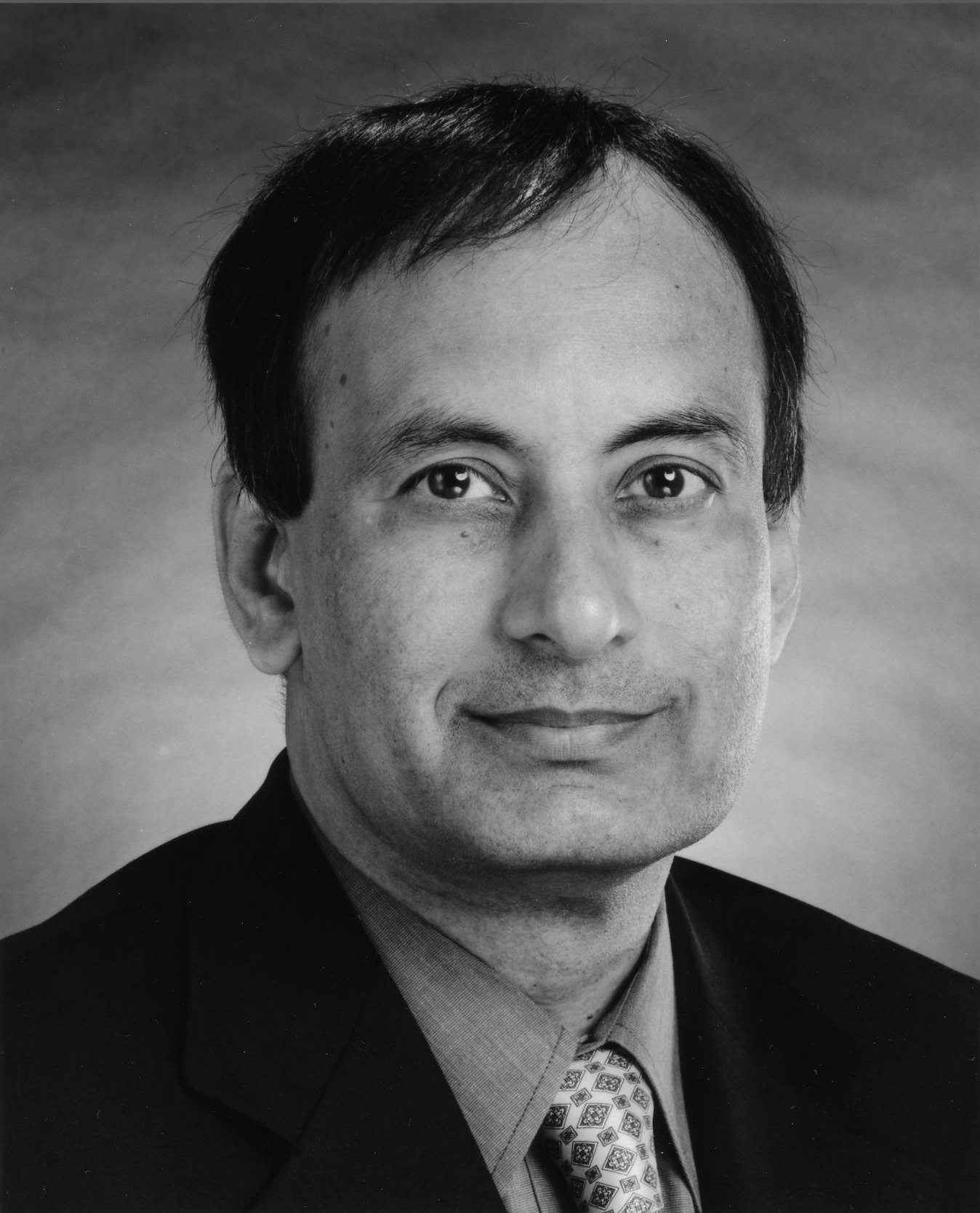
Husain Haqqani is a Visiting Scholar at Carnegie Endowment for International Peace in Washington DC. He served as adviser to Prime Ministers Nawaz Sharif and Benazir Bhutto and as Pakistan?s Ambassador to Sri Lanka.
Former Visiting Scholar
Recent Work
Mr. Husain Haqqani, Ashley J. Tellis
Mr. Husain Haqqani
Carnegie does not take institutional positions on public policy issues; the views represented herein are those of the author(s) and do not necessarily reflect the views of Carnegie, its staff, or its trustees.
The ways in which democracies interact with autocracies can also play a role in sustaining repressive regimes. Democratic governments must adopt more holistic approaches that offset the negative implications of international engagement.
Nic Cheeseman, Marie-Eve Desrosiers

2014 was a year of crisis. Ebola, ISIS, and Donbas are now part of the global lexicon. Eurasia Outlook experts weigh in on how crises on Russia’s periphery affected the country, and what these developments mean for Moscow in 2015.


Thomas de Waal, Maxim Suchkov, Balázs Jarábik, …
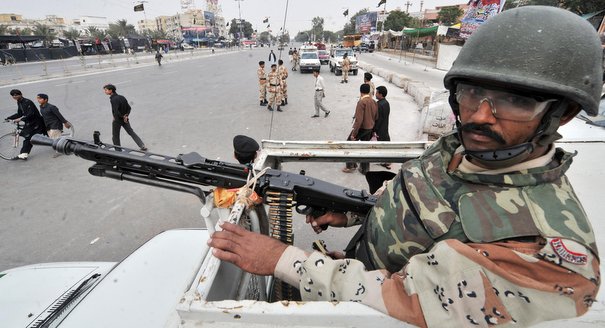
Irrespective of how Afghanistan's coming security transition pans out, one country may be on a surprising course to a major strategic defeat: Pakistan.
Ashley J. Tellis
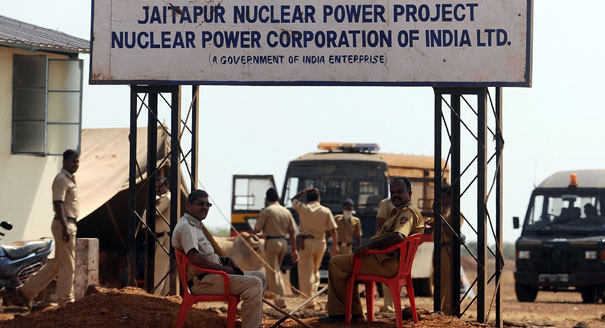
The Nuclear Suppliers Group should take time to consider the implications of India's possible membership before deciding.

Mark Hibbs, Toby Dalton
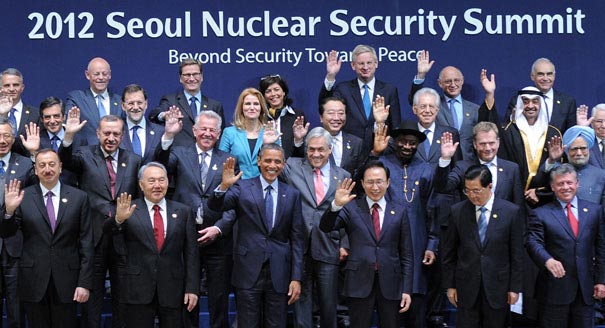
With anxieties over the nuclear activities of North Korea and Iran looming large, heads of state from 53 countries convened in Seoul this week to reaffirm and intensify their commitment to prevent nuclear materials from getting into the hands of terrorists.
Mark Hibbs