

Commentary
Maria Lipman
{
  "authors": [
    "Maria Lipman"
  ],
  "type": "legacyinthemedia",
  "centerAffiliationAll": "",
  "centers": [
    "Carnegie Endowment for International Peace",
    "Carnegie Russia Eurasia Center"
  ],
  "collections": [],
  "englishNewsletterAll": "",
  "nonEnglishNewsletterAll": "",
  "primaryCenter": "Carnegie Russia Eurasia Center",
  "programAffiliation": "",
  "programs": [],
  "projects": [],
  "regions": [
    "Caucasus",
    "Russia"
  ],
  "topics": []
}
REQUIRED IMAGE
Source: Carnegie
No One's Accountable in RussiaBy Masha Lipman
Originally published in the Washington Post, September 6, 2003.
MOSCOW -- Just three years after the tragedy of the Kursk -- in which 118 Russian seamen were lost -- another Russian submarine has sunk in the Barents Sea. This time it was an ancient, decommissioned vessel being transported to a dock for dismantling. Of the 10 sailors on board, only one survived. Just as in the Kursk disaster, there was no appropriate rescue equipment, and just as then, officials appear to be lying or withholding the truth.
And as happened three years ago, independent experts are offering their own versions and explanations that indicate irresponsibility, negligence and violations of rules and regulations. There is barely any response to the allegations. Russian officials, uniformed or civilian, make statements but won't hold Q&A sessions. The only surviving sailor has been questioned by military investigators, but for several days after the catastrophe his father was not admitted to see him. Since the sunken sub was decades old, it's likely that the only state secret Russian authorities are trying to hide is the botched performance of the Russian navy.
Nobody was seriously punished for the Kursk disaster. About a dozen top-ranking navy commanders were dismissed, but two of them were promptly appointed to government positions. This lack of accountability of military commanders is especially outrageous because it inevitably leads to the loss of human lives -- witness this latest tragedy. It might have less serious consequences in other spheres, but the very scope of it in Vladimir Putin's Russia is deeply troubling. Here are a few recent examples:
• Vladimir Gusinsky, a former Russian media tycoon, persona non grata in his own country, was arrested in Athens and then released on bail several days later. Beginning in 1999 Gusinsky was persecuted by the Russian government, lost his media business in a government-backed litigation and in 2000 went to live abroad in self-imposed exile. The Russian government tried to have him extradited from Spain but failed. This new arrest occurred over two years after the Spanish court had ruled against his extradition and Interpol subsequently announced that charges against him were politically motivated.
A statement issued by the Russian prosecutor's office says Russia seeks to have Gusinsky extradited to Russia, yet the office seems strangely reluctant to pursue the case against him: It is not in a rush to submit to Greece the necessary documents proving Gusinsky's guilt. Nor did anybody from the prosecutor's office appear in public before Gusinsky was released on bail to answer questions on why they want him extradited and on what charges. It seems that prosecutors did not expect Gusinsky's arrest and are concerned that their case against him could fall apart once again. Yet, their desire to get the man is so obsessive that they can't just announce that they are dropping the charges. And, perhaps most important, they know full well that there's nobody in Russia to hold them accountable for this lack of competence and professionalism.
• Another business tycoon, oil magnate Mikhail Khodorkovsky, and his company Yukos Oil Company, have been under government attack for over three months. Some of his associates have been held in jail, others interrogated, and his offices have been searched. Khodorkovsky blames the attack on the president's top aides, an opinion broadly shared by commentators. Everyone knows the aides' names, but they never appear in public, and the idea of their answering reporters' questions is inconceivable. Though they, like those in the prosecutor's office, are paid with taxpayers' rubles, they wouldn't deign to explain anything to the public. Nor would the president, or even his spokesman, for that matter.
• In early August Yuri Levada, a highly respected, world-famous Russian sociologist, called a press conference to announce his imminent dismissal. Levada said he was informed by government officials (he wouldn't give any names) that he'd have to abandon his post as director of the best Russian polling agency VTsIOM (All Russian Center for the Study of Public Opinion), which he has held for more than 15 years. No comment was ever made by any officials to reassure either the Russian public or the foreign professional community. (Among those expressing concern was a group of prominent French scholars who wrote in an open letter that dismissing Levada would lead to the destruction of a renowned polling institution.)
• Vladimir Yakovlev, the former governor of St. Petersburg, was for a time the object of severe criticism by the Kremlin. Allegations of mismanagement and corruption filled the media, and a criminal investigation was opened. When he finally stepped down from his post, the investigation simply evaporated. Instead of ending up in jail or at least under prosecution, Yakovlev was appointed to head housing reform efforts. Why? There is no answer and no one to ask.
Unaccountability has become a chronic and grave condition of Putin's Russia. It is further aggravated by the fact that only a negligible fraction of the Russian society seeks to challenge the government's performance.
Unaccountability is President Putin's fault. By reducing the role of political institutions, suppressing the media and concealing virtually all government decision-making from the public eye, President Putin has encouraged the inefficient and incompetent performance of the Russian bureaucracy.
Masha Lipman, editor of the Carnegie Moscow Center's Pro et Contra Journal, writes a monthly column for The Post.
Former Scholar in Residence, Society and Regions Program, Editor in Chief, Pro et Contra, Moscow Center
Lipman was the editor in chief of the Pro et Contra journal, published by the Carnegie Moscow Center. She was also the expert of the Carnegie Moscow Center’s Society and Regions Program.
Recent Work
Maria Lipman
Maria Lipman
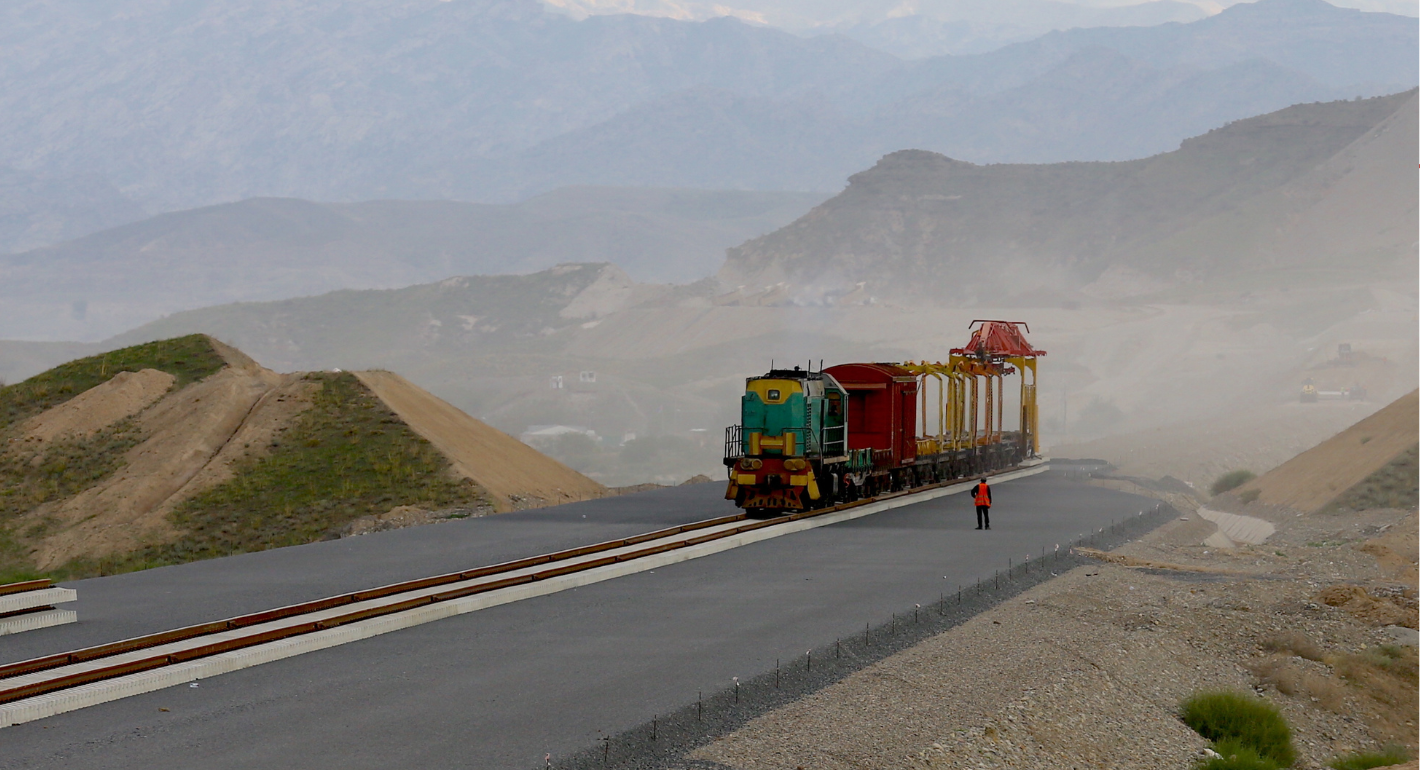
The EU lacks leadership and strategic planning in the South Caucasus, while the United States is leading the charge. To secure its geopolitical interests, Brussels must invest in new connectivity for the region.

Zaur Shiriyev
2026 has started in crisis, as the actions of unpredictable leaders shape an increasingly volatile global environment. To shift from crisis response to strategic foresight, what under-the-radar issues should the EU prepare for in the coming year?

Thomas de Waal
Europe is designing a new model of collective security that no longer relies on the United States. For this effort to succeed, solidarity between member states that have different threat perceptions is vital.
Erik Jones
Beset by an increasingly hostile United States, internal divisions, and the threat of Russian aggression, the EU finds itself in a make-or-break moment. U.S. President Donald Trump calls it a decaying group of nations headed by weak leaders. Is Europe able to prove him wrong?
Thomas de Waal
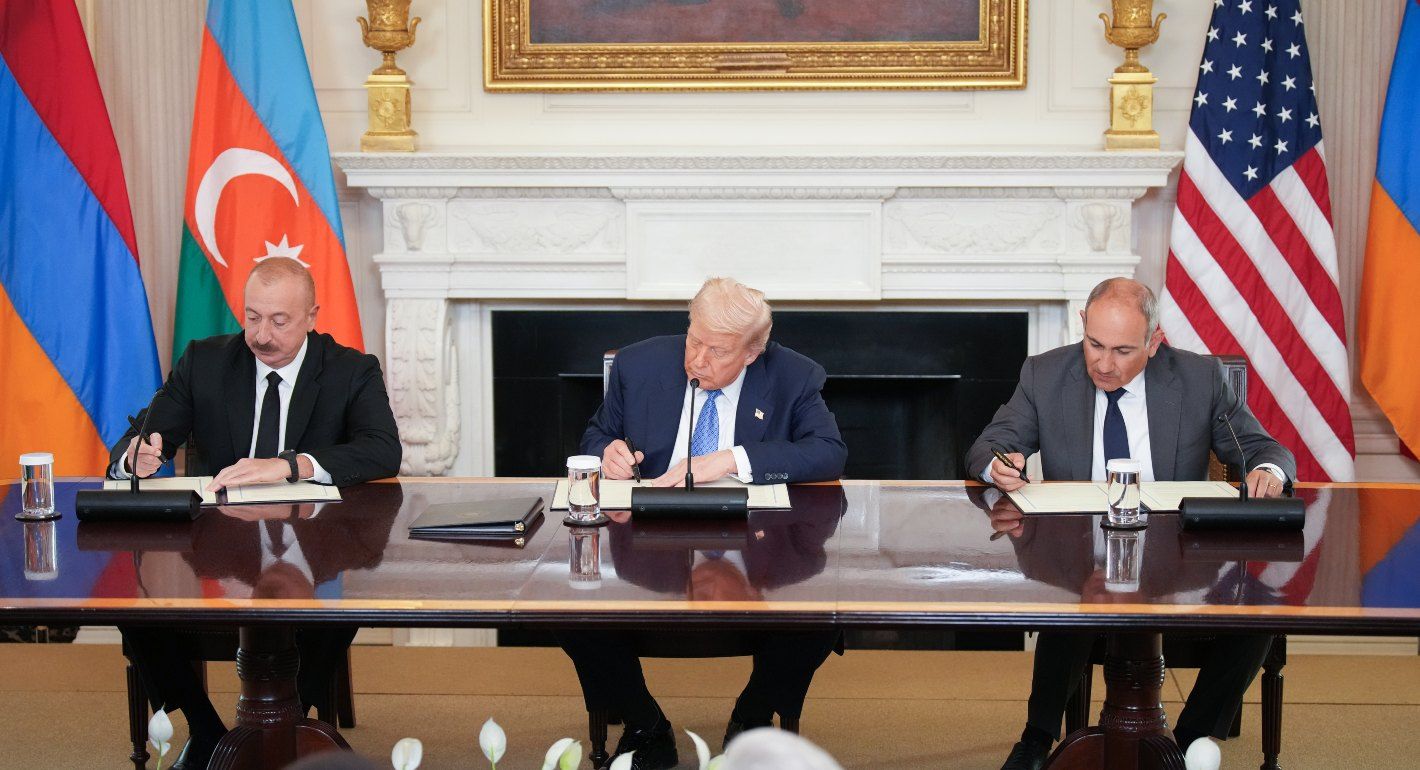
U.S. President Donald Trump’s claims to have ended eight wars may be debatable, but his peace efforts raise valid questions. Europe can learn lessons from Washington on how to break the deadlock in protracted conflicts.
Thomas de Waal