

Commentary
Maria Lipman
{
  "authors": [
    "Maria Lipman"
  ],
  "type": "legacyinthemedia",
  "centerAffiliationAll": "",
  "centers": [
    "Carnegie Endowment for International Peace",
    "Carnegie Russia Eurasia Center"
  ],
  "collections": [],
  "englishNewsletterAll": "",
  "nonEnglishNewsletterAll": "",
  "primaryCenter": "Carnegie Russia Eurasia Center",
  "programAffiliation": "",
  "programs": [],
  "projects": [],
  "regions": [
    "Caucasus",
    "Russia"
  ],
  "topics": []
}
REQUIRED IMAGE
Source: Carnegie
Russian Relapse
By Masha Lipman
Originally published in The Washington Post, April 21, 2004.
MOSCOW -- The conviction and prison sentence of Igor Sutyagin this month offers more evidence of how Russia's judicial system is falling under the control of the executive branch. Sutyagin, an arms control researcher, was sentenced to 15 years on trumped-up charges of espionage. His case raises many of the same concerns as that of Mikhail Khodorkovsky, the jailed oil tycoon. Defense lawyers in these cases increasingly find themselves under strong pressure from the prosecution and state security agencies. Both cases mock President Vladimir Putin's stated commitment to the rule of law, and they devalue the progress of judicial reform.
One of the major defects of the Soviet judiciary was the dependency of its judges on the Communist Party. Only the Communist bosses were seen to possess the ultimate truth about guilt and innocence. Thus, those who were prosecuted and tried were almost inevitably found guilty.
In the post-Communist years judicial reform has had its ups and down, but progress toward true rule of law has been undeniable. The criminal and the procedural codes have become more humane, and independent lawyers have become an important factor of Russian life; they have repeatedly demonstrated that they can make a difference. The jury trials eliminated by the Bolsheviks have been reintroduced, providing hope for better justice. Though independent judges, immune to corruption, are still a goal rather than a reality, the state appeared to have lost its unquestioned authority over the judicial branch.
This was well illustrated by several cases -- those of environmentalists Grigory Pasko and Alexander Nikitin, diplomat Valentin Moiseev, physicist Valentin Danilov and a few others -- prosecuted by the state security service (the FSB) for espionage. Reviving the old Soviet mentality -- all foreign contacts are suspicious, and suspect individuals must be repressed -- the FSB brought charges in these cases with the cooperation of sympathetic state prosecutors. But as each case reached the courtroom, the defense demonstrated that the charges were flimsy and far-fetched, and the prosecution was defeated. Even if the judges didn't acquit the defendants for fear of antagonizing the FSB, they showed a certain degree of independence by coming up with compromise rulings -- generally soft sentences that allowed defendants to walk out of the courtroom after the verdict.
Putin has turned the security and law enforcement bodies into pillars of his government. The Kremlin, in its struggle against political enemies, has been resorting to the services of the prosecutor's office and the FSB. The prosecution of Khodorkovsky, the Kremlin's No. 1 enemy, has been a succession of blatant procedural violations. It is apparently understood by both the prosecution and the judge that the president wants Khodorkovsky locked up (he has been in custody since October), and they have acted accordingly, with little regard for the case his lawyers present. Two other people associated with Khodorkovsky and his business have spent even more time in jail. Defense lawyers in these cases have been searched, harassed and threatened with prosecution.
The charges against Sutyagin were based on analytical papers on defense issues that he wrote for a British company, an act he never denied. The defense had solid evidence that every piece of information contained in Sutyagin's papers had been published and was available to anyone who wanted to read it. Moreover, Sutyagin never had access to state secrets. The charges against Sutyagin appeared as hollow as those against his predecessor "spy" suspects, and it seemed likely that he, too, would walk out of the courtroom, especially because a jury was hearing his case.
It turned out, however, that even the jury trial can be turned into a mock institution when superior political will and "accusatory bias" substitute for justice. The judge worded questions to the jurors in a way that pushed them to give "appropriate" answers. For instance, she omitted the word "secret" in asking the jurors whether Sutyagin handed over materials for money. Defense lawyers lodged objections, but the judge dismissed them. Talking to me 10 days after the sentence, Boris Kuznetsov, a lawyer for Sutyagin, called the actions of the judge "misleading and manipulating" toward the jurors. "We did not lose this case," Kuznetsov added, "because this was not an adversary proceeding. This was not a duel; it was a stab in the back."
Sutyagin's lawyers have appealed to the Supreme Court, complaining about the judge's actions. For the time being, however, the "accusatory bias" of Sutyagin's judge has done more than ruin the life of a talented scholar and his family. It has discredited the Russian judicial system and put in doubt the newly introduced institution of jury trials. The Supreme Court decision will come as a critical test: Can the judiciary, at least at its topmost level, act independently or will the state security apparatus further consolidate its hold?
Masha Lipman, editor of the Carnegie Moscow Center's Pro et Contra Journal, writes a monthly column for The Post.
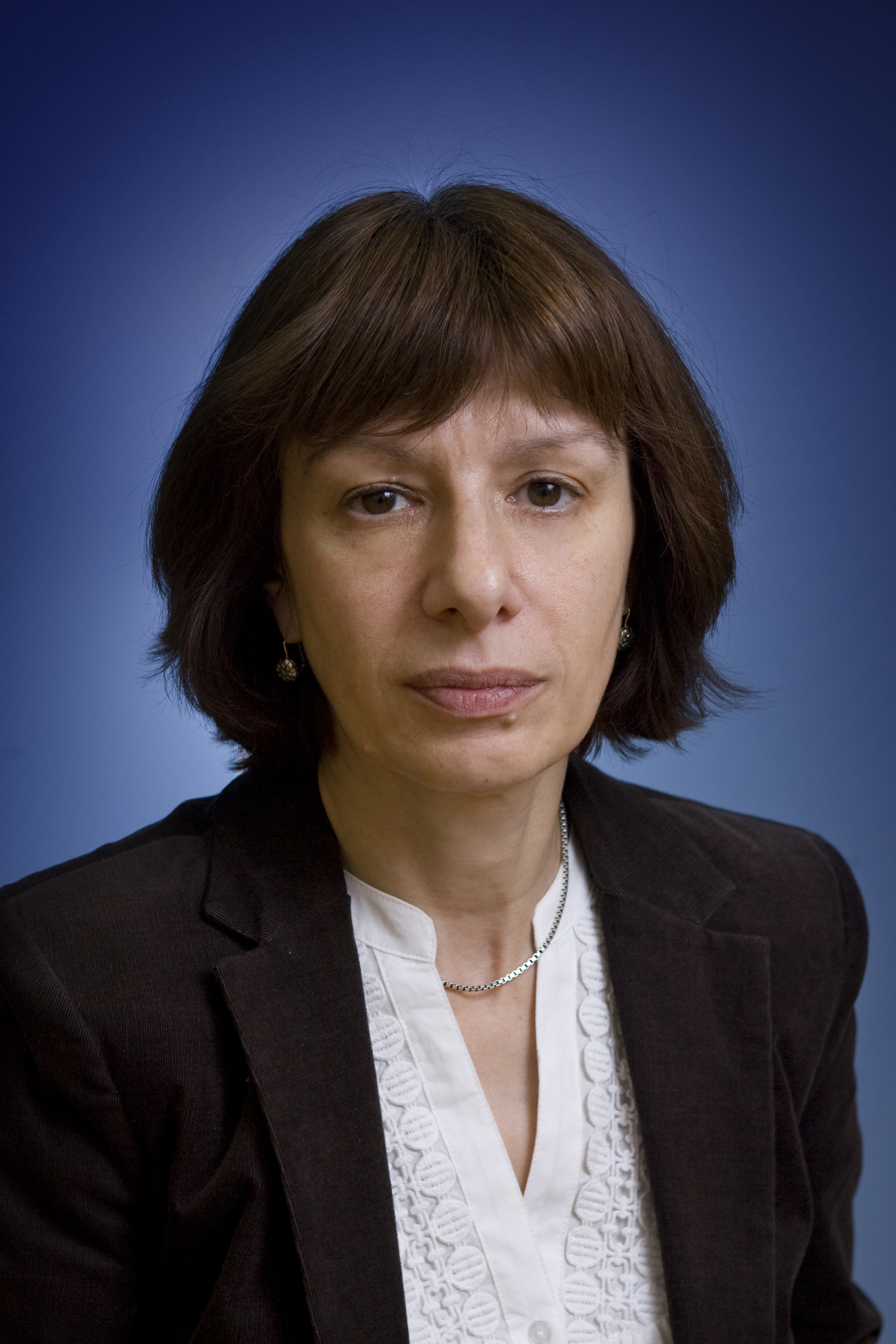
Former Scholar in Residence, Society and Regions Program, Editor in Chief, Pro et Contra, Moscow Center
Lipman was the editor in chief of the Pro et Contra journal, published by the Carnegie Moscow Center. She was also the expert of the Carnegie Moscow Center’s Society and Regions Program.
Recent Work
Maria Lipman
Maria Lipman

French President Emmanuel Macron has unveiled his country’s new nuclear doctrine. Are the changes he has made enough to reassure France’s European partners in the current geopolitical context?

Rym Momtaz, ed.

The EU lacks leadership and strategic planning in the South Caucasus, while the United States is leading the charge. To secure its geopolitical interests, Brussels must invest in new connectivity for the region.
Zaur Shiriyev
2026 has started in crisis, as the actions of unpredictable leaders shape an increasingly volatile global environment. To shift from crisis response to strategic foresight, what under-the-radar issues should the EU prepare for in the coming year?

Thomas de Waal
Europe is designing a new model of collective security that no longer relies on the United States. For this effort to succeed, solidarity between member states that have different threat perceptions is vital.
Erik Jones
Beset by an increasingly hostile United States, internal divisions, and the threat of Russian aggression, the EU finds itself in a make-or-break moment. U.S. President Donald Trump calls it a decaying group of nations headed by weak leaders. Is Europe able to prove him wrong?
Thomas de Waal