

Article
A notable degree of participative democracy has firmly arrived in Europe. But to have more far-reaching impact, democratic deliberation needs to move into a radically new phase.
Richard Youngs
{
  "authors": [
    "Mai Yamani"
  ],
  "type": "legacyinthemedia",
  "centerAffiliationAll": "dc",
  "centers": [
    "Carnegie Endowment for International Peace"
  ],
  "collections": [],
  "englishNewsletterAll": "menaTransitions",
  "nonEnglishNewsletterAll": "",
  "primaryCenter": "Carnegie Endowment for International Peace",
  "programAffiliation": "MEP",
  "programs": [
    "Middle East"
  ],
  "projects": [],
  "regions": [
    "Saudi Arabia"
  ],
  "topics": [
    "Political Reform"
  ]
}
Source: Getty
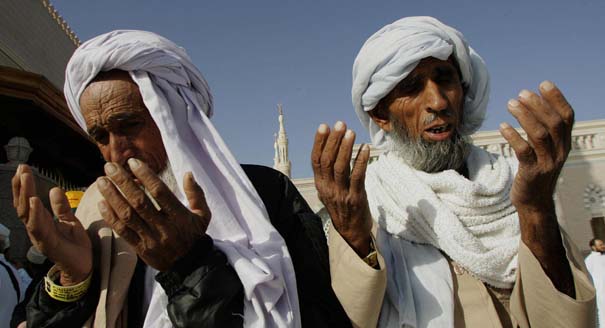
The violent clashes between Shia pilgrims and the Saudi religious police and security forces at the entrance to the Prophet Mohamed's Mosque in Medina may have serious repercussions for domestic security, if not for the regime itself.
Source: Guatemala Times

Some 2,000 Shia pilgrims gathered near the mosque that houses the Prophet's tomb for the commemoration of Mohamed's death, an act of worship that the ruling Saudi Wahhabi sect considers heretical and idolatrous. Thus, the Mutawa'ah, the religious police of the Committee for the Preservation of Virtue and the Prohibition of Vice, armed with sticks and backed by police firing into the air, tried to disperse the pilgrims. The pilgrims resisted. Three pilgrims died and hundreds were injured in the ensuing stampede. A large number of pilgrims remain in detention, among them 15 teenage boys.
Soon after, representatives of Saudi Arabia's Shia community sought a meeting with King Abdullah in an effort to free the detainees. Dialogue seemed like a promising strategy: just ten days earlier, Abdullah had announced a promising reform agenda for the country. But the King refused to meet the Shia delegation.
.
The violence outside the Medina mosque has led to unprecedented demonstrations in front of Saudi embassies in London, Berlin, and The Hague, with protesters demanding independence from the Saudi state.
Such demonstrations are, of course, illegal in Saudi Arabia. But domestic suppression has only served to export and expand the problem. And now, the regime's policies of repression, discrimination, and antagonism directed at the Shia and other politically marginalized groups increasingly threaten the Saudi state with disintegration.
The Shia are a special case, constituting 75% of the population in the Eastern Province, the Kingdom's main oil-producing region, and identifying far more strongly with Shia across the border in Iraq than with the Saudi state. Indeed, the empowerment of Iraq's long-suppressed Shia has raised expectations among Saudi Arabia's Shia that they, too, can gain first-class status.
From the regime's point of view, however, Shia Iran is now the most serious security threat. The Saudi authorities perceived the Shia demonstrations as an assertion of Iranian policy, as they coincided precisely with Iran's celebration of the 30th anniversary of its Islamic Revolution. Suppression of the Shia is thus a part of the Kingdom's strategy to counter Iran's bid for regional hegemony.
But this thinking is tremendously shortsighted. Only by transforming Saudi Arabia's currently monolithic Saudi/Wahhabi national identity into a more inclusive one will the Kingdom become a model that is attractive to its minorities. Today, the disempowered Shia are forced to seek political connections and backing from the region's wider Shia political movements to compensate for the discrimination they face at home.
So the choice for the Saudi rulers is stark: empower the Shia within the system, or watch as they increase their power through external alliances. The threat that this would represent is not abstract: the Kingdom's borders are very porous.
So far, King Abdullah has shown no sign of opting for a policy of inclusion - not even a token gesture, such as a Shia minister. Moreover, Abdullah is unable even to stop Wahhabi satellite TV stations from denouncing the Shia "heretics," or the hundreds of Wahhabi Web sites that call for the outright elimination of the Shia.
But non-Wahhabi Saudis, mainly the Shia, continue to resist state dogma. Until the beginning of this year, they have not formed significant or open opposition movements, owing to a historically well-entrenched fear of repression. Shia unrest dates back to the Kingdom's establishment in 1932, and violent confrontations with the Saudi state began with the Shia revolution in neighbouring Iran.
The Iranian revolution prompted a Shia uprising in the Eastern Province in November 1979. Saudi Arabia's Shia, an economically and politically marginalized community, staged an unprecedented intifada in the towns of Qatif, Saihat, Safwa, and Awamiyya. Tens of thousands of men and women demanded an end to the politics of discrimination against the Shia.
Although, the Saudi security forces, the National Guard, and the marines crushed the rebellion, the domestic tensions that fueled it remain. And Ayatollah Khomeini challenged the Al Saud's ideological monopoly and control of Mecca and Medina. Khomeini challenged the very concept of monarchy in Islam by declaring that "those with authority" are not Kings but religious scholars.
The Saudi religious establishment has long been on alert to this rival and threatening entity. Sefr al Hawali, a prominent Saudi Wahhabi cleric, warned of the dangers of the "Shia arc" following the Shia intifada in Iraq in 1991. But, since the war in Iraq in 2003 and the empowerment of Shia across the region, the Saudi regime faces sizeable, restless, and politically ambitious Shia populations in neighboring Gulf countries, especially Kuwait and Bahrain, as well as in Lebanon.
The demonstrations at Medina show that Saudi Shia are now themselves emboldened. Indeed, they have formed an opposition movement called Khalas (Salvation), aimed at mobilizing the new generation of Shia in the Eastern Province. In light of widened regional and political cleavages, confrontations such as occurred in the holy mosque of the Prophet could increase in frequency, size, and violence.
Mai Yamani, is a Visiting Scholar at the Carnegie Middle East Center, Beirut.
Former Visiting Scholar, Middle East Center
Mai Yamani was a visiting scholar at the Carnegie Middle East Center. Yamani was a research fellow in the Middle East Programme at Chatham House from 1997 to 2007, the Centre of Islamic and Middle Eastern Law at the School of Oriental and African Studies in London from 1992 to 2002, and from 1990 to 1991, at the Centre for Cross Cultural Research on Women in Oxford.
Carnegie does not take institutional positions on public policy issues; the views represented herein are those of the author(s) and do not necessarily reflect the views of Carnegie, its staff, or its trustees.

A notable degree of participative democracy has firmly arrived in Europe. But to have more far-reaching impact, democratic deliberation needs to move into a radically new phase.

Richard Youngs

Before the next wave of EU enlargement takes place, the union needs to grapple with thorny questions of how power is distributed among its members.


Emil Sondaj Hansen, Ditte Brasso Sørensen

As the EU confronts profound challenges, several leaders have called for fundamental reform to the union’s model—but only modest, superficial changes have resulted. What if Europe really could be reimagined from zero today: What should such a redesigned European order look like?
Richard Youngs, ed.
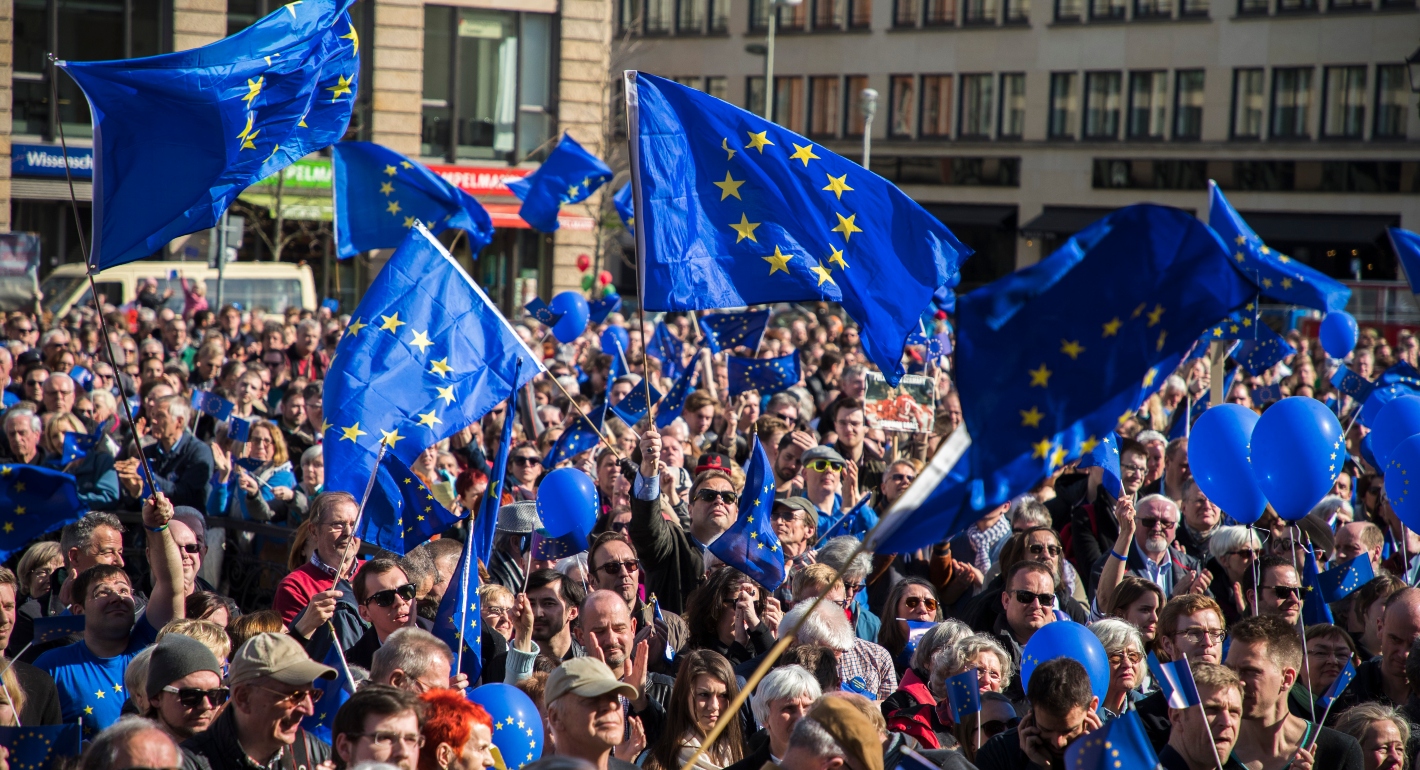
Preparing candidate countries for EU membership is no longer enough. As the enlargement process becomes a reality, the union must also prepare its own societies.

Iliriana Gjoni
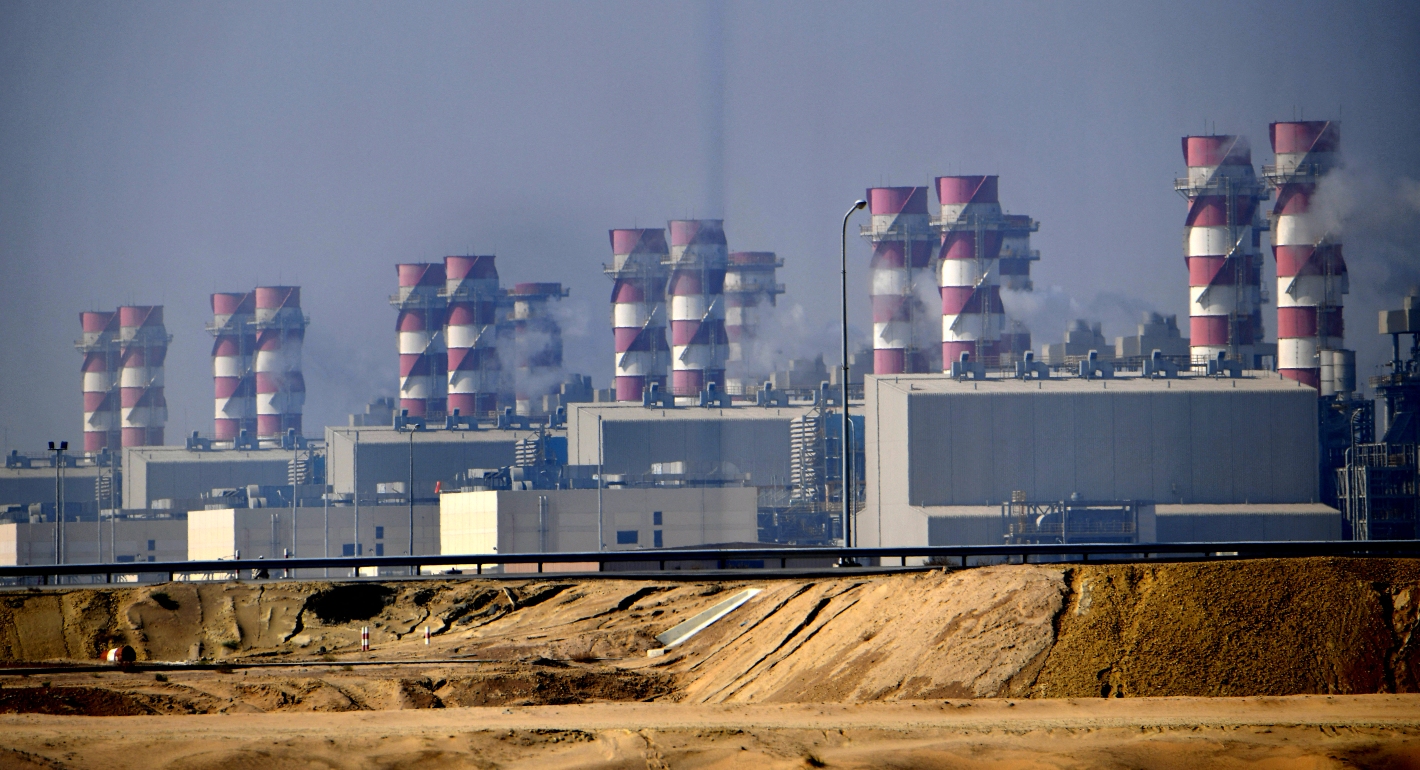
The U.S.-Iran war has crossed a dangerous threshold: water infrastructure in the Gulf is now a target. Ecological statecraft is no longer peripheral to security, it's part of its foundations.

Olivia Lazard, Ali Bin Shahid