

Other
Sharon Squassoni
{
  "authors": [
    "Sharon Squassoni"
  ],
  "type": "legacyinthemedia",
  "centerAffiliationAll": "dc",
  "centers": [
    "Carnegie Endowment for International Peace"
  ],
  "collections": [
    "U.S. Nuclear Policy"
  ],
  "englishNewsletterAll": "ctw",
  "nonEnglishNewsletterAll": "",
  "primaryCenter": "Carnegie Endowment for International Peace",
  "programAffiliation": "NPP",
  "programs": [
    "Nuclear Policy"
  ],
  "projects": [],
  "regions": [
    "North America",
    "United States",
    "Caucasus",
    "Russia"
  ],
  "topics": [
    "Foreign Policy",
    "Nuclear Policy"
  ]
}
Source: Getty
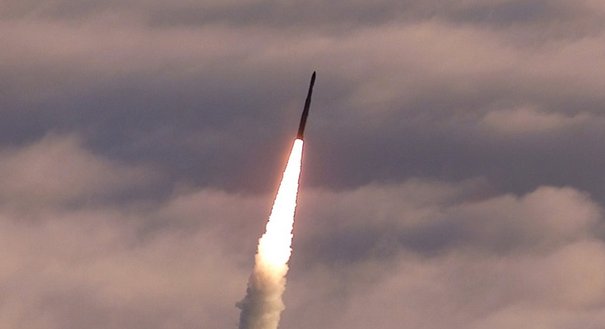
President Obama's decision to scrap the Bush administration's plans for a missile defense system in Poland and the Czech Republic will provide more breathing room for U.S.-Russian strategic arms control negotiations.
Source: New York Times

What are the consequences of President Obama’s decision? Will the alternative — deploying smaller missiles, at first aboard ships and later elsewhere in Europe or in Turkey — work?
Getting Russia Onboard
The most immediate outcome of President Obama’s decision to replace the ground-based interceptors and radars in Poland and the Czech Republic, respectively, with Aegis-based missiles and x-band radars is to provide more breathing room for U.S. -Russian strategic arms control negotiations. The arms control negotiations need to produce agreement before December 2009, when the START treaty expires, and the Russians have continued to complain about George W. Bush’s decision last year to deploy ground-based missile defense systems in Europe.
This link to the arms talks may have been regrettable but unavoidable. Given that the administration was likely to overturn the Bush missile defense deployments anyway, it may be good timing in terms of getting the most mileage from this concession. If it is true that Iranian long-range missile development has been moving more slowly than forecasted — and there is no reason not to believe that, since their capabilities in this area have been overestimated for more than a decade — then deploying a more flexible system against short- and medium-range missiles on an earlier timeframe makes sense.
The issue then remains what options the U.S. and Europe will seek if or when the Iranians actually do deploy a longer range ballistic missile. Will it be a mobile ground-based interceptor, which Boeing floated this summer? Or will relations with Russia in the future prove to be less of an impediment to fixed-missile defense sites? Better yet, will the threat of an Iranian nuclear-tipped missile have faded from view?
One area that absolutely requires Russia’s undivided attention and cooperation is persuading Iran to step back from the nuclear abyss. President Obama knows that. And if a change in missile defense deployments helps that happen, so much the better.
Former Senior Associate, Nuclear Policy Program
Squassoni came to Carnegie from the Congressional Research Service. She also served for nine years in the executive branch. Her last position at the State Department was director of Policy Coordination in the Nonproliferation Bureau.
Recent Work
Sharon Squassoni
Sharon Squassoni
Carnegie does not take institutional positions on public policy issues; the views represented herein are those of the author(s) and do not necessarily reflect the views of Carnegie, its staff, or its trustees.

Ahead of a tough winter for Ukraine, Donald Trump’s swing back toward Russia bodes ill. But instead of panicking, Kyiv’s European allies are focusing on action.

Rym Momtaz

Funding Ukraine remains a priority for European leaders. As Russia’s war of aggression heads into another winter, two feasible options to mobilize support for Kyiv should be fast-tracked.


Vladyslav Rashkovan, Gregory P. Wilson

While the EU and European governments are embracing the much-lauded middle-power moment, this entails three difficult conundrums.

Richard Youngs

Europe is facing rising populism internally as well as external pressures from Russia, China, Turkey, and the United States.

Dimitar Bechev

Much has been said of the changes Brussels is trying to make to the EU enlargement process. Here’s why gradual integration might—or might not—be the answer.
Dimitar Bechev