• Research
  • Strategic Europe
  • About
  • Experts
Carnegie Europe logoCarnegie lettermark logo
EUUkraine
  • Donate
{
  "authors": [],
  "type": "scholarSpotlight",
  "centerAffiliationAll": "dc",
  "centers": [
    "Carnegie Endowment for International Peace"
  ],
  "collections": [],
  "englishNewsletterAll": "ctw",
  "nonEnglishNewsletterAll": "",
  "primaryCenter": "Carnegie Endowment for International Peace",
  "programAffiliation": "SCP",
  "programs": [
    "Sustainability, Climate, and Geopolitics"
  ],
  "projects": [],
  "regions": [
    "North America",
    "United States"
  ],
  "topics": [
    "Climate Change"
  ]
}
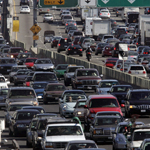
Source: Getty

Scholar Spotlight

Executive Summary: Leadership Initiative On Transportation Solvency

The Leadership Initiative on Transportation Solvency will develop a non-partisan solution for financing an improved and self-sustaining transportation system in the United States.

Link Copied
Published on Aug 5, 2010

Mission

The Leadership Initiative on Transportation Solvency will develop a non-partisan solution for financing an improved and self-sustaining transportation system in the United States. Under the leadership of three distinguished political figures, the initiative will conduct an analysis of strategies to fund America’s transportation system that are politically realistic but also serve to make transportation better, greener, and more fiscally sound.

Leadership Team

  • The initiative is being led by former U.S. Senator Bill Bradley, former Pennsylvania Governor and Homeland Security Secretary Tom Ridge, and former U.S. Comptroller General and now president of the Peter G. Peterson Foundation David Walker.

  • Staffing and support for the project is being provided by the Carnegie Endowment for International Peace’s Energy and Climate Program.

The Problem

  • When Congress created the interstate highway system in 1956 it was meant to be self-sustaining. Funds were raised through a combination of federal gasoline and excise taxes and then deposited into the Highway Trust Fund, which is used to maintain America’s transportation infrastructure.

  • The gas tax has remained unchanged since 1993 while transportation spending has continued to grow.

  • There is an ever-widening gap between the amount of money flowing into the system and the amount of money being spent.

  • The Highway Trust Fund is not only broke, it is broken. Of the $78 billion spent by the federal government every year on transportation, $25 billion is funded from the United States Treasury’s general revenues. 

  • Bailing out the Highway Trust Fund year after year is not only fiscally unsustainable, it also shortchanges critical improvements to America’s crumbling infrastructure.
  • Failure to reform our transportation system risks deepening U.S. dependence on oil, adding to climate change, and eroding American economic competitiveness.

The Solution

  • Conduct intensive analysis of existing federal transportation programs and identify opportunities to sunset programs that have achieved their initial objective or are no longer relevant.

  • Explore the possibility of using transportation-related carbon pricing to fund future transportation improvements.

  • Produce a long-term strategy that will simultaneously finance America’s transportation infrastructure, decrease the deficit, and reduce carbon emissions.

Policy Recommendations

  • In spring 2011, the initiative will unveil its findings and the final report will issue policy recommendations for consideration by Congress. Preliminary findings will be released in advance of the President’s Fiscal Responsibility and Reform Commission.
Climate ChangeNorth AmericaUnited States

Carnegie does not take institutional positions on public policy issues; the views represented herein are those of the author(s) and do not necessarily reflect the views of Carnegie, its staff, or its trustees.

More Work from Carnegie Europe

  • Commentary
    Strategic Europe
    Taking the Pulse: Is it NATO’s Job to Support Trump’s War of Choice?

    Donald Trump has demanded that European allies send ships to the Strait of Hormuz while his war of choice in Iran rages on. He has constantly berated NATO while the alliance’s secretary-general has emphatically supported him.

      • Rym Momtaz

      Rym Momtaz, ed.

  • Commentary
    Is the Radical-Right Threat Existential or Overstated?

    Amid increased polarization and the influence of disinformation, radical-right parties are once again gaining traction across Europe. With landmark elections on the horizon in several countries, are the EU’s geostrategic vision and fundamental values under existential threat?

      Catherine Fieschi, Cas Mudde

  • Commentary
    Strategic Europe
    Europe and the Arab Gulf Must Come Together

    The war in Iran proves the United States is now a destabilizing actor for Europe and the Arab Gulf. From protect their economies and energy supplies to safeguarding their territorial integrity, both regions have much to gain from forming a new kind of partnership together.

      • Rym Momtaz

      Rym Momtaz

  • Commentary
    Strategic Europe
    Taking the Pulse: Is France’s New Nuclear Doctrine Ambitious Enough?

    French President Emmanuel Macron has unveiled his country’s new nuclear doctrine. Are the changes he has made enough to reassure France’s European partners in the current geopolitical context?

      • Rym Momtaz

      Rym Momtaz, ed.

  • Commentary
    The Iran War’s Dangerous Fallout for Europe

    The drone strike on the British air base in Akrotiri brings Europe’s proximity to the conflict in Iran into sharp relief. In the fog of war, old tensions in the Eastern Mediterranean risk being reignited, and regional stakeholders must avoid escalation.

      Marc Pierini

Get more news and analysis from
Carnegie Europe
Carnegie Europe logo, white
Rue du Congrès, 151000 Brussels, Belgium
  • Research
  • Strategic Europe
  • About
  • Experts
  • Projects
  • Events
  • Contact
  • Careers
  • Privacy
  • For Media
  • Gender Equality Plan
Get more news and analysis from
Carnegie Europe
© 2026 Carnegie Endowment for International Peace. All rights reserved.







