

In The Media
Shahram Chubin
{
  "authors": [
    "Shahram Chubin"
  ],
  "type": "legacyinthemedia",
  "centerAffiliationAll": "dc",
  "centers": [
    "Carnegie Endowment for International Peace"
  ],
  "collections": [],
  "englishNewsletterAll": "ctw",
  "nonEnglishNewsletterAll": "",
  "primaryCenter": "Carnegie Endowment for International Peace",
  "programAffiliation": "NPP",
  "programs": [
    "Nuclear Policy"
  ],
  "projects": [],
  "regions": [
    "Middle East",
    "Iran"
  ],
  "topics": [
    "Nuclear Policy"
  ]
}
Source: Getty
The latest round of negotiations between Iran and its critics faces the same significant obstacles and political constraints as previous diplomatic efforts.
Source: PBS Frontline

First, the two sides -- Iranian officials on one side of the table and American and European diplomats on the other -- have different goals.
The world's six major powers -- Britain, China, France, Germany, Russia, and the United States -- want to test Iran's flexibility in limiting its nuclear program, especially in light of new international sanctions and recent technical difficulties with its nuclear program.
For Iran, the talks are a way to demonstrate that Tehran does not reject diplomacy, though it is not willing to make substantive concessions to make it productive.
Besides longstanding mutual mistrust, their approaches are incompatible too. The major powers want to begin with small steps to build confidence and provide a temporary compromise, to be followed with an enduring solution to the controversy over Iran's nuclear controversy.
In contrast, Iran sees any form of compromise, even short-term, as denoting weakness that could in turn set dangerous precedents, challenge its sovereignty and even undermine the regime's standing at home. Tehran instead wants to be sure of the entire game plan, the end point, and the road map toward an eventual grand bargain, before committing itself to anything.
Complicating diplomacy, the two sides do not agree on their respective power positions. Each is convinced the other is weakened and, if pressed, will make concessions.
Both sides are also politically constrained. President Mahmoud Ahmadinejad has scorned his predecessors for attempts to meet the West halfway. His domestic critics, both conservative and reformers, are in no mood to reward him now by supporting his own attempt at overtures to the West, which could strengthen his position at home.
The Obama administration also has limited diplomatic wiggle room. It fears domestic criticism, especially after major Republican gains in November elections. And its key foreign allies, notably Israel, are increasingly outspoken about the dangers of Iran's nuclear program.
In principle, a deal is possible. It would probably center on a balance between engagement with Iran while also criticizing its human rights abuses and support for terrorism. It would also probably require accepting Iran's rights to determine its own political system and some level of enrichment, but with intrusive international inspections.
But the outline of Iran's position is also clear: No Iranian government is likely to accept the renunciation of the right to enrichment, although a temporary "voluntary" freeze is conceivable under certain conditions.
And for the major powers, anything short of a halt to enrichment is unlikely to create the necessary confidence in Iran's intentions.
Even if Iran and its Western interlocutors agree on an interim deal, it would not deal with the underlying issue or guarantee its resolution. An interim agreement would probably center on a swap of nuclear materials: Iran ships out a high percentage of its low-enriched uranium in exchange for fuel rods provided by the West for the Tehran Research Reactor, which makes radioisotopes for medical purposes. Such an agreement would reduce Iran's fissile stockpile temporarily, but it would be buying time to give space for diplomacy.
The issue, however, may not simply be the time required to find a diplomatic solution. After eight years of diplomatic attempts, the real issue is the "will" of the two parties to settle matters peacefully.
Former Nonresident Senior Fellow, Nuclear Policy Program
Chubin, who is based in Geneva, focuses his research on nonproliferation, terrorism, and Middle East security issues. He was director of studies at the Geneva Centre for Security Policy, Switzerland, from 1996 to 2009.
Recent Work
Shahram Chubin
Shahram Chubin
Carnegie does not take institutional positions on public policy issues; the views represented herein are those of the author(s) and do not necessarily reflect the views of Carnegie, its staff, or its trustees.
When the U.S.-Iran memorandum of understanding was announced, the UK, France, Germany, and Italy declared their readiness to help demine the Strait of Hormuz and lift nuclear sanctions on Tehran. But does Europe need new tools to recover a diplomatic role?

Rym Momtaz, ed.

The EU’s new migration policy is not suited to today’s realities. With climate change increasingly becoming a driver of displacement, Europe needs to rethink its deterrence-focused approach.

Shana Tabak
Europe seems to have accepted its sidelining in the Middle East. The EU must reassert its support for the international rules-based order and step up engagement.
Rym Momtaz
Amid uncertainty caused by the Iran war, the global drive for nonproliferation has stalled. With Europe diplomatically marginalized and countries reassessing their nuclear options, efforts to curb the spread of nuclear weapons risk becoming irrelevant.

Jane Darby Menton
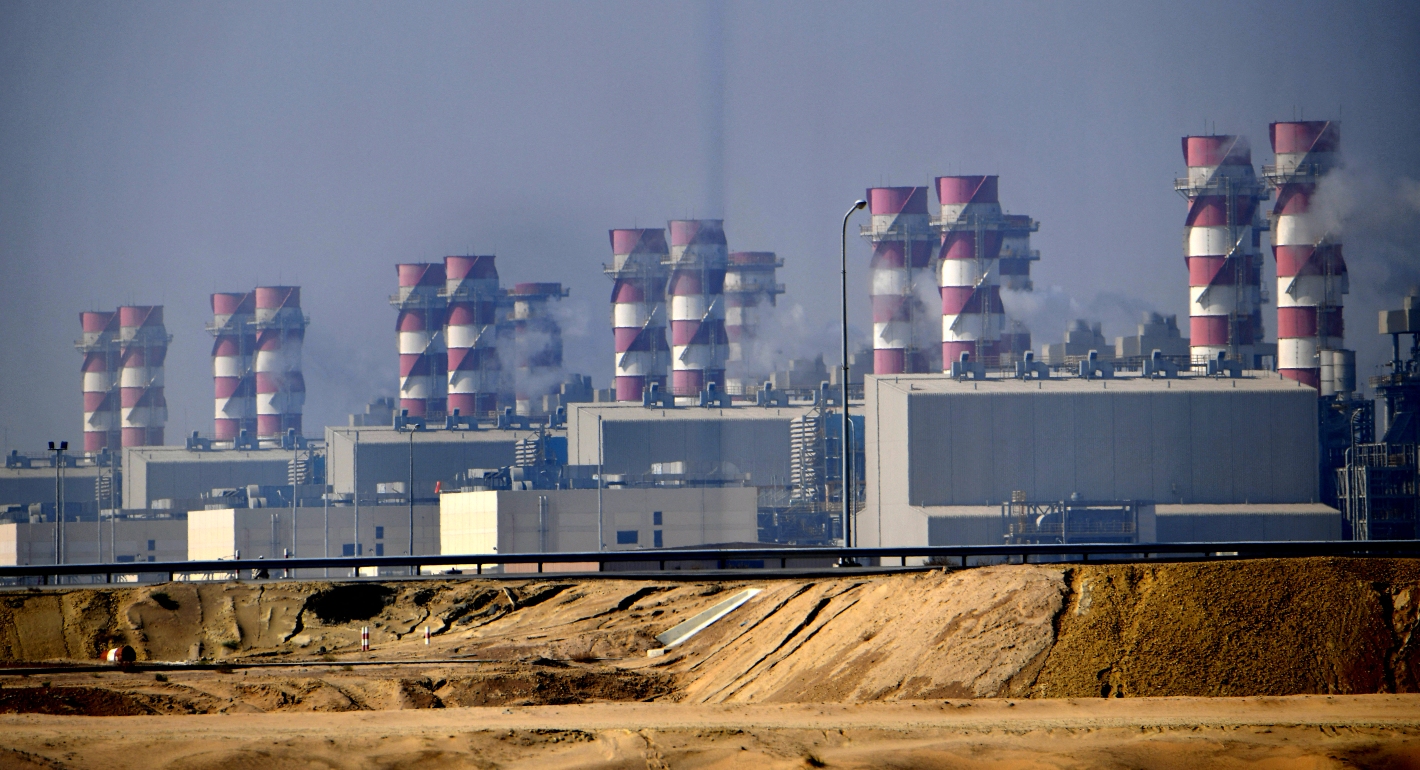
The U.S.-Iran war has crossed a dangerous threshold: water infrastructure in the Gulf is now a target. Ecological statecraft is no longer peripheral to security, it's part of its foundations.


Olivia Lazard, Ali Bin Shahid