

Commentary
Ahead of a tough winter for Ukraine, Donald Trump’s swing back toward Russia bodes ill. But instead of panicking, Kyiv’s European allies are focusing on action.
Rym Momtaz
{
  "authors": [
    "William Dixon",
    "Maksym Beznosiuk"
  ],
  "type": "commentary",
  "blog": "Strategic Europe",
  "centerAffiliationAll": "",
  "centers": [
    "Carnegie Endowment for International Peace",
    "Carnegie Europe"
  ],
  "englishNewsletterAll": "",
  "nonEnglishNewsletterAll": "",
  "primaryCenter": "Carnegie Europe",
  "programAffiliation": "",
  "regions": [
    "Europe",
    "Russia",
    "Middle East"
  ],
  "topics": [
    "EU",
    "Foreign Policy"
  ]
}
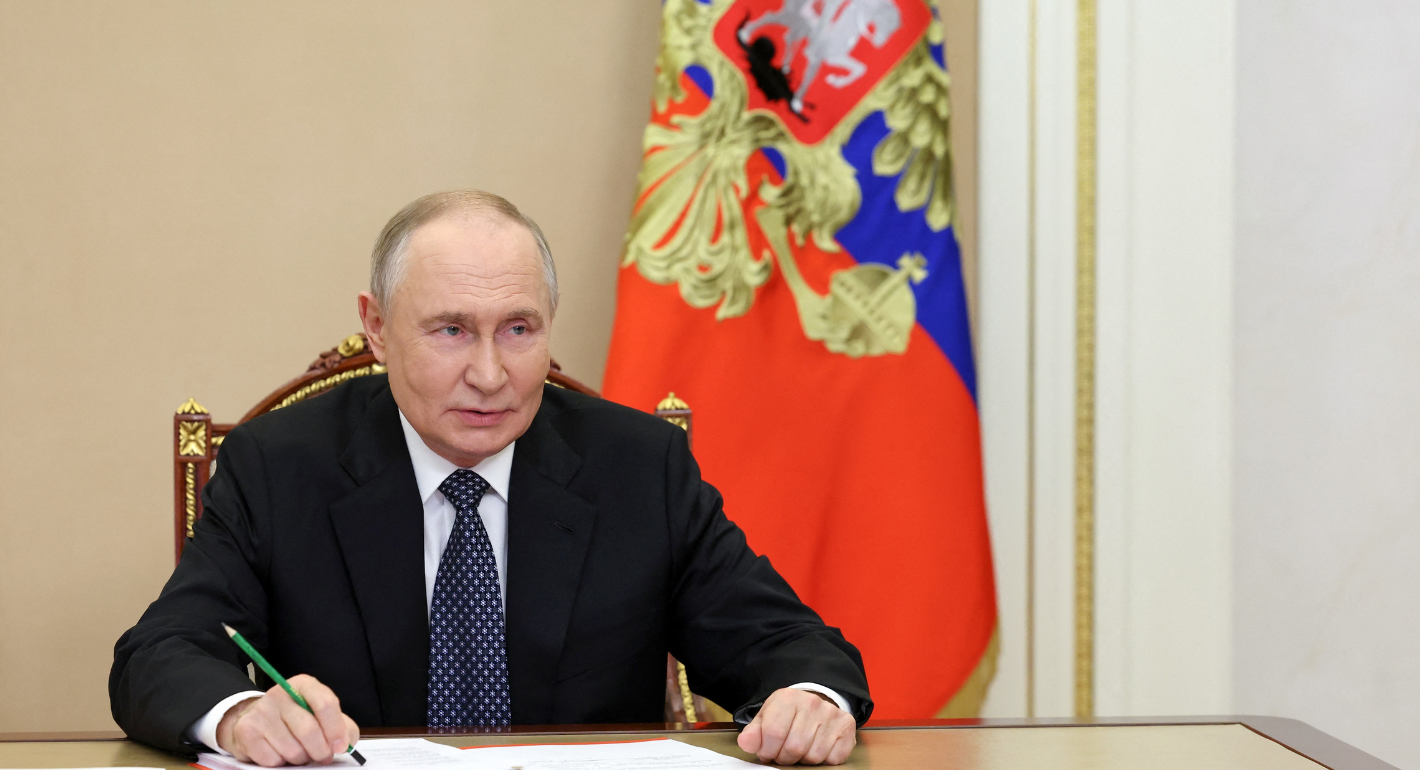
Source: Getty
The war in Ukraine is costing Russia its leverage overseas. Across the South Caucasus and Middle East, this presents an opportunity for Europe to pick up the pieces and claim its own sphere of influence.
When Iran sought tangible support, Russia’s response fell short. While Moscow has provided indirect assistance to Tehran, it has not offered the kind of decisive backing one would expect from a credible security guarantor. The Kremlin neither activated its S-400 missile systems stationed in Syria nor appeared to act in line with the spirit of the mutual assistance clauses in the comprehensive strategic partnership Iran and Russia signed in 2025.
And yet, it wasn’t surprising. It was just the latest way Russia has fallen short of its promises as a security broker to its allies.
From the fall of Bashar al-Assad’s regime in Syria to the silent collapse of Nicolás Maduro’s government in Venezuela, Russian President Vladimir Putin is overseeing what one might call a Great Liquidation. To sustain a war of total attrition in Ukraine, the Kremlin has effectively pawned its overseas empire. However, this imperial retreat does not automatically herald a Western resurgence. Instead, it has created a volatile geopolitical vacuum.
For European policymakers, it could represent a finite strategic window: a chance to integrate its near abroad into a durable European security and energy architecture before the vacuum is claimed by chaos or China’s middle corridor ambitions.
Russia’s contraction is most visible where its traditional role as a security guarantor has turned into that of a security predator. To feed the front in Ukraine, Moscow has cannibalized the hardware and political capital it once used to dominate its near abroad.
In the South Caucasus, the myth of Russian reliability has been replaced by the reality of Western-led connectivity. The most dramatic shift is in Armenia. After decades of ninety-six percent dependency on Russian arms, Yerevan radically realigned itself after Moscow failed to deliver contracted weapons during the 2023 Nagorno-Karabakh collapse. By March 2026, dependence on the Russian military had fallen below ten percent, with alternative suppliers such as France and India filling the void.
The strategic centerpiece of this shift is the Trump Route for International Peace and Prosperity (TRIPP), a forty-two-kilometer transit corridor through southern Armenia. With the United States holding a seventy-four percent controlling stake in the TRIPP Development Company, the corridor is no longer merely a local road: It is a Western-guaranteed artery linking the Caspian Sea to the Mediterranean.
To prevent the wider middle corridor from defaulting to Chinese hardware and standards, the EU should launch a South Caucasus border infrastructure fund. It should prioritize the digital spine, fiber-optics, automated customs terminals, and 5G corridors, ensuring that the region’s new connectivity is built on European, rather than Chinese, technical and regulatory architecture.
In the Western Balkans, Moscow’s strongest leverage—energy—is in terminal decline. The late-2025 expansion of U.S. and EU secondary sanctions against Russian companies Lukoil and Rosneft has forced a historic divestment of the country’s energy holdings across the continent.
If Brussels continues to offer a vague, decades-long membership timeline, accession fatigue will set in and Russia will be replaced by non-aligned transactional powers rather than Europe. The union must pivot to genuine functional integration. This means decoupling the energy transition from the slower-moving political acquis. The EU should integrate Western Balkan candidate countries into the energy union, ensure faster regulatory alignment and deeper investment in critical raw materials, making a return to Russia economically and politically impossible.
In the EU’s Southern flank—the Middle East and Africa—Russia’s global forfeit could either improve European security or further weaken it.
Despite its twenty-year comprehensive strategic partnership with Iran, Moscow’s inability to protect Tehran from successive U.S.-Israeli attacks signaled that it no longer possessed the capacity to risk a confrontation with the West on behalf of a partner. Instead, it is choosing the immediate benefits to its Ukraine campaign that the war is providing: spiking oil prices and a reduction of secondary sanctions.
In Syria, it suffered an even more profound strategic defeat. The fall of the Assad regime in December 2025 ended a decade of heavy military commitment. Ever since, Damascus has transitioned from a Russian client to a pragmatic landlord. Russia no longer dictates Syrian policy—it pays rent for its survival.
This shift has a direct, cascading impact on Africa. There, Russia’s mercenary-backed security model—trading regime protection for mineral access in Mali, Niger, and Burkina Faso—is failing because it lacks a sustainable logistics tail. Syria’s airbases were the indispensable transshipment points for Russia’s Africa Corps. By restricting Russian troop movement and reasserting sovereignty over strategic assets like the strategic port of Tartus, the new Syrian government is liquidating the very outposts that once anchored Moscow’s Mediterranean presence.
To effectively seize this opening in critical parts of its southern neighborhood, Europe should move beyond fragmented national deployments and build a unified maritime deterrent. Furthermore, Brussels should designate the India–Middle East–Europe economic corridor as a strategic priority, embedding African and Middle Eastern energy networks into European infrastructure to ensure that the post-Russian order is structurally aligned with the West.
The Great Liquidation of the Russian empire is not a permanent state of affairs, but a finite geopolitical intermission. Moscow is contracting, but it is not disappearing. If Europe fails to fill the vacuum today with durable institutions and physical infrastructure, it will face a Russian return tomorrow—one that is leaner, more volatile, and more reliant on asymmetric disruption.
The success of the post-Russian order in the near abroad depends on whether Brussels can move from being a regulatory power to a strategic actor. The map is being redrawn by the Kremlin’s retreat to focus on Kyiv. Whether it reflects European values and connectivity or defaults to transactional chaos depends entirely on the speed with which Brussels moves to claim the terrain.
William Dixon is a Senior Associate Fellow at the Royal United Services Institute.
Maksym Beznosiuk is a strategic policy analyst and writer.
Subscribe to Strategic Europe, delivered every Tuesday and Thursday!
William Dixon
Senior Associate Fellow, Royal United Services Institute
William Dixon is a senior associate fellow at the Royal United Services Institute.

Maksym Beznosiuk
Analyst, Strategic Policy and Security
Maksym Beznosiuk is an analyst focusing on Ukraine, Russia, and international security and an associate fellow at GLOBSEC.
Carnegie does not take institutional positions on public policy issues; the views represented herein are those of the author(s) and do not necessarily reflect the views of Carnegie, its staff, or its trustees.

Ahead of a tough winter for Ukraine, Donald Trump’s swing back toward Russia bodes ill. But instead of panicking, Kyiv’s European allies are focusing on action.

Rym Momtaz

While the EU and European governments are embracing the much-lauded middle-power moment, this entails three difficult conundrums.

Richard Youngs

Much has been said of the changes Brussels is trying to make to the EU enlargement process. Here’s why gradual integration might—or might not—be the answer.

Dimitar Bechev

The European Commissioner for Trade is headed to China. But after President Xi’s bridge-building visit to Washington, can a more isolated EU overcome Beijing’s stranglehold on critical raw materials? Who will blink first?
Rym Momtaz, ed.

The domestic impacts of how long it is taking to end the war in Ukraine have pushed the French electorate to the political extremes and compromised the country’s diplomatic capacity.
Rym Momtaz