

Paper
Ibrahim Saif, Ahmed Ghoneim
{
  "authors": [
    "Ibrahim Saif"
  ],
  "type": "legacyinthemedia",
  "centerAffiliationAll": "",
  "centers": [
    "Carnegie Endowment for International Peace",
    "Malcolm H. Kerr Carnegie Middle East Center"
  ],
  "collections": [],
  "englishNewsletterAll": "",
  "nonEnglishNewsletterAll": "",
  "primaryCenter": "Malcolm H. Kerr Carnegie Middle East Center",
  "programAffiliation": "",
  "programs": [],
  "projects": [],
  "regions": [
    "Levant"
  ],
  "topics": [
    "Economy"
  ]
}
Source: Getty
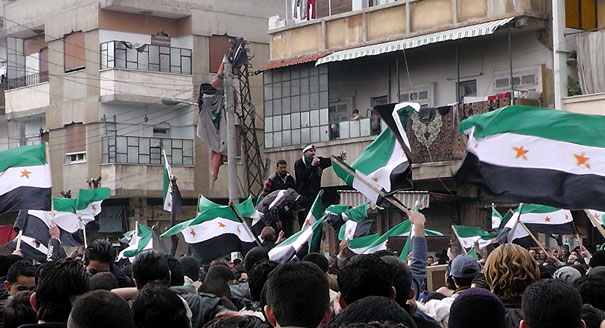
The current unrest in Syria is likely to have a serious economic impact on states such as Turkey, Lebanon, Iraq, and Jordan, all of which are dealing with problems of their own.
Source: Los Angeles Times

The situation in Syria affects Turkey in two ways. The first is the potentially large drop in trade volume, especially since demand for imports and Turkish commodities –- which used to be high –- has dropped sharply since the beginning of the events. Some sources estimate that trade volume has dropped between 30% and 40%, and that these percentages could drop even lower with the expiration of prior arrangements and the continued state of chaos.
Meanwhile there is an absence of desire on both sides, Syrian and Turkish, to renew these contracts before matters become clearer. During 2010, Syrian exports to Turkey were valued at $1.6 billion, while Syrian imports from Turkey were around $630 million.
As for Turkish investments in Syria, they are valued at around $260 million, making Turkey one of the foremost foreign investors in the country. However, the fate of these investments in various sectors such as light industry and construction is unclear. The second negative aspect of relations lies in the influx of Syrian refugees to Turkey, now estimated to number around 15,000 people. This number is expected to rise if events continue as they have been. As for joint investments and some joint water infrastructure projects, these have been postponed indefinitely.
The second country linked to Syria by a complex web of relationships is Lebanon. The relationship between the two sides is not limited to official trade relations, which were estimated at around $1.3 billion last year. They also include the movement of labor, which until recently was continually flowing between the two countries.
This labor force, part of which has settled in Lebanon, is skilled and relatively cheap by Lebanese standards, especially in construction, contracting and some services. Now that movement is difficult, the Lebanese economy’s labor costs are expected to rise because it will be hard to create local alternatives to Syrian labor. As for Lebanese exports to Syria, they are limited, since the balance of trade between the two countries is weighted heavily in Syria’s favor.
There is another dimension in the relationship between Lebanon and Syria: Lebanon’s financial sector is heavily used by Syrian businessmen and merchants. Lebanese banks are considered a safe haven for savings and conduct many credit operations for exports and other purposes. Although these activities are expected to decline, Syrian deposits in Lebanese banks are not expected to decrease –- in fact, they are likely to rise due to instability in Syria.
There is no doubt that the tourism season in Lebanon will be strongly affected, especially tourism from the Gulf –- Gulf residents usually cross Syria in private cars to spend the summer in Lebanon. To date, tourism levels in Lebanon are still far lower than they were at the same time last year.
Another of Syria’s important trade partners is Iraq, which is the primary destination for Syrian exports -– it receives 18.8% of the total, equal to $2.5 billion. These are mostly agricultural and light industrial commodities, located and consumed in the area along the two countries’ border. These commodities are distinguished by their cheap price and acceptable quality. Trade has declined noticeably during the last few months. While there are possible alternatives, costs are expected to rise for Iraqi consumers.
Although transport costs are limited, local Iraqi communities are expected to be affected by the decline in trade activity. A number of joint projects in the border regions that were awaiting improvement in Iraqi security conditions have been canceled or postponed. As for Iraqi exports to Syria, they are not expected to decline greatly, since they involve energy products that are considered essential.
The fourth state with close ties to Syria is Jordan, which has many bilateral agreements with its neighbor. For example, there is an agreement regulating the trade of Jordanian cement for Syrian wheat. This arrangement has been operational for years and serves the interests of both countries. This arrangement saved the Jordanian treasury tens of millions of dollars, since bread is subsidized in Jordan and Syrian wheat was used as part of this arrangement.
Similarly, activity across the border between the two countries has almost completely stopped. It is well known that the cities of northern Jordan, Ramtha and Irbid, subsist to a great extent on the transport sector and the sale and purchase of consumer commodities. Companies specialized in these fields were set up, such as the Jordanian Syrian Ground Transport Co. Since the outbreak of events, there has been a virtual freeze on such activities.
Many Jordanian traders depend on Latakia’s Mediterranean port to import their goods, especially from Europe. They do so because importing via Latakia is cheaper than importing through the port of Aqaba on the Red Sea, which is Jordan’s only port. However, this activity has been halted due to security threats and importers’ inability to insure commodities with global insurance providers.
Officials do not hide their worries about the future of some joint projects, such as the electrical arrangement whereby Syria supplies some Jordanian border regions with electricity, and the Arab gas project that links Egypt to Syria and Lebanon via Jordan. Although these lines have not been attacked, fears that infrastructure could be targeted have raised questions about the future of some joint projects in the energy sector, which have been studied during meetings of the countries’ joint commissions.
The events in Syria will likely also affect important trade partners such as Russia, Iran and the European Union to some extent. All of these actors are closely linked to Syria -– via loans and military agreements in the case of Russia, close bilateral relations in the case of Iran, and trade relations in the case of the European Union that strongly favor the latter’s states.
In general, the tourism and transport sectors have been greatly affected due to the ongoing events in Syria, while the effect has varied on the states surrounding Syria.
These economic effects, including temporary refugee flight such as occurred in Turkey, could become a true concern for states that are already bearing the burden of their own problems and do not have much margin of error to adjust for ongoing events.

Former Senior Associate, Middle East Center
Saif is an economist specializing in the political economy of the Middle East. His research focuses on international trade and structural adjustment programs in developing countries, with emphasis on Jordan and the Middle East.
Recent Work
Ibrahim Saif, Ahmed Ghoneim
Ibrahim Saif, Muhammad Abu Rumman

The European Commissioner for Trade is headed to China. But after President Xi’s bridge-building visit to Washington, can a more isolated EU overcome Beijing’s stranglehold on critical raw materials? Who will blink first?

Rym Momtaz, ed.

The domestic impacts of how long it is taking to end the war in Ukraine have pushed the French electorate to the political extremes and compromised the country’s diplomatic capacity.
Rym Momtaz

A summer of escalation in the Black Sea has hurt Ukraine economically and is exacerbating world food security. A truce is needed—as is a broader reframing of Europe’s Ukraine strategy.

Thomas de Waal

As geopolitical rivalry weaponizes global supply chains, the EU’s true vulnerability lies in emerging-risk imports. For these goods, suppliers are growing more concentrated, substitution more difficult, and political risk is looming.

Sinan Ülgen
The EU is putting together a new security strategy to meet today’s myriad challenges. But for any proposal to be effective, the union needs to grapple with its identity and ambitions.

Pierre Vimont