

Q&A
Stephen Tankel
{
  "authors": [
    "Stephen Tankel"
  ],
  "type": "legacyinthemedia",
  "centerAffiliationAll": "dc",
  "centers": [
    "Carnegie Endowment for International Peace"
  ],
  "collections": [],
  "englishNewsletterAll": "ctw",
  "nonEnglishNewsletterAll": "",
  "primaryCenter": "Carnegie Endowment for International Peace",
  "programAffiliation": "SAP",
  "programs": [
    "South Asia"
  ],
  "projects": [],
  "regions": [
    "South Asia",
    "India",
    "Afghanistan",
    "Pakistan"
  ],
  "topics": [
    "Security"
  ]
}
Source: Getty
As long as Pakistan continues to make no significant effort to dismantle the military apparatus of the terrorist group Lashkar-e-Taiba, the group will remain a threat both to India and to the West.
Source: Yale Global

Like Al Qaeda and many other jihadist groups, Lashkar was born during the anti-Soviet jihad in Afghanistan. From the outset, it was a pan-Islamist organization, dedicated to waging jihad until the domination of Islam was achieved. But regional dynamics associated with the India-Pakistan rivalry and the insurgency that erupted in Indian-administered Kashmir in 1989 exerted the heaviest influence on it. For Lashkar’s leaders, the road to reestablishing the caliphate ran through South Asia.
Focusing on jihad against India to liberate Kashmir also brought with it the offer of significant state support from the Pakistan army and its powerful Inter-Services Intelligence Directorate, known as the ISI. Within a decade, Lashkar had become Pakistan’s most reliable proxy against India. The ISI increased support to the group for several reasons. Most important was the belief that LeT would easy to control based on its small size at the time and lack of natural allies.
State support enabled Lashkar to develop a powerful military apparatus and the group also channeled resources into the provision of social services as a means of missionary outreach. By the late 1990s, it controlled a robust social welfare and powerful military infrastructure. During that decade Lashkar also began weaving together its international networks.
As early as 1992, Lashkar operatives began working with Indian Muslims motivated by domestic grievances to help them build a homegrown jihadist movement and launch small-scale terrorist attacks. By 2000, it had a robust network of operatives in India and provided support to various indigenous jihadist cells responsible for a growing drumbeat of bombings there. To assist these efforts, Lashkar also built up its footprint in Bangladesh and Nepal. LeT was not necessarily building up its footprint in these areas because of caliphate ambitions. This really was about supporting attacks in India.
Lashkar leaders also had longstanding ties to the Persian Gulf. Saudis associated with the group helped expand networks there during the 1990s and 2000s, as did Pakistani and Indian operatives living in the region and South Asian criminal syndicates. Lashkar had been raising funds in the Gulf since the 1980s. By the late 1990s, its donor base included members of the Pakistani diaspora and those motivated to give money on the basis of a shared Salafi religious identity. The Gulf proved a fertile ground for recruiting Indian operatives to execute attacks against their country of origin as well as an ideal location from which to support such attacks.
Lashkar has a history of recruiting and training Westerners, particularly members of the diaspora living in the UK. Unlike Al Qaeda, Lashkar did not use its overseas recruits to launch attacks against America or its allies prior to 9/11. Instead, the group’s objectives included developing transnational networks across Europe for support purposes, including fundraising and the procurement of a military kit including night-vision goggles and surveillance equipment for use in Kashmir, promoting the organization’s international reach and appeal, building its brand for fundraising purposes, and promoting its interpretation of Islam.
After 9/11, Lashkar began using its international networks along with its training apparatus to contribute to the global jihad against the US and its allies. This included the provision of training and logistical support to established outfits and aspiring Western jihadis, some of whom used the group as a gateway to Al Qaeda. And it continued to use many foreign operatives to support local, India-centric operations.
From the middle of the decade onwards, Lashkar’s organizational footprint in Afghanistan grew. The insurgency there eclipsed the conflict in Kashmir, and an increasing number of militants from other organizations, in some cases spurred on by Al Qaeda, began attacking the Pakistani state. Lashkar’s leaders came under increasing pressure to expand the group’s involvement in the global jihad.
The 2008 Mumbai attacks appear intended partly to increase Lashkar’s credibility among members, recruits and donors, impressing them with a terrorist spectacular that included Western targets. A month before the Mumbai attacks, Lashkar leaders also began plotting a unilateral terrorist attack in Denmark. The operation was delayed indefinitely as a result of ISI pressure, but David Headley, the transnational operative who conceived of the idea and was tasked with surveillance, linked up with jihadists close to Al Qaeda to move the plot forward. He did so without quitting Lashkar.
The group remains active in Kashmir, and its Afghanistan presence is believed to have grown since Mumbai, though its organizational footprint in Afghanistan remains small relative to other outfits. Some members now have more experience fighting against America than they do India, though the latter continues to be the primary enemy for Lashkar’s leadership, who still prioritize the Kashmir jihad and remain heavily influenced by the Pakistan army and ISI.
The Pakistan security establishment still considers Lashkar to be its most reliable and obedient proxy for several reasons, including the leadership’s India-centric priorities, its policy of abjuring attacks in Pakistan and the fact that the group remains more disciplined than others. Longstanding personal connections between Lashkar members and those in the army and ISI enhance this assessment. The two historically shared the same recruiting pool, and a number of retired army and ISI officers have joined Lashkar, at captain, major, colonel ranks and some at brigadier level, which strengthens these bonds. Nevertheless, organizational control was seen to slip prior to Mumbai. Several ISI officers played a role, but there was no evidence that the ISI or army leadership was aware of the full parameters of the plot.
Since early 2009, the ISI has tightened control over Lashkar’s leaders and sought to help them regain control over their cadre. Yet anecdotal evidence also suggests that Al Qaeda continues attempts to lure Lashkar members and that the two organizations’ leaders clash ideologically over the issue of fighting against the Pakistani state. In short, tensions within the organization over the direction of its violence remain.
With its international network, Lashkar has the means to release such tension by launching a unilateral attack against the US or allied interests, though the more likely scenario is that the group could provide support for a joint attack. Considerable concern also exists regarding the capacity of nodes within these transnational networks to engage in unsanctioned activities against the West. The greater concern is that LeT will launch another major terrorist attack against India, leading to an escalation with Pakistan. With networks in Bangladesh, Nepal and the Gulf, as well as India, the group has multiple locations from which to support Indian militants engaged in homegrown terrorism. If Pakistan were to crack down on Lashkar’s domestic infrastructure, these networks could be unleashed in many countries or in Pakistan itself.
At present no significant effort has been made to dismantle the group’s military apparatus. As long as its infrastructure in Pakistan and transnational networks remain extant, Lashkar remains a threat close to home and abroad.
Reprinted with permission from YaleGlobalOnline, (http://yaleglobal.yale.edu) a publication of the Yale Center for the Study of Globalization. Copyright (c) 2011 Yale Center for the Study of Globalization.
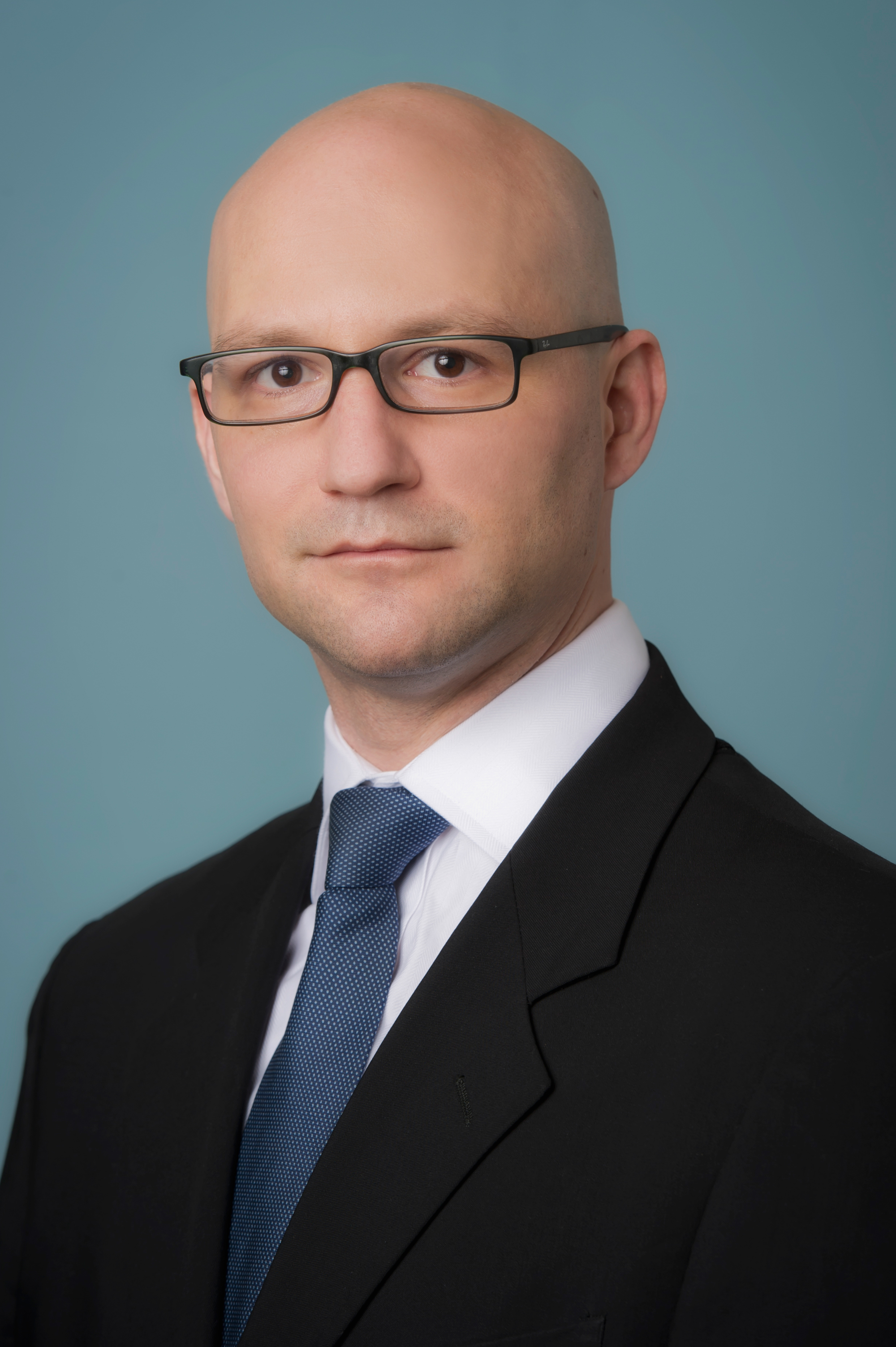
Former Nonresident Scholar, South Asia Program
Tankel was a nonresident scholar at the Carnegie Endowment, where his research focuses on insurgency, terrorism, and the evolution of nonstate armed groups.
Recent Work
Stephen Tankel
Stephen Tankel
Carnegie does not take institutional positions on public policy issues; the views represented herein are those of the author(s) and do not necessarily reflect the views of Carnegie, its staff, or its trustees.

Russia is testing the waters of NATO’s mutual defense clause. What do strikes in Romanian territorial waters mean for the alliance’s posture toward Moscow?

Dimitar Bechev

With its public finances in shambles, the far right polling at 35 percent ahead of the 2027 presidential election, and a growing protest movement, is France’s crisis a threat to the EU’s geopolitical awakening?

Rym Momtaz, ed.

Europe is facing rising populism internally as well as external pressures from Russia, China, Turkey, and the United States.
Dimitar Bechev

The new U.S.–Denmark–Greenland agreement will help Washington exert political, economic, and financial dominance under the guise of security. Yet, it acknowledged Copenhagen’s and Nuuk’s sovereignty on the island.

Marc Pierini

A summer of escalation in the Black Sea has hurt Ukraine economically and is exacerbating world food security. A truce is needed—as is a broader reframing of Europe’s Ukraine strategy.

Thomas de Waal