

Q&A
Suzanne Maloney, Aaron David Miller, Karim Sadjadpour
{
  "authors": [
    "Karim Sadjadpour"
  ],
  "type": "legacyinthemedia",
  "centerAffiliationAll": "dc",
  "centers": [
    "Carnegie Endowment for International Peace"
  ],
  "collections": [],
  "englishNewsletterAll": "menaTransitions",
  "nonEnglishNewsletterAll": "",
  "primaryCenter": "Carnegie Endowment for International Peace",
  "programAffiliation": "MEP",
  "programs": [
    "Middle East"
  ],
  "projects": [],
  "regions": [
    "Middle East",
    "Iran"
  ],
  "topics": [
    "Political Reform",
    "Nuclear Policy"
  ]
}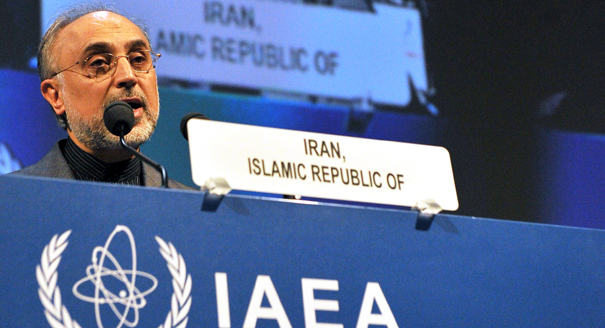
Source: Getty
Dialing down the rhetoric between Israel, Iran, and the United States is an important component in allowing coercive sanctions and diplomacy to run its course.
Source: MSNBC's Andrea Mitchell Reports
Speaking on MSNBC's Andrea Mitchell Reports, Carnegie's Karim Sadjadpour explained that the rhetoric between Iran and Israel has consistently escalated over the course of the last several months. However, both President Obama and Supreme Leader Ayatollah Khamenei have recently made conciliatory statements that have worked to dial down the temperature. Sadjadpour suggested that Iran sees little incentive to be transparent because transparency would just expose Tehran's illicit activities. “For a diplomatic solution to work, Iran must not feel as though it will be penalizing itself for being transparent,” noted Sadjadpour. For coercive sanctions and diplomacy to work, Sadjadpour argued that bellicose rhetoric must be kept to a minimum. “Whenever Prime Minister Netanyahu makes a statement about going to war with Iran, it causes speculation in the world oil market and spikes the price of oil,” said Sadjadpour. This inevitability blunts the power of any sanctions regime and demonstrates the importance of circumspect rhetoric.

Senior Fellow, Middle East Program
Karim Sadjadpour is a senior fellow at the Carnegie Endowment for International Peace, where he focuses on Iran and U.S. foreign policy toward the Middle East.
Recent Work


Suzanne Maloney, Aaron David Miller, Karim Sadjadpour

Aaron David Miller, Karim Sadjadpour, Robin Wright
Carnegie does not take institutional positions on public policy issues; the views represented herein are those of the author(s) and do not necessarily reflect the views of Carnegie, its staff, or its trustees.

Before the next wave of EU enlargement takes place, the union needs to grapple with thorny questions of how power is distributed among its members.


Emil Sondaj Hansen, Ditte Brasso Sørensen

As the EU confronts profound challenges, several leaders have called for fundamental reform to the union’s model—but only modest, superficial changes have resulted. What if Europe really could be reimagined from zero today: What should such a redesigned European order look like?

Richard Youngs, ed.

When the U.S.-Iran memorandum of understanding was announced, the UK, France, Germany, and Italy declared their readiness to help demine the Strait of Hormuz and lift nuclear sanctions on Tehran. But does Europe need new tools to recover a diplomatic role?

Rym Momtaz, ed.

The EU’s new migration policy is not suited to today’s realities. With climate change increasingly becoming a driver of displacement, Europe needs to rethink its deterrence-focused approach.

Shana Tabak
Europe seems to have accepted its sidelining in the Middle East. The EU must reassert its support for the international rules-based order and step up engagement.
Rym Momtaz