• Research
  • Strategic Europe
  • About
  • Experts
Carnegie Europe logoCarnegie lettermark logo
EUUkraine
  • Donate
{
  "authors": [
    "Michael D. Swaine"
  ],
  "type": "legacyinthemedia",
  "centerAffiliationAll": "dc",
  "centers": [
    "Carnegie Endowment for International Peace"
  ],
  "collections": [],
  "englishNewsletterAll": "asia",
  "nonEnglishNewsletterAll": "",
  "primaryCenter": "Carnegie Endowment for International Peace",
  "programAffiliation": "AP",
  "programs": [
    "Asia"
  ],
  "projects": [],
  "regions": [
    "East Asia",
    "China"
  ],
  "topics": [
    "Political Reform",
    "Security",
    "Military"
  ]
}
Source: Getty

In The Media

China's Assertive Behavior—Part Four: The Role of the Military in Foreign Crises

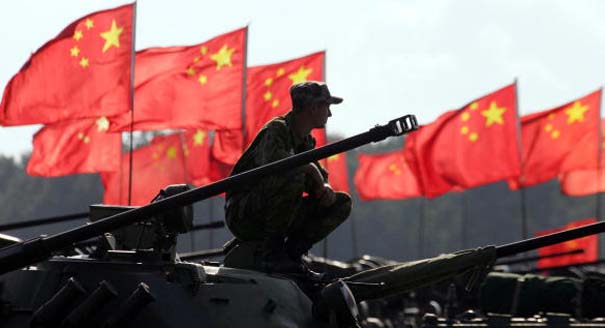
Although the People's Liberation Army exerts relatively little influence over Chinese decision-making, it plays a somewhat larger role during crises, when senior leaders often rely on the military for intelligence and implementation.

Link Copied
By Michael D. Swaine
Published on Apr 4, 2012

Source: China Leadership Monitor

The previous essay in this series on China‘s assertive behavior examined the general role of the Chinese military in the PRC foreign policy process, focusing on leadership and organizational issues. This China Leadership Monitor (CLM) essay builds directly on that essay by focusing in particular on the military‘s role in leadership decision making and lower-level implementation with regard to political-military crises with foreign powers.

As one would expect, the same caveats apply in this instance as with the previous CLM, except even more so. That is, very little detailed, reliable information exists regarding crisis decision making in general and the military‘s role in particular, especially concerning the informal and high-level dimensions of the decision making process. Much of the information presented herein is thus derived from interviews with both civilian and military Chinese scholars and analysts conducted by the author and other analysts—especially Bonnie Glaser and Iain Johnston—and from the existing literature on past political-military crises. The latter includes some of the findings to date of an ongoing collaborative project on crisis management issues in which the author is involved.

Hence, many of the observations herein are tentative and certainly subject to future clarification and correction. Nonetheless, enough is known about certain aspects of the role of the PLA in foreign political-military crises to draw an overall picture of the decision process, and to identify significant gaps or gray areas in our knowledge.

This essay covers seven areas of relevance to the military‘s role in crisis decision making.

  • The Main Participants
  • The High-level Deliberation and Decision Process
  • Senior Advisory and Management Groups
  • Lower-Level Advisory and Management Groups
  • Intelligence and Information Flows
  • Pre-existing Plans
  • Research Institutes
  • Unplanned or Uncontrolled Behavior

Within each area, the more general features of the crisis decision making structure and process often provide the larger context and background for our assessment of the military‘s role and presence. Some of this analysis is drawn from the analysis of the military‘s role in foreign policy presented in CLM 36. And, as with that essay, this study will also conclude with a summary and overall assessment.

About the Author

Michael D. Swaine

Former Senior Fellow, Asia Program

Swaine was a senior fellow at the Carnegie Endowment for International Peace and one of the most prominent American analysts in Chinese security studies.

    Recent Work

  • Other
    What Kind of Global Order Should Washington and Beijing Strive For?

      Michael D. Swaine

  • Commentary
    A Smarter U.S. Strategy for China in Four Steps

      Michael D. Swaine

Michael D. Swaine
Former Senior Fellow, Asia Program
Michael D. Swaine
Political ReformSecurityMilitaryEast AsiaChina

Carnegie does not take institutional positions on public policy issues; the views represented herein are those of the author(s) and do not necessarily reflect the views of Carnegie, its staff, or its trustees.

More Work from Carnegie Europe

  • Commentary
    Strategic Europe
    Europe on Iran: Gone with the Wind

    Europe’s reaction to the war in Iran has been disunited and meek, a far cry from its previously leading role in diplomacy with Tehran. To avoid being condemned to the sidelines while escalation continues, Brussels needs to stand up for international law.

      Pierre Vimont

  • Commentary
    Strategic Europe
    Macron Makes France a Great Middle Power

    France has stopped clinging to notions of being a great power and is embracing the middle power moment. But Emmanuel Macron has his work cut out if he is to secure his country’s global standing before his term in office ends.

      • Rym Momtaz

      Rym Momtaz

  • Commentary
    How Can Europe Renew a Stalled Enlargement Process?

    Despite offering security benefits to candidates and the EU alike, the enlargement agenda appears stalled. Why is progress not being made, and is it time for Europe to rethink its approach?

      Sylvie Goulard, Gerald Knaus

  • Commentary
    Strategic Europe
    Can Europe Still Matter in Syria?

    Europe’s interests in Syria extend beyond migration management, yet the EU trails behind other players in the country’s post-Assad reconstruction. To boost its influence in Damascus, the union must upgrade its commitment to ensuring regional stability.

      Bianka Speidl, Hanga Horváth-Sántha

  • Commentary
    Strategic Europe
    Taking the Pulse: Can the EU Attract Foreign Investment and Reduce Dependencies?

    EU member states clash over how to boost the union’s competitiveness: Some want to favor European industries in public procurement, while others worry this could deter foreign investment. So, can the EU simultaneously attract global capital and reduce dependencies?

      • Rym Momtaz

      Rym Momtaz, ed.

Get more news and analysis from
Carnegie Europe
Carnegie Europe logo, white
Rue du Congrès, 151000 Brussels, Belgium
  • Research
  • Strategic Europe
  • About
  • Experts
  • Projects
  • Events
  • Contact
  • Careers
  • Privacy
  • For Media
  • Gender Equality Plan
Get more news and analysis from
Carnegie Europe
© 2026 Carnegie Endowment for International Peace. All rights reserved.






