

Paper
James M. Acton, Ankit Panda
{
  "authors": [
    "James M. Acton"
  ],
  "type": "legacyinthemedia",
  "centerAffiliationAll": "dc",
  "centers": [
    "Carnegie Endowment for International Peace"
  ],
  "collections": [
    "U.S. Nuclear Policy",
    "Korean Peninsula"
  ],
  "englishNewsletterAll": "ctw",
  "nonEnglishNewsletterAll": "",
  "primaryCenter": "Carnegie Endowment for International Peace",
  "programAffiliation": "NPP",
  "programs": [
    "Nuclear Policy"
  ],
  "projects": [],
  "regions": [
    "North America",
    "United States",
    "East Asia",
    "North Korea"
  ],
  "topics": [
    "Nuclear Policy",
    "Arms Control"
  ]
}
Source: Getty
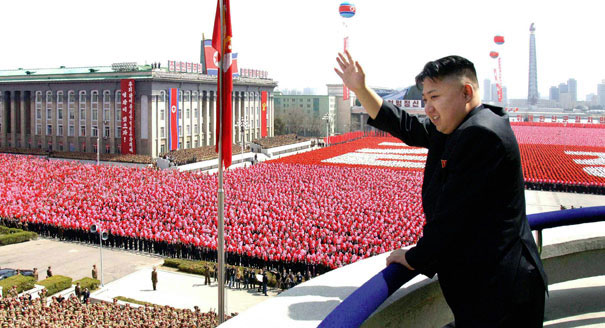
North Korea carried out a third nuclear test underground at a remote location in the northeastern part of the country, prompting new fears and international condemnation.
Source: PBS NewsHour
IMGXYZ15964IMGZYXAppearing on PBS's NewsHour, Carnegie's James Acton said that most people believe that Pyongyang's long term goal is developing a ballistic missile armed with a nuclear warhead that can threaten the United States. "In order to do that," said Acton, "you need a miniaturized, physically smaller and lighter nuclear device, so Pyongyang is claiming that is has successfully done that."
North Korea carried out a nuclear test underground at a remote location in the northeastern part of the country, prompting new fears and international condemnation. This is third nuclear test by North Korea since 2006 and the first test under the new leader, Kim Jong-un.
The U.N. Security Council voted just weeks ago to impose additional sanctions on North Korea. This latest test forced the Council into an emergency session where members condemned the actions and discuss more sanctions. Even China, North Korea’s sole ally, condemned the act, Acton said.
Acton clarified that the size of the device tested and the material it was made from remain unknown. "In fact, we don't even know definitively that this was larger than the previous two tests," said Acton. However, he went on to say that this test demonstrates North Korea is "moving along its arc of developing nuclear weapons that can threaten the United States."

Jessica T. Mathews Chair, Co-director, Nuclear Policy Program
Acton holds the Jessica T. Mathews Chair and is co-director of the Nuclear Policy Program at the Carnegie Endowment for International Peace.
Recent Work

James M. Acton, Ankit Panda
James M. Acton
Carnegie does not take institutional positions on public policy issues; the views represented herein are those of the author(s) and do not necessarily reflect the views of Carnegie, its staff, or its trustees.

Ahead of a tough winter for Ukraine, Donald Trump’s swing back toward Russia bodes ill. But instead of panicking, Kyiv’s European allies are focusing on action.

Rym Momtaz

While the EU and European governments are embracing the much-lauded middle-power moment, this entails three difficult conundrums.

Richard Youngs

Europe is facing rising populism internally as well as external pressures from Russia, China, Turkey, and the United States.

Dimitar Bechev

European NATO countries are wrestling with the possibility of U.S. disengagement from the alliance. With the continent’s security increasingly uncertain, governments must restore the credibility of their collective defense.



Hans-Dieter Lucas, Adam Thomson, Pierre Vimont

The new U.S.–Denmark–Greenland agreement will help Washington exert political, economic, and financial dominance under the guise of security. Yet, it acknowledged Copenhagen’s and Nuuk’s sovereignty on the island.

Marc Pierini