

Paper
James M. Acton, Ankit Panda
{
  "authors": [
    "James M. Acton"
  ],
  "type": "legacyinthemedia",
  "centerAffiliationAll": "dc",
  "centers": [
    "Carnegie Endowment for International Peace"
  ],
  "collections": [
    "U.S. Nuclear Policy"
  ],
  "englishNewsletterAll": "ctw",
  "nonEnglishNewsletterAll": "",
  "primaryCenter": "Carnegie Endowment for International Peace",
  "programAffiliation": "NPP",
  "programs": [
    "Nuclear Policy"
  ],
  "projects": [],
  "regions": [
    "North America",
    "United States"
  ],
  "topics": [
    "Nuclear Policy",
    "Nuclear Energy"
  ]
}
Source: Getty
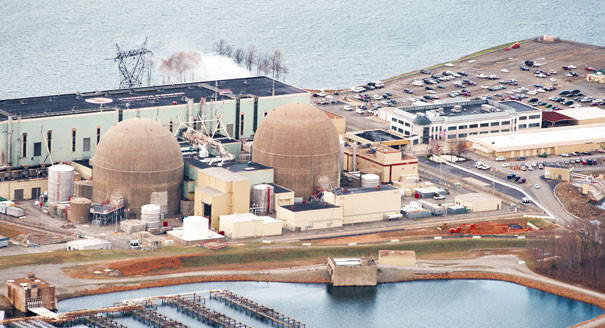
The former chairman of the U.S. Nuclear Regulatory Commission, Gregory Jaczko, is back in the news with a story that’s causing a stir in the nuclear industry.
Source: Platts Energy Week
The former chairman of the U.S. Nuclear Regulatory Commission is back in the news with a story that’s causing a stir in the nuclear industry. At a Washington conference, Gregory Jaczko said all 104 nuclear power reactors in the U.S. are fundamentally flawed and should be phased out. What will be the fallout of his remarks in the industry and the public? Carnegie's James Acton spoke with Platts Energy Week host Bill Loveless.
"The chairman made remarks about the problem of decay heat and there is no question that the problems of mismanaging decay heat were vividly demonstrated in the Fukushima accident," Acton said, adding that he thinks that opposing the filtered, hardened venting, which is an issue that is going before the NRC at the moment, is a mistake on behalf of the industry.
"I think that had the industry been pro-active about this issue, as they had been very pro-active about the so-called FLEX approach for managing a severe accident should one occur, the industry would have done itself a much greater service than by trying to oppose the particular step of filtered, hardened venting," Acton said.
"My interpretation of the chairman's comments was that he was saying that there are issues with current reactors and that they should be phased out over time, that is something that I fundamentally disagree with," concluded Acton.

Jessica T. Mathews Chair, Co-director, Nuclear Policy Program
Acton holds the Jessica T. Mathews Chair and is co-director of the Nuclear Policy Program at the Carnegie Endowment for International Peace.
Recent Work

James M. Acton, Ankit Panda
James M. Acton
Carnegie does not take institutional positions on public policy issues; the views represented herein are those of the author(s) and do not necessarily reflect the views of Carnegie, its staff, or its trustees.

European Commission President Ursula von der Leyen is about to give her annual address on the state of the EU. Here’s what she won’t—but should—say.

Rym Momtaz

Radical-right parties are expected to do well in upcoming elections in four of the EU's biggest member states. If successful, they could prevent the union from addressing key challenges ahead.

Stefan Lehne

Canadian Prime Minister Mark Carney has twice inspired praise for standing up to U.S. President Donald Trump: at the 2026 World Economic Forum in Davos and on Canada-U.S. trade negotiations. Is Carney showing a third way better than the EU has in dealing with the Trump administration?
Rym Momtaz, ed.

European states control several Overseas Countries and Territories around the world that carry strategic, economic, and environmental weight. As great powers challenge the rules-based order, defending them is a geopolitical imperative for Europe.

Marc Pierini
In supporting Europe’s far-right, MAGA and Russia both want the same thing: a weaker EU. Europe must defend itself without abandoning the openness these forces exploit.

Armida van Rij