

{
  "authors": [
    "Julie Leighton"
  ],
  "type": "commentary",
  "centerAffiliationAll": "",
  "centers": [
    "Carnegie Endowment for International Peace",
    "Carnegie Russia Eurasia Center"
  ],
  "collections": [],
  "englishNewsletterAll": "",
  "nonEnglishNewsletterAll": "",
  "primaryCenter": "Carnegie Endowment for International Peace",
  "programAffiliation": "",
  "programs": [],
  "projects": [],
  "regions": [],
  "topics": []
}
Source: Getty
St. Petersburg Summit: Worth the Price of the Flight?
Even before the G20 summit’s formal opening its failure was predictable. Too many factors will make constructive dialogue between the United States and Russia impossible.
G20-2013 is being held in St. Petersburg on September 5-6. Even before the summit’s formal opening its failure was predictable. Too many factors—Snowden, Syria, missile defense, human rights, Magnitsky law and the subsequent ban on adoption of Russian orphans to American families, as well as civil society issues—just to name a few—will make constructive dialogue between the United States and Russia impossible.
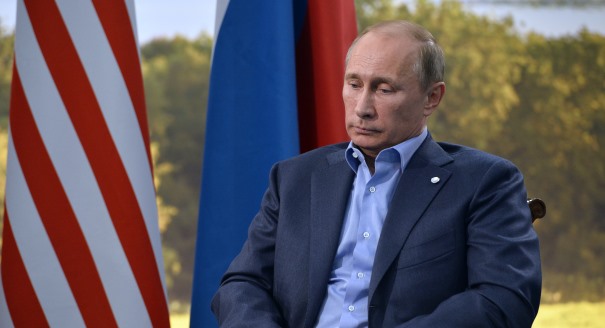
But while the roadblocks are sizeable, they are not the main reason this summit will fail. Dialogue between Obama and Putin has reached a point where the two seem more like bitter exes than heads of state.
The media is crying “Cold War.” If the relationship has not actually degraded to the polarity of the late twentieth century, the coverage and analysis of it most certainly has. Just this morning the BBC had a video clip explaining that the superpowers’ strained relations were due, in part, to a personality clash between the two leaders. This was followed by a clip of John Kerry saying that he and Sergey Lavrov, because of their shared experience in amateur hockey, understood that diplomacy could have “occasional collisions.” The video editor must have had a sense of irony because this was followed with a clip of Lavrov explaining that they could make a difference in American—Russian relations by acting “as adults.”
If a foreign minister of one of the largest economies in the world has to publicly announce that international relations will function more smoothly if everyone acts their age, is there really any hope for this summit? If the baseline for acceptable behavior is one that is usually used for children, what can the public realistically expect from this global meeting? Will Putin be on one side, Obama on the other, and Merkel and Hollande ferrying notes between the two? This is beginning to look more like a middle school spat than a high state meeting.
The Associated Press recently published an article titled “Putin Warns West Over Syria Action” that touched on the personal relationship between the two heads of state. It quotes both leaders saying that their occasional clashes will not bar productivity. We’ll see.
Hosting the G20 has cost Russia millions. The event is occurring at a pivotal moment, at a time when even the smallest agreement could immediately and positively impact the global community. But as of now, with relations between Putin and Obama being what they are, is attending this summit really worth the price of the flight? Or would a Skype meeting have been a better alternative?
Julie Leighton is an independent Russian researcher; she was a research assistant at Russia and Eurasia Program, Carnegie Endowment for International Peace.
About the Author
Julie Leighton
Former Research Assistant, Russia and Eurasia Program
Carnegie does not take institutional positions on public policy issues; the views represented herein are those of the author(s) and do not necessarily reflect the views of Carnegie, its staff, or its trustees.