

Paper
James M. Acton, Ankit Panda
{
  "authors": [
    "James M. Acton"
  ],
  "type": "legacyinthemedia",
  "centerAffiliationAll": "dc",
  "centers": [
    "Carnegie Endowment for International Peace"
  ],
  "collections": [],
  "englishNewsletterAll": "ctw",
  "nonEnglishNewsletterAll": "",
  "primaryCenter": "Carnegie Endowment for International Peace",
  "programAffiliation": "NPP",
  "programs": [
    "Nuclear Policy"
  ],
  "projects": [],
  "regions": [
    "South Asia",
    "India",
    "East Asia",
    "Japan"
  ],
  "topics": [
    "Nuclear Policy",
    "Nuclear Energy"
  ]
}
Source: Getty
In the near future—possibly within the next twelve months—Japan will face two genuinely tough choices: whether to commission the Rokkasho Reprocessing Plant and whether to sell nuclear reactor components to India.
Source: Hiroshima Report
Japan is where the nuclear age began on August 6, 1945. And, for the last 68 years, the Japanese people have been at the forefront of efforts to bring this perilous era to an end. The Hiroshima Report continues this tradition by usefully highlighting where progress toward a more secure and more just nuclear future has been made—and where it hasn’t.
Rightly, the Hiroshima Report scores Japan highly on disarmament (where Japan ranks first among the ten non-nuclear weapon states surveyed) and non-proliferation (where Japan ranks equal second among the same group). That said, it must also be acknowledged that most of Japan’s points were earned for activities that did not come at the expense of conflicting policy goals. For example, Japan’s voting record in the United Nations General Assembly and its adoption of tougher IAEA safeguards, while laudable, did not carry any particular political cost (even if enhanced safeguards do come with a significant financial cost).
In the near future—possibly within the next twelve months—Japan will face two genuinely tough choices: whether to commission the Rokkasho Reprocessing Plant and whether to sell nuclear reactor components to India. These decisions are highly consequential for the future of the nuclear order. But, doing the right thing will incur a high political cost because it will mean sacrificing competing objectives.The most important reason why Japan fares less well in the Hiroshima Report’s nuclear security rankings than in disarmament or non-proliferation is its stockpile of separated plutonium, which is far larger than any other non-nuclear weapon state’s. In fact, the build-up of this material shouldn’t be viewed purely as a nuclear security problem; it’s a non-proliferation issue too.
Most Japanese plutonium was separated in France and the United Kingdom (and much of that material is still awaiting transfer back to Japan). However, Japan has long sought to reprocess spent nuclear fuel on an industrial scale domestically and built Rokkasho Reprocessing Plant for this purpose. After a series of delays—some resulting from design flaws—the plant’s owner, Japan Nuclear Fuels Limited, hopes to commission the facility early next year, once new regulatory requirements have entered into force in December.
If Rokkasho Reprocessing Plant is started next year, it is virtually inevitable that Japan’s separated plutonium stockpile will grow quickly. Nominally, Japan intends to use its separated plutonium to fuel some of its nuclear reactors. However, J-MOX, the facility in which this plutonium will be fabricated into fuel, is still under construction and will not come online until 2016 at the earliest. Moreover, plans for the utilization of its product were developed before the Fukushima Daiichi accident. Local opposition to nuclear power could make implementing these plans extremely difficult. As a result, it is likely that, if Japan starts Rokkasho Reprocessing Plant in the short term, plutonium production will outpace plutonium use.
To be sure, delaying the commissioning of Rokkasho Reprocessing Plant would carry a high political price. In particular, many citizens of Aomori prefecture are eager to see the plant start soon because they fear that, if it doesn’t, their prefecture, where spent fuel from all over Japan is stored, will be turned into a permanent dumping ground for nuclear waste. But, this opposition is precisely why the facility represents a critical test case for the Japanese commitment to non-proliferation and nuclear security.
Japan’s second dilemma is also a consequence of its advanced nuclear-industrial base. Three of the four most modern American and French nuclear reactor designs contain components that can be made in Japan and nowhere else. The United States and France wish to sell these reactors to India, which requires Tokyo and New Delhi to conclude a nuclear cooperation agreement.
Nuclear cooperation with India places Japan in a bind. As the Hiroshima Report shows, India’s record on disarmament, non-proliferation and nuclear security is far from exemplary. New Delhi has not signed either the Nuclear Non-Proliferation Treaty or the Comprehensive Nuclear Test Ban Treaty, and does not place all of its nuclear facilities under IAEA safeguards. Tokyo worries—quite rightly—that selling reactor components to India would weaken the non-proliferation regime.
India and Japan began negotiating a cooperation agreement in 2010. Disarmament and non-proliferation were priorities for the Democratic Party of Japan, which formed the government at that time. During negotiations, Japan insisted that it should have the right to terminate cooperation should India conduct another nuclear test. Even this provision would not really be adequate since it would do nothing to deter India from testing after sales of reactor components were completed. Nonetheless, India was not willing to accept this minimal requirement and three rounds of talks went nowhere.
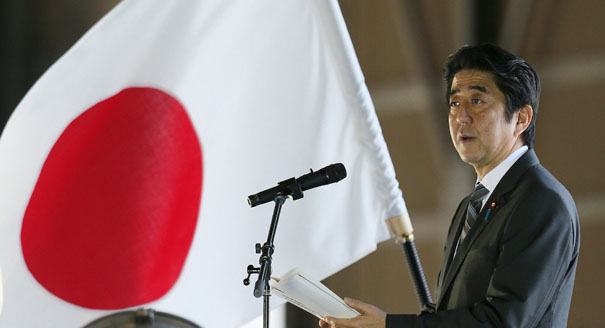
Following a prolonged hiatus after the Fukushima accident, the Abe administration restarted negotiations in September 2013. To its great credit, the new administration reportedly stuck to its predecessor’s demands. However, in the coming months, Tokyo could come under intense pressure—from India, France and the United States—to stop making a fuss, drop this demand and conclude an agreement.
It is critical that Japan holds firm. Another Indian nuclear test is a real possibility. In May 1998, India tested a hydrogen bomb (amongst other devices). However, it is almost certain that this weapon did not work as intended. As a result, there appears to be pressure from some in India’s nuclear establishment to test again. Indeed, the desire to keep open the option of testing is probably a major reason why India has not signed the Comprehensive Nuclear Test Ban Treaty. To be sure, an Indian test is unlikely in the next few years. But, it the next decade or two it absolutely cannot be ruled out.
Once again Japan faces a tough choice. Because of the strength of the U.S.-Japan relationship, the pressure from Washington to agree to cooperation on Indian terms could be acute. Meanwhile, Tokyo seeks to forge a closer relationship with New Delhi, which will be easier if Tokyo backs down in negotiations. That said, if India tests another nuclear weapon, great injury will be done to the non-proliferation regime. If Japan is serious about helping to create a world without nuclear weapons, it must ensure that New Delhi will pay a high price for testing.
This op-ed was originally published in the Hiroshima Report.

Jessica T. Mathews Chair, Co-director, Nuclear Policy Program
Acton holds the Jessica T. Mathews Chair and is co-director of the Nuclear Policy Program at the Carnegie Endowment for International Peace.
Recent Work

James M. Acton, Ankit Panda
James M. Acton
Carnegie does not take institutional positions on public policy issues; the views represented herein are those of the author(s) and do not necessarily reflect the views of Carnegie, its staff, or its trustees.

When the U.S.-Iran memorandum of understanding was announced, the UK, France, Germany, and Italy declared their readiness to help demine the Strait of Hormuz and lift nuclear sanctions on Tehran. But does Europe need new tools to recover a diplomatic role?

Rym Momtaz, ed.
Amid uncertainty caused by the Iran war, the global drive for nonproliferation has stalled. With Europe diplomatically marginalized and countries reassessing their nuclear options, efforts to curb the spread of nuclear weapons risk becoming irrelevant.

Jane Darby Menton

French President Emmanuel Macron has unveiled his country’s new nuclear doctrine. Are the changes he has made enough to reassure France’s European partners in the current geopolitical context?
Rym Momtaz, ed.
For years, the United States anchored global cyber diplomacy. As Washington rethinks its leadership role, the launch of the UN’s Cyber Global Mechanism may test how allies adjust their engagement.


Patryk Pawlak, Chris Painter
Europe’s reaction to the war in Iran has been disunited and meek, a far cry from its previously leading role in diplomacy with Tehran. To avoid being condemned to the sidelines while escalation continues, Brussels needs to stand up for international law.

Pierre Vimont