

{
  "authors": [
    "Nicholas D. Wright"
  ],
  "type": "other",
  "centerAffiliationAll": "",
  "centers": [
    "Carnegie Endowment for International Peace"
  ],
  "collections": [],
  "englishNewsletterAll": "",
  "nonEnglishNewsletterAll": "",
  "primaryCenter": "Carnegie Endowment for International Peace",
  "programAffiliation": "",
  "programs": [],
  "projects": [],
  "regions": [],
  "topics": []
}
Source: Getty
Dissociable Influences of Skewness and Valence on Economic Choice and Neural Activity
Asymmetry in distributions of potential outcomes and whether those potential outcomes reflect gains or losses both exert a powerful influence on value-based choice.
Source: PLOS ONE
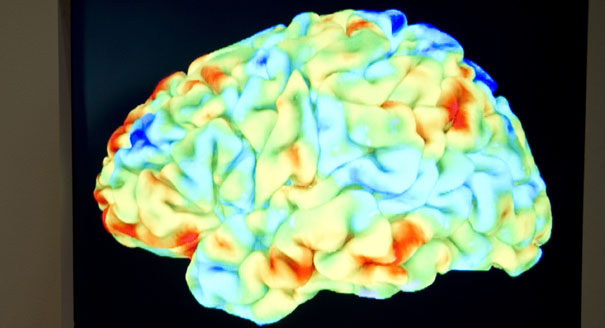
Asymmetry in distributions of potential outcomes (i.e. skewness), and whether those potential outcomes reflect gains or losses (i.e. their valence), both exert a powerful influence on value-based choice. How valence affects the impact of skewness on choice is unknown. Here by orthogonally manipulating the skewness and valence of economic stimuli we show that both have an influence on choice. We show that the influence of skewness on choice is independent of valence, both across and within subjects. fMRI data revealed skew-related activity in bilateral anterior insula and dorsomedial prefrontal cortex, which shows no interaction with valence. Further, the expression of skew-related activity depends on an individual’s preference for skewness, and this was again independent of valence-related preference. Our findings highlight the importance of skewness in choice and show that its influence, both behaviourally and neurally, is distinct from an influence of valence.
The full article was published in PLOS ONE, volume 8, issue 12.
About the Author

Former Nonresident Associate, Nuclear Policy Program
Wright was a nonresident associate in the Nuclear Policy Program at the Carnegie Endowment. His research draws on his background in neuroscience to explore political decisionmaking in economics and nuclear security.
Carnegie does not take institutional positions on public policy issues; the views represented herein are those of the author(s) and do not necessarily reflect the views of Carnegie, its staff, or its trustees.