

Article
A notable degree of participative democracy has firmly arrived in Europe. But to have more far-reaching impact, democratic deliberation needs to move into a radically new phase.
Richard Youngs
{
  "authors": [
    "Michael Cecire"
  ],
  "type": "commentary",
  "centerAffiliationAll": "",
  "centers": [
    "Carnegie Endowment for International Peace",
    "Carnegie Russia Eurasia Center"
  ],
  "collections": [],
  "englishNewsletterAll": "",
  "nonEnglishNewsletterAll": "",
  "primaryCenter": "Carnegie Endowment for International Peace",
  "programAffiliation": "",
  "programs": [],
  "projects": [],
  "regions": [
    "Caucasus",
    "Georgia"
  ],
  "topics": [
    "Political Reform"
  ]
}
Source: Getty
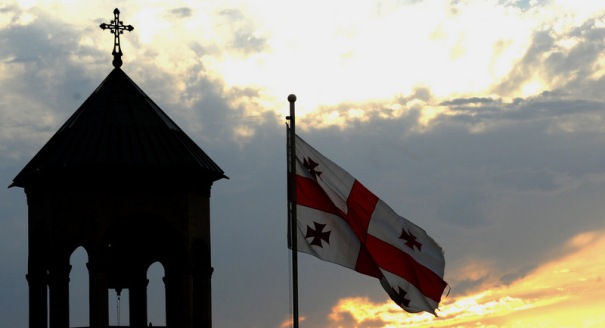
The new Georgian government’s proposed legislation would dramatically decentralize power exercised by the center. Should this bill pass in a meaningful form, Georgian democracy and economic development might seriously benefit.
While protesters battle to keep the dream of Ukraine's independent and European future alive, big things are also happening in fellow Eastern Partnership state Georgia. Unlike Ukraine, Georgia arrived to the summit in Vilnius with a pen in hand and initialed its own Association Agreement with the European Union. Though it still has to finalize and sign its Agreement, which is widely anticipated to occur in 2014, few expect Tbilisi to do anything but maintain its longstanding Euro-Atlantic trajectory.
With Vilnius in the rear view mirror and the recent departures of political heavyweights Mikheil Saakashvili and Bidzina Ivanishvili, more mundane tasks of policymaking headline the Georgian political agenda. One such initiative on local governance reform, released last week, was introduced to little fanfare or international media attention. But this proposed legislation could be a game changer for Georgia's democratic and, potentially, economic development.
Under the now-opposition United National Movement (UNM), ejected from power in the October 2012 parliamentary elections, Georgia's political system was sharply centralized in Tbilisi, broadly speaking, and in the presidency in particular. This was not entirely a bad thing, considering that the UNM inherited a state in 2004 that had an uneven writ at best over wide swaths of the country outside the capital. But over time, the UNM did not stop with strengthening the state, and systematically undermined local self-rule. By 2008, presidentially-appointed regional governors exercised supervisory authority over municipalities, and income tax revenues—once shared with localities—were diverted to central coffers. Though former President Mikheil Saakashvili claimed to aim toward decentralization by moving the constitutional court to Batumi and parliament to Kutaisi, the practical effect was not an actual decentralization of power but only the physical dispersal of state bodies clearly subordinate to the president and his narrow circle.
In contrast, the new government's proposed legislation would dramatically decentralize power exercised by the center. Currently, only five cities in Georgia are considered "self-governed," which offers a higher degree of home rule, but only Tbilisi's mayor is directly elected. Under the proposed legislation, all cities with populations greater than 15,000 (and potentially a few others) would be "self-governed" and have direct elections of mayors as well as city councils. But even in non-qualifying localities, gamgeblebi—municipal heads—would be directly elected by voters along with the local councils. On the provincial level, the governor would be balanced by a regional council comprised of representatives of municipalities. Of crucial importance, talks are also underway restore the sharing of income tax revenues with the localities.
If passed, reforms along these lines could offer a major boost to Georgia's democratic development. In years past, local residents often had little or no say on the way their towns were run or the way money was allocated. At best, functionaries in Tbilisi determined what was best for regional localities, with minimal or no local input. At worst, things happened only when the president took a shine to some town or village—or even not at all.
Just as importantly, decentralization could be a potential boon to regional economic development. Greater local control could allow investors and entrepreneurs to go right to the source without having to check in with distant planners in Tbilisi. And presumably, local governments will have a better sense of local needs and can budget, plan, and execute accordingly. One also hopes that greater possibilities in the regions will help arrest the debilitating brain drain into the capital that political and economic centralization encouraged.
Of course, the proposal does have its detractors, including the powerful Georgian Orthodox Church. The Patriarch weighed in quickly to criticize the draft legislation, calling it a "threat" and warning that it would promote separatism. Parliament Speaker Davit Usupashvili correctly countered by pointing out that the Abkhazian and South Ossetian situation was not a consequence of an overabundance of self-rule, but its deficit. Another ruling party MP, Tamar Kordzaia, meanwhile, criticized the Church for interfering in the affairs of the government.
The proposed bill is no panacea, but it could be a big step in the right direction. Should it pass in a meaningful form, Georgian democracy and economic development might seriously benefit. It would further broadcast the country's seriousness about tackling major political reforms, which could help shore up confidence among Georgian citizens and potential investors alike.
Michael Hikari Cecire is an associate scholar at the Foreign Policy Research Institute's Project on Democratic Transitions. He is also a former economic development practitioner.
Michael Cecire
Carnegie does not take institutional positions on public policy issues; the views represented herein are those of the author(s) and do not necessarily reflect the views of Carnegie, its staff, or its trustees.

A notable degree of participative democracy has firmly arrived in Europe. But to have more far-reaching impact, democratic deliberation needs to move into a radically new phase.

Richard Youngs

Much has been said of the changes Brussels is trying to make to the EU enlargement process. Here’s why gradual integration might—or might not—be the answer.

Dimitar Bechev

Before the next wave of EU enlargement takes place, the union needs to grapple with thorny questions of how power is distributed among its members.


Emil Sondaj Hansen, Ditte Brasso Sørensen

As the EU confronts profound challenges, several leaders have called for fundamental reform to the union’s model—but only modest, superficial changes have resulted. What if Europe really could be reimagined from zero today: What should such a redesigned European order look like?
Richard Youngs, ed.
Preparing candidate countries for EU membership is no longer enough. As the enlargement process becomes a reality, the union must also prepare its own societies.

Iliriana Gjoni