

Commentary
The EU’s new migration policy is not suited to today’s realities. With climate change increasingly becoming a driver of displacement, Europe needs to rethink its deterrence-focused approach.
Shana Tabak
{
  "authors": [
    "Scott Williamson"
  ],
  "type": "other",
  "centerAffiliationAll": "",
  "centers": [
    "Carnegie Endowment for International Peace"
  ],
  "collections": [],
  "englishNewsletterAll": "",
  "nonEnglishNewsletterAll": "",
  "primaryCenter": "Carnegie Endowment for International Peace",
  "programAffiliation": "",
  "programs": [],
  "projects": [],
  "regions": [
    "North Africa",
    "Egypt"
  ],
  "topics": []
}
Source: Getty
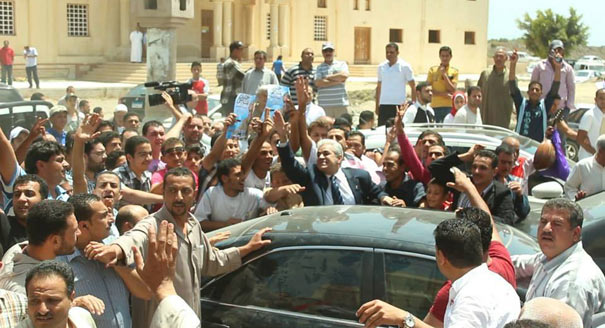
A summary of presidential candidate Hamdeen Sabahi’s campaign positions.
Egyptian presidential candidate Hamdeen Sabahi—the only challenger to Field Marshal Abdel Fattah el-Sisi for the presidency—will likely fail to capture a significant share of the vote in the upcoming election, scheduled for May 26 and 27. However, the veteran opposition politician has taken advantage of the campaign to challenge certain narratives surrounding Sisi’s candidacy. In television appearances, comments to the press, and his lengthy platform, Sabahi has emphasized democratic reforms and social justice and taken a nationalist stance on foreign policy. His positions are summarized below.
Since the military, led by Sisi, removed then Egyptian president Mohamed Morsi on July 3, 2013, Sabahi has argued that Sisi is a national hero but that the field marshal—and the army—should step back from politics. Sabahi has maintained this posture during the campaign, stressing the need for a civil, democratic state and saying at a recent campaign rally that “the army . . . must not rule.” In an interview with Egyptian television hosts Magdy al-Gallad and Khairy Ramadan, Sabahi claimed that the military is the property of the people and its leaders should be subjected to civilian oversight.
During the same interview, Sabahi followed Sisi’s lead and rejected the idea of an active Muslim Brotherhood presence under his presidency. He did, however, also criticize the security forces’ violent dispersal of a Brotherhood-led sit-in at Rabaa Square in August 2013 for excessive casualties. Sabahi said he would amend Egypt’s controversial law effectively banning protests, which he views as unconstitutional. He has criticized the imprisonment of revolutionary youth, claiming that there would be no prisoners of conscience under his administration.
Sabahi has adopted nationalist positions that challenge Egypt’s current foreign policy stance. Contesting Sisi’s attempts to restore the U.S. aid relationship, he has said that he would not accept aid from Washington—including for the military—although he would maintain relations with the United States on issues that are in Egypt’s national interest.
In addition, Sabahi has suggested that he would amend the peace treaty with Israel so that Egypt has freedom of movement in the Sinai, but he has also stated that he would honor all treaties even if he personally opposed them. He has spoken of maintaining a partnership with the Gulf states.
In contrast to Sisi, who has attempted to straddle the free market–public sector divide while offering something to both rich and poor, Sabahi has framed his economic messaging squarely around social justice. His economic platform calls for fighting poverty and eliminating unemployment. He wants to activate millions of small and medium projects—for industry, agriculture, and tourism—in the four years of his presidency. He refers to privatization as a “massacre” and calls for the county’s remaining state-owned companies, a source of “national wealth,” to be reformed, strengthened, and saved. Among other issues, the platform also discusses goals for developing Upper Egypt, strengthening the education system, building solar- and wind-power capacity, and expanding pensions and healthcare.
Scott Williamson
Former Junior Fellow, Middle East Program
Carnegie does not take institutional positions on public policy issues; the views represented herein are those of the author(s) and do not necessarily reflect the views of Carnegie, its staff, or its trustees.

The EU’s new migration policy is not suited to today’s realities. With climate change increasingly becoming a driver of displacement, Europe needs to rethink its deterrence-focused approach.

Shana Tabak
2026 has started in crisis, as the actions of unpredictable leaders shape an increasingly volatile global environment. To shift from crisis response to strategic foresight, what under-the-radar issues should the EU prepare for in the coming year?

Thomas de Waal
Despite the strategic importance of relations between the EU and the African Union, deep divisions remain between the blocs. At their upcoming summit, both partners should strive to build a mutually beneficial cooperation.

Marta Martinelli
The EU’s new Pact for the Mediterranean aims to reshape the bloc’s relations with its Southern neighborhood. But the initiative lacks concrete measures to address societal divides and the region’s pressing challenges.

Richard Youngs
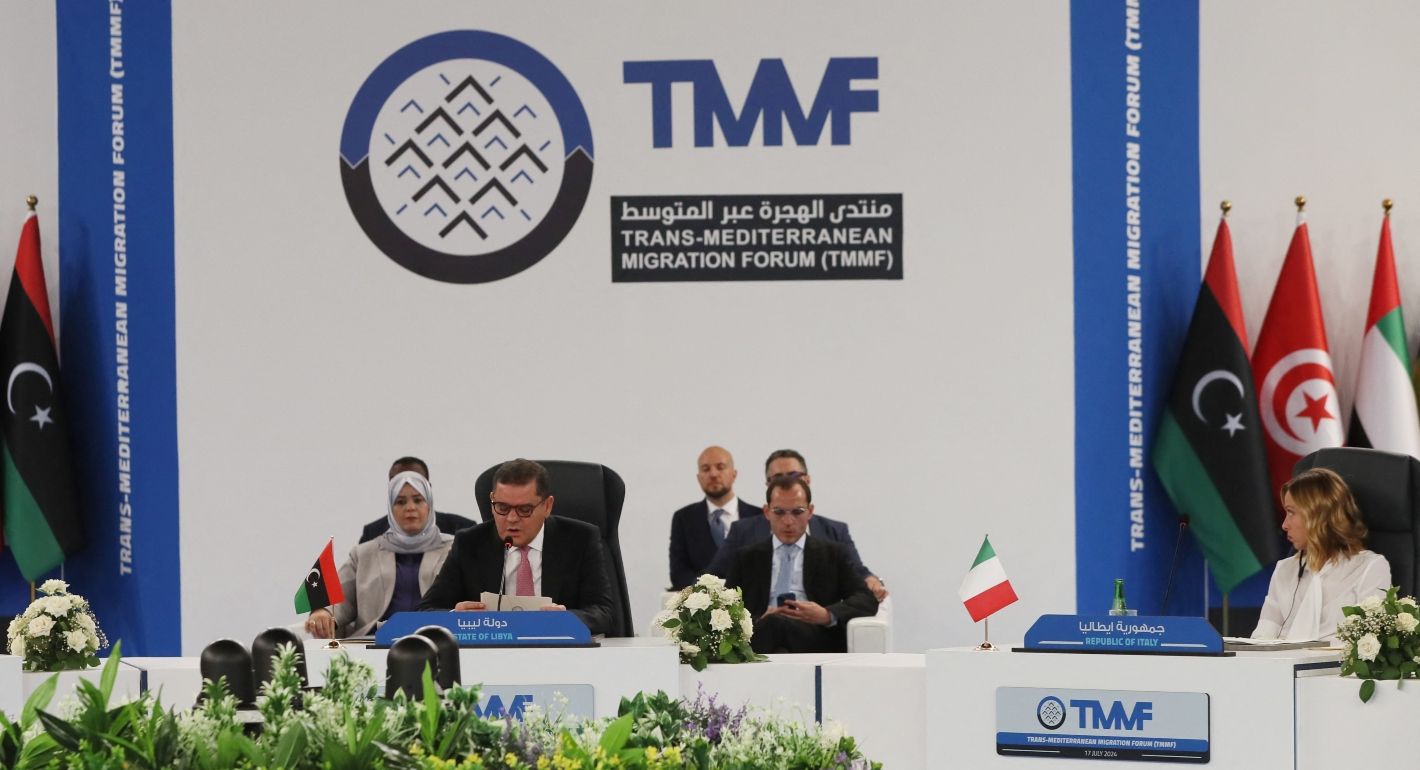
As the EU prepares a new pact for its Southern neighborhood, the union should balance economic and security interests with support for civil society, political reforms, and inclusive governance.
Hussein Baoumi