

Paper
James M. Acton, Ankit Panda
{
  "authors": [
    "James M. Acton"
  ],
  "type": "legacyinthemedia",
  "centerAffiliationAll": "dc",
  "centers": [
    "Carnegie Endowment for International Peace"
  ],
  "collections": [
    "U.S. Nuclear Policy"
  ],
  "englishNewsletterAll": "ctw",
  "nonEnglishNewsletterAll": "",
  "primaryCenter": "Carnegie Endowment for International Peace",
  "programAffiliation": "NPP",
  "programs": [
    "Nuclear Policy"
  ],
  "projects": [],
  "regions": [
    "North America",
    "United States",
    "Russia"
  ],
  "topics": [
    "Nuclear Policy"
  ]
}
Source: Getty
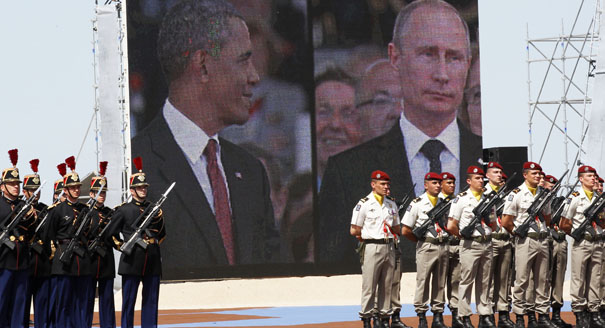
The United States has accused Russia of violating a 1987 missile treaty.
Source: Bloomberg TV
On Bloomberg TV’s Global Outlook, the Carnegie Endowment’s James Acton and Bloomberg’s Jonathan Allen discussed accusations that Russia has violated a 1987 missile treaty.
James Acton told Bloomberg TV that the United States does not have “any evidence that Russia has deployed prohibited missiles in large numbers, so I think right now the treaty does act as something of a constraint on the Russians, albeit an impartial one.”
Acton added that if Russia were to withdraw from the treaty and deploy missiles in large numbers, that would be of significant concern to the United States’ European allies. Acton also suggested that the United States take specific and targeted steps so that the Russians do not enjoy the benefits of their violation of the treaty.

Jessica T. Mathews Chair, Co-director, Nuclear Policy Program
Acton holds the Jessica T. Mathews Chair and is co-director of the Nuclear Policy Program at the Carnegie Endowment for International Peace.
Recent Work

James M. Acton, Ankit Panda
James M. Acton
Carnegie does not take institutional positions on public policy issues; the views represented herein are those of the author(s) and do not necessarily reflect the views of Carnegie, its staff, or its trustees.
European NATO countries are wrestling with the possibility of U.S. disengagement from the alliance. With the continent’s security increasingly uncertain, governments must restore the credibility of their collective defense.



Hans-Dieter Lucas, Adam Thomson, Pierre Vimont

The new U.S.–Denmark–Greenland agreement will help Washington exert political, economic, and financial dominance under the guise of security. Yet, it acknowledged Copenhagen’s and Nuuk’s sovereignty on the island.

Marc Pierini

A summer of escalation in the Black Sea has hurt Ukraine economically and is exacerbating world food security. A truce is needed—as is a broader reframing of Europe’s Ukraine strategy.

Thomas de Waal

European Commission President Ursula von der Leyen is about to give her annual address on the state of the EU. Here’s what she won’t—but should—say.

Rym Momtaz

Radical-right parties are expected to do well in upcoming elections in four of the EU's biggest member states. If successful, they could prevent the union from addressing key challenges ahead.

Stefan Lehne