

Paper
James M. Acton, Ankit Panda
{
  "authors": [
    "James M. Acton"
  ],
  "type": "legacyinthemedia",
  "centerAffiliationAll": "dc",
  "centers": [
    "Carnegie Endowment for International Peace"
  ],
  "collections": [
    "U.S. Nuclear Policy"
  ],
  "englishNewsletterAll": "ctw",
  "nonEnglishNewsletterAll": "",
  "primaryCenter": "Carnegie Endowment for International Peace",
  "programAffiliation": "NPP",
  "programs": [
    "Nuclear Policy"
  ],
  "projects": [],
  "regions": [
    "North America",
    "United States",
    "East Asia",
    "China"
  ],
  "topics": [
    "Nuclear Policy"
  ]
}
Source: Getty
It’s hard to dispute the notion that before spending billions of dollars on a new weapon, the Pentagon ought to be able to explain what it’s for. So it’s surprising how often this rule isn’t followed. Take the Advanced Hypersonic Weapon.
Source: Defense One
It’s hard to dispute the notion that before spending billions of dollars on a new weapon, the Pentagon ought to be able to explain what it’s for. So it’s surprising how often this rule isn’t followed.
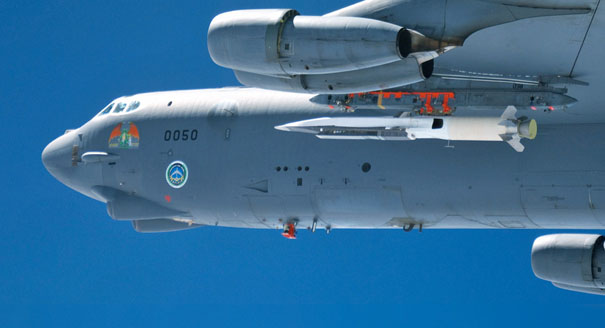
Take the Advanced Hypersonic Weapon. Just tested last month, it’s the latest candidate technology being developed for the Defense Department’s Conventional Prompt Global Strike program, an effort to develop long-range, ultra-fast, non-nuclear weapons. Following a successful test in 2011, hopes were running high ,but the booster rocket went out of control and was deliberately destroyed shortly after its launch from Alaska. If the test had gone to plan, the rocket would have released a glider that would then have flown—without power—for about 4,000 miles across the Pacific at many times the speed of sound.
Members of Congress will undoubtedly want to know about the causes of this failure and whether a do-over is warranted (which it may well be since the glider itself never got the chance to perform). But they should also be asking tough questions about how this weapon fits into broader U.S. defense strategy.
Jessica T. Mathews Chair, Co-director, Nuclear Policy Program
Acton holds the Jessica T. Mathews Chair and is co-director of the Nuclear Policy Program at the Carnegie Endowment for International Peace.
Recent Work

James M. Acton, Ankit Panda
James M. Acton
Carnegie does not take institutional positions on public policy issues; the views represented herein are those of the author(s) and do not necessarily reflect the views of Carnegie, its staff, or its trustees.

European Commission President Ursula von der Leyen is about to give her annual address on the state of the EU. Here’s what she won’t—but should—say.

Rym Momtaz

Radical-right parties are expected to do well in upcoming elections in four of the EU's biggest member states. If successful, they could prevent the union from addressing key challenges ahead.

Stefan Lehne

Canadian Prime Minister Mark Carney has twice inspired praise for standing up to U.S. President Donald Trump: at the 2026 World Economic Forum in Davos and on Canada-U.S. trade negotiations. Is Carney showing a third way better than the EU has in dealing with the Trump administration?
Rym Momtaz, ed.

European states control several Overseas Countries and Territories around the world that carry strategic, economic, and environmental weight. As great powers challenge the rules-based order, defending them is a geopolitical imperative for Europe.

Marc Pierini

In supporting Europe’s far-right, MAGA and Russia both want the same thing: a weaker EU. Europe must defend itself without abandoning the openness these forces exploit.

Armida van Rij