

In The Media
John Judis
{
  "authors": [
    "John Judis"
  ],
  "type": "legacyinthemedia",
  "centerAffiliationAll": "",
  "centers": [
    "Carnegie Endowment for International Peace"
  ],
  "collections": [],
  "englishNewsletterAll": "",
  "nonEnglishNewsletterAll": "",
  "primaryCenter": "Carnegie Endowment for International Peace",
  "programAffiliation": "",
  "programs": [],
  "projects": [],
  "regions": [
    "North America",
    "United States"
  ],
  "topics": [
    "Political Reform",
    "Foreign Policy"
  ]
}
Source: Getty
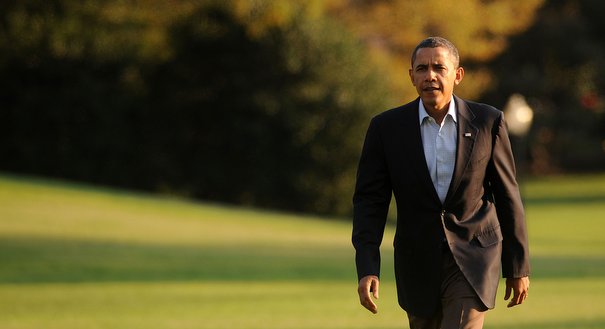
Hagel’s ouster had little to do with his handling of the major foreign policy issues. Instead, it stemmed from conflicts with National Security Advisor Susan Rice and a lack of confidence in his management skills at the Pentagon.
Source: New Republic
The New York Times, NBC News, and other news outlets have suggested that President Barack Obama fired Secretary of Defense Chuck Hagel because of doubts whether he could carry out the administration’s war against the Islamic State (IS). “Hagel resigns under pressure as global crises test Pentagon,” The New York Times declared. That presumably reflects what the White House is saying about Hagel’s departure. And if so, it amounts to scapegoating Hagel for the administration’s continued difficulties abroad.
As my colleague Julia Ioffe reports, Hagel’s ouster had little to do with his handling of the major foreign policy issues. Instead, it stemmed from conflicts with National Security Advisor Susan Rice and a lack of confidence, apparently well deserved, in his management skills at the Pentagon. Hagel himself had little effect on the major global crises the U.S. faced in the Middle East or the Ukraine. American foreign policy has been directed primarily from the White House; and as Obama was taking leave of Hagel on the White House lawn, these crises were, if anything, gathering strength.
In Vienna, Secretary of State John Kerry was announcing that the United States and Iran had failed to reach an agreement that would remove sanctions against Iran in exchange for its severely limiting its capability to produce nuclear weapons. The talks have now been extended seven months to July 1. The problem is that if the White House does reach an agreement with Iran then, it will almost certainly have to face concerted opposition from a Republican Senate and House, and possibly too from Democrats who share Israeli Prime Minister Benjamin Netanyahu’s opposition to an agreement that doesn’t totally dismantle Iran’s nuclear facilities.The president would not need Congress to ratify the deal. It is a multi-state agreement, not a treaty. And he could also waive the sanctions against Iran, as he has already done in part. But he can only suspend them for two years. He cannot end them permanently. That would require an act of Congress, and it’s very doubtful that he could get one given who will soon control the House and Senate and its foreign policy committees. Leading Republicans were already denouncing Obama and Secretary of State John Kerry for agreeing to another extension.
Obama is likely to bypass Congress entirely, but his inability to promise more than a temporary elimination of sanctions will weaken the American bargaining position. Writes legal expert Jack Goldsmith, “The bottom line, then, is that any deal struck by President Obama with Iran will probably appear to the Iranians to be, at best, short-term and tenuous. And so we can probably expect, at best, only a short-term and tenuous commitment from Iran in return.”
Then there’s Syria. The White House’s hints of a disagreement over IS has sent reporters, including me, scrambling to get copies of the memo about IS and Syria that Hagel sent Rice last month, but its contents remain secret. What is known about it—Hagel’s insistence that Obama clarify has stand against Syrian President Bashar al-Assad—reflects well, not poorly, on Hagel. The U.S. is currently sending warplanes against IS positions in Syria. As Hagel acknowledged in a press briefing, that indirectly benefits Assad. Obama insists that the U.S. still intends to aid the overthrow of Assad, but according to Syria expert Joshua Landis, the moderate forces the U.S. supports control at most five percent of the country, and the $500 million in military aid that the U.S. is giving them amounts to “chump change.” (The United States was spending $70-100 billion a year in Iraq during the war there.) There’s a disconnect, in other words, between what the administration says it is doing in Syria and what it is doing.
Similar doubts can be raised about administration policy in Iraq and Syria. Obama has promised to “destroy” IS in Iraq as well as Syria, but his strategy—consisting of air strikes and 3,000 advisors—is not designed to do so. It has succeeded so far in stopping IS’s advance on Baghdad and Erbil without rolling back its earlier advances. The United States is arming the Iraqi army, but the government has been unwilling or unable to do more than defend Shiite holdings. In Afghanistan, Obama has re-expanded the American role in fighting the Taliban. Here, too, as in Syria and Iraq, there is reason to doubt whether the modest means employed will achieve the desired military ends.
Obama’s Republican critics in Congress, of course, are calling for a massive increase in the means. Senator John McCain, who will take over the Armed Services Committee in January, has advocated sending troops to Iraq and Syria. But it may make more sense to reduce American ends in the region—to containing rather than destroying IS and other Islamist forces and to accepting some kind of de facto partition of Syria. The Middle East is witnessing the unraveling of nation-states that France and Britain artificially constructed after World War I, and the unraveling is occurring along religious, sectarian lines. Landis compares the unraveling to what happened to Europe from World War I through the 1990s. That process, too, involved awful bloodshed, ethnic cleansing, and even genocide. The United States can hope to prevent the worst excesses and protect the global stake in the region’s oil, but it cannot hope either to reverse the process or to divert the region, as the Bush administration tried to do, onto an American-style glide path toward secular democracy.
In his second term, Obama took a very important step in attempting to reach a rapprochement with Iran. A resumption of American diplomatic relations with Iran is essential to America playing a constructive, mediating role in the Middle East. It cannot hope for any kind of stability in Syria or Iraq without Iran’s participation. But that initiative now seems endangered. And on other fronts—in Syria, Israel and Palestine, Iraq, and the Ukraine—the administration has appeared to stumble. The administration may have good reason for wanting to replace Chuck Hagel, but those stumbles can’t be blamed on his tenure and cannot be righted by replacing him.

Former Visiting Scholar
As a visiting scholar at Carnegie, Judis wrote The Folly of Empire: What George W. Bush Could Learn from Theodore Roosevelt and Woodrow Wilson.
Recent Work
John Judis
John Judis
Carnegie does not take institutional positions on public policy issues; the views represented herein are those of the author(s) and do not necessarily reflect the views of Carnegie, its staff, or its trustees.
There is an elephant in the room when it comes to the EU’s upcoming security strategy: Donald Trump. Unless European leaders acknowledge the depth of the transatlantic crisis, true autonomy will remain out of reach.

Stefan Lehne

Europe’s industrial supply chains leave it vulnerable to global shocks. The EU needs a pragmatic green industrial strategy that balances durable partnerships and bolsters homegrown clean tech without sacrificing low-carbon ambition.


Milo McBride, Pauline Gerard

Defense tech innovations will be at the heart of Europe’s new security strategy. But so far, Brussels has been making moves without a broader plan, undermining readiness and credibility.

Raluca Csernatoni

When the U.S.-Iran memorandum of understanding was announced, the UK, France, Germany, and Italy declared their readiness to help demine the Strait of Hormuz and lift nuclear sanctions on Tehran. But does Europe need new tools to recover a diplomatic role?

Rym Momtaz, ed.
The Franco-German relationship is on the rocks again. But unlike previous moments of tension, the epochal changes on the world stage require that both step up investment in their bilateral ties.
Rym Momtaz