

Q&A
Suzanne Maloney, Aaron David Miller, Karim Sadjadpour
{
  "authors": [
    "Karim Sadjadpour"
  ],
  "type": "legacyinthemedia",
  "centerAffiliationAll": "dc",
  "centers": [
    "Carnegie Endowment for International Peace",
    "Malcolm H. Kerr Carnegie Middle East Center"
  ],
  "collections": [
    "Iranian Proliferation"
  ],
  "englishNewsletterAll": "menaTransitions",
  "nonEnglishNewsletterAll": "",
  "primaryCenter": "Carnegie Endowment for International Peace",
  "programAffiliation": "MEP",
  "programs": [
    "Middle East"
  ],
  "projects": [],
  "regions": [
    "United States",
    "Middle East",
    "Iran"
  ],
  "topics": [
    "Political Reform",
    "Foreign Policy",
    "Nuclear Policy"
  ]
}
Source: Getty
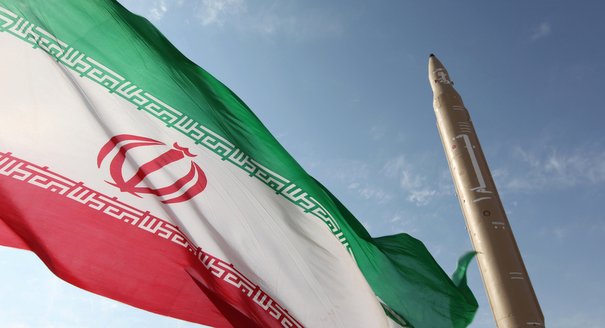
Rapprochement with Iran or, at the minimum, a nuclear deal with Iran would be a significant part of Obama’s foreign policy legacy. The big question is whether Iran’s leadership is interested in that rapprochement.
Source: NPR
ROBERT SIEGEL, HOST: Negotiations with Iran have been a top priority for President Obama. The U.S. and its allies have been pushing for an accord that would have Iran dismantle its nuclear program. There's no deal as of yet, but negotiations continue. In an interview with Morning Edition's Steve Inskeep, President Obama chose his words carefully when he spoke about U.S.-Iran relations.
(SOUNDBITE OF ARCHIVED INTERVIEW)
PRESIDENT BARACK OBAMA: They have a path to break through that isolation, and they should seize it. Because if they do, there's incredible talent and resources and sophistication inside of - inside of Iran. And it would be a very successful regional power that was also abiding by international norms and international rules, and that would be good for everybody. That would be good for the United States, that would be good for the region, and most of all, it would be good for the Iranian people.
SIEGEL: Karim Sadjadpour is an Iran researcher with the Carnegie Endowment, and he joins us now to talk about the president's remarks. That's just one excerpt of what will air tomorrow morning. The entire transcript is already out on the web, and it's been read by people both here and in Iran. Karim Sadjadpour, what do you think Iranians make of the president's pretty positive comments about what relations with Iran could be like?
KARIM SADJADPOUR: Robert, the paradox of Iran is that you have a regime which, in some ways, resembles North Korea. It's deeply isolationist. It's deeply ideological and a society which resembles South Korea. It wants to be part of the outside world, wants to be prosperous and integrated. So the Iranian people see Obama's speech, and they see it as very positive, conciliatory. He's talking about opening up an embassy - U.S. Embassy in Tehran. That's something they want to see. But I think Obama's rhetoric is somewhat unsettling for the hardliners in Tehran because it becomes more difficult for them to justify their anti-Americanism.
SIEGEL: No official reaction...
SADJADPOUR: Not yet.
SIEGEL: ...Yet. But social media reaction to the president?
SADJADPOUR: The social media reaction has been overwhelmingly positive from the standpoint of the people. But again, if you look at the rhetoric of government officials, they continue in the same vein of anti-Americanism.
SIEGEL: Here's another clip from Steve Inskeep's interview. President Obama, at this point, recalls the long, terribly-costly war that Iran fought with Iraq.
(SOUNDBITE OF INTERVIEW)
OBAMA: They have legitimate defense concerns, but those have to be separated out from the adventurism, the support of organizations like Hezbollah, the threats they've directed towards Israel.
SIEGEL: The word he used was adventurism - a meaningful word?
SADJADPOUR: It was a meaningful word in that it was a departure from past speeches of U.S. presidents. In the past, U.S. presidents always said the fact that Iran, according to the State Department, is the world's leading sponsor of state terrorists. So they used the word terrorism. Obama has toned that down with the word adventurism.
Another thing I thought was significant was that he said that Iran has the potential to be a quote, unquote, "successful regional power." Instead of saying the word responsible regional power, he said successful regional power. And I think if you're U.S. allies, like Israel and Saudi Arabia, that's deeply concerning. Those words from the U.S. president are deeply concerning because it appears that he is really trying to accommodate the Iranian government.
SIEGEL: But as you pointed out to me earlier, it's not just past presidents who have invoked terror - it's President Obama, too. When he sent that first Nowruz, Persian New Years, greeting to the Iranian people, he said that Tehran's place in the international community cannot be reached through terror or arms.
SADJADPOUR: That's absolutely right. I mean, even - if you look at the transcript of Obama's interview with Steve Inskeep, it has to be one of the most conciliatory interviews on Iran that any U.S. president has given in the last 35 years. And it kind of shows you where he's at. Rapprochement with Iran or, at the minimum, a nuclear deal with Iran would be a significant part of Obama's foreign policy legacy. And there's no doubt, I think, if President Obama or John Kerry could push a button and improve relations with Iran, they would do so. The big question is whether Iran's leadership is interested in that rapprochement.
SIEGEL: Karim, every time we talk, we talk about what the sanctions are doing to Iran. Can they bite any harder than they've bitten already?
SADJADPOUR: It's going to be tough for them to bite harder because you really now have a kind of airtight international coalition against Iran. And if you try to push sanctions harder, that coalition may unravel. But you do have a combination of three things, Robert, which is really debilitating the Iranian economy. You have the precipitous drop in oil prices, you have the sanctions, and you have Iran's hemorrhaging money in Syria to keep the Assad regime in power. So those three things, if they continue, I'm not sure how sustainable that is for Iran in the long-term.
SIEGEL: Karim Sadjadpour of the Carnegie Endowment. Thanks for talking with us.
SADJADPOUR: Thank you, Robert.
SIEGEL: And we've been talking about Steve Inskeep's interview with President Obama. You can hear the president's comments on Iran tomorrow on NPR's Morning Edition. Transcript provided by NPR, Copyright NPR.

Senior Fellow, Middle East Program
Karim Sadjadpour is a senior fellow at the Carnegie Endowment for International Peace, where he focuses on Iran and U.S. foreign policy toward the Middle East.
Recent Work

Suzanne Maloney, Aaron David Miller, Karim Sadjadpour

Aaron David Miller, Karim Sadjadpour, Robin Wright
Carnegie does not take institutional positions on public policy issues; the views represented herein are those of the author(s) and do not necessarily reflect the views of Carnegie, its staff, or its trustees.
As we close out another season of Strategic Europe, it is worth taking stock of the deep shifts underway.

Rym Momtaz

The hybrid warfare landscape is evolving rapidly, leaving policymakers without clear strategies. To better inform their work in addressing emerging challenges, governments must dig deeper into the underlying dynamics at play.


Raluca Csernatoni, Alicia Wanless
The EU had to compromise to adopt a twenty-first sanctions package against Russia, exposing growing cracks in the union’s resolve. Is this latest, weaker round worth it to keep pressure on Moscow?
Rym Momtaz, ed.

Trump is distracted and Ukraine wants Europe to step up. The continent’s leaders must find their voice and assert it in talks with Russia.

Alissa de Carbonnel

Mounting economic strain and battlefield losses will not necessarily make the Kremlin less dangerous. They could instead push Moscow toward a more aggressive hybrid campaign designed to test NATO’s Eastern flank, exploit allied hesitation, and fracture European resolve.

Maksym Beznosiuk