

Commentary
Yukon Huang, Isaac B. Kardon, Matt Sheehan
{
  "authors": [
    "Yukon Huang"
  ],
  "type": "legacyinthemedia",
  "centerAffiliationAll": "dc",
  "centers": [
    "Carnegie Endowment for International Peace"
  ],
  "collections": [],
  "englishNewsletterAll": "asia",
  "nonEnglishNewsletterAll": "",
  "primaryCenter": "Carnegie Endowment for International Peace",
  "programAffiliation": "AP",
  "programs": [
    "Asia"
  ],
  "projects": [],
  "regions": [
    "East Asia",
    "China"
  ],
  "topics": [
    "Economy"
  ]
}
Source: Getty
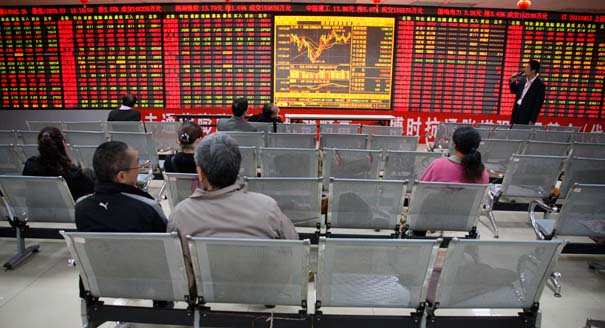
China’s debt has risen very rapidly over the last decade and many commentators are warning of a coming collapse. However, China is not at immediate risk of a financial crisis.
Source: China File
Markets and economic commentators are currently fixated on China’s rising debt levels and seemingly bottomless economic slowdown. Many warn of an imminent collapse. The argument typically begins by pointing out that China’s debt-to-GDP ratio has surged since 2009 at a pace comparable to the others who ended up experiencing a crisis. As these uber-bears argue, why not China?
Yet the argument that China is about to fall off a financial cliff is overstated. China simply does not fit that pattern. It possesses a strong balance of payments position, modest fiscal deficits, and high household savings rates. Moreover, the dynamics of a debt crisis are different for financial systems which are largely private compared with China where the bulk of the debtors are state-owned entities borrowing directly or indirectly from state-owned banks.Although there are many anecdotal examples of financial stress, there is little evidence of widespread insolvency among Chinese firms and local governments that could threaten the broader economy. Nevertheless, the debt burden has increased beyond prudent levels and if not stabilized within the next several years, would exacerbate financial pressures and dampen longer-term growth prospects. Thus the failure for the authorities to take more decisive steps so far is worrisome even if warnings of an imminent crisis are overdone.
The clearest area of concern for China is corporate debt, with the rapidly increasing size of China’s corporate debt setting it apart from other countries. But much of this surge is concentrated among a narrower subset of firms in construction and property development and in the commodity and energy sectors. The more egregious cases tend to be large SOEs which will in some cases require consolidation, mergers, and bankruptcy.
But the oft cited risks of shadow banking are not as serious as many have argued. Most importantly, in all but the most extreme scenarios, the government has the flexibility in the form of discretionary fiscal and financial resources to bail out the most important distressed entities and to recapitalize major banks. This will ensure that any tensions do not turn into the sort of systemic financial crisis that could derail the economy.
The stabilization process, however, will be messy and costly as the economy slowly hemorrhages financial resources and throws good money after bad to keep growth in line with official targets. China’s inexperienced new investor class also may react to market stresses in unexpected ways. Adjustments in an overbuilt property market will exacerbate vulnerabilities. And, the recent surge and then collapse of the equity market has accentuated market perceptions about increasing risks.
These issues point to China’s need for reforms to slow the growth of bad debt and encourage productivity growth. While most observers see the crux of the problem emanating from banking vulnerabilities, its origins actually come from China’s weak fiscal system and limited financial markets. Local governments have relied excessively on banks and land development to fund infrastructure that should have been supported by the budget. SOEs need to rely more on non-bank sources of financing but currently China’s equity and bond markets lack the depth and credibility to play effective roles. The financial stresses are symptoms of underlying distortions and institutional weakness that still need to be addressed.
This piece was originally part of a collection of expert comments published by China File.

Senior Fellow, Asia Program
Huang is a senior fellow in the Carnegie Asia Program where his research focuses on China’s economy and its regional and global impact.
Recent Work


Yukon Huang, Isaac B. Kardon, Matt Sheehan
Yukon Huang, Genevieve Slosberg

The hybrid warfare landscape is evolving rapidly, leaving policymakers without clear strategies. To better inform their work in addressing emerging challenges, governments must dig deeper into the underlying dynamics at play.


Raluca Csernatoni, Alicia Wanless

As geopolitical rivalry weaponizes global supply chains, the EU’s true vulnerability lies in emerging-risk imports. For these goods, suppliers are growing more concentrated, substitution more difficult, and political risk is looming.

Sinan Ülgen

The EU is putting together a new security strategy to meet today’s myriad challenges. But for any proposal to be effective, the union needs to grapple with its identity and ambitions.

Pierre Vimont
Amid uncertainty caused by the Iran war, the global drive for nonproliferation has stalled. With Europe diplomatically marginalized and countries reassessing their nuclear options, efforts to curb the spread of nuclear weapons risk becoming irrelevant.

Jane Darby Menton
Between the United States’ market-driven approach and China's state-led industrial strategy, Europe is reckoning with how it can remain competitive in the global economy. But is Europe in danger of becoming a U.S. or China colony?


Noah Barkin, Anu Bradford