

Paper
George Perkovich
{
  "authors": [
    "George Perkovich"
  ],
  "type": "legacyinthemedia",
  "centerAffiliationAll": "dc",
  "centers": [
    "Carnegie Endowment for International Peace"
  ],
  "collections": [],
  "englishNewsletterAll": "ctw",
  "nonEnglishNewsletterAll": "",
  "primaryCenter": "Carnegie Endowment for International Peace",
  "programAffiliation": "NPP",
  "programs": [
    "Nuclear Policy"
  ],
  "projects": [],
  "regions": [
    "South Asia",
    "India",
    "Pakistan"
  ],
  "topics": [
    "Nuclear Policy"
  ]
}
Source: Getty
The challenge facing India’s leaders is to show that strength can be blended with subtlety and deftness
Source: Indian Express
Whatever verified facts eventually emerge about the September 29 surgical strikes across the LoC, it appears that the operation was as carefully calibrated as any use of force could be. One danger now is that media triumphalism in India could increase pressure on various actors in Pakistan to “teach India a lesson” and demonstrate their own manly resolve. If the result were a high-casualty attack in the heartland, Indian leaders would feel the need to do something more dramatic than the well-practised tit-for-tat violence across the LoC. This could fuel a harder-to-manage dynamic of actions and reactions whose end point would be difficult for anyone to predict or control with confidence.
India’s key leaders know this, of course. The prime minister has urged other officials not to beat their chests over the blows struck against jihadis and Pakistan last Thursday. The government is mobilising every intelligence and operational resource to detect and interdict potential attacks in Kashmir and the rest of India. Monday’s reported riposte of another attack, in Baramulla, reflects this. If the Pakistani military and militant groups under their control confine themselves to confronting India in Kashmir, escalation should be quite manageable.The more worrisome possibility is that terrorists will attack “soft” civilian targets in a major Indian city, killing many more than the 19 who died at Uri. If such an attack succeeded, despite preventive measures, the pressure on Indian leaders to respond with unprecedented ferocity would be enormous. Depending on the scale of damage inflicted, the prime minister would be urged to retaliate against targets outside of Kashmir. Pressure to hit the army would be felt, whether or not reliable intelligence proved that Pakistani military leaders authorised or could have prevented such attack.
It can be hoped that Pakistani leaders understand these risks and will do their utmost to prevent terrorist acts that not only would cause India to counter-escalate, but also would elicit ever more international isolation of Pakistan. Yet, at least some militants have their own recruiting and brand-building interests to defy restraints that the army might seek to impose on them. If the Lashkar-e-Taiba and/or Jaish-e-Mohammed lost personnel on September 29, these groups will want to avenge them and demonstrate strength even if Pakistani leaders would prefer more calibrated reactions. Similar drives appeared to give impetus to the 26/11 attacks on Mumbai. The swirling motives and array of actors in Pakistan — and perhaps sympathetic cells of militants already in India — complicate the challenges that both Rawalpindi and New Delhi face.
For the Pakistani establishment, the primary challenges are to save face and maintain political authority at a time when Kashmiri Muslims in India are suffering and the Indian leadership is displaying muscularity. A Hindutva-inflected government with a forceful prime minister tests the mettle, purpose and self-regard of the Pakistani military (if not other segments of society). For Indian leaders, the challenge is to demonstrate the capability and resolve to “win” any escalatory competition with Pakistan, without engendering human and economic costs that undermine India’s larger national and global interests. In other words, to demonstrate that strength and will power can be blended with subtlety and deftness.
The combination of these imperatives raises extremely difficult questions for both leaderships. (Media organisations should treat these issues carefully, too. But quests for clicks, “likes”, and commercial revenue bring out the worst in us.)
For Pakistan, two central questions are: Whether the security establishment is willing and able to prevent militants from attacking targets in the Indian heartland; and, relatedly, whether the establishment is willing to share information with India that could help it interdict attacks that could not be prevented on the Pakistani side of the line. Magnanimity would not be the motive here. Self-interest would be. No one in Pakistan — or anywhere else — should be confident that the action-reaction cycle following a high-casualty terrorist attack would be “winnable” without devastating consequences.
For India, the central questions include the following. What military options exist to respond to a successful major terrorist attack in the heartland in ways that would be punishing enough to motivate Pakistani authorities to demobilise anti-Indian militant groups, and would not prompt further escalation of violence? Assuming that both objectives may not be achievable, what are the probable courses of subsequent conflict and how can India prevail with acceptable risks and costs? What political and diplomatic moves should India make toward Kashmiri groups and Pakistan — again, not out of magnanimity, but in order to place the domestic and international burden on Pakistani leaders to avert escalation?
To ask these questions is to realise how difficult it is to produce feasible and reassuring answers to them. This is the nature of violent conflict under the shadow of nuclear weapons and the cacophony of media-charged politics. History — whether from 1947, or 1965, or 2001, or 2008, or September of this year — shapes the perceptions and interests that leaders and societies must reconcile. Many moves set the stage for the Uri attack and the careful reprisal to it. None of them was the last move. The need now is to think carefully through the next ones.

Japan Chair for a World Without Nuclear Weapons, Senior Fellow
George Perkovich is the Japan Chair for a World Without Nuclear Weapons and a senior fellow in the Carnegie Endowment for International Peace’s Nuclear Policy Program. He works primarily on nuclear deterrence, nonproliferation, and disarmament issues.
Recent Work
George Perkovich
George Perkovich
Carnegie does not take institutional positions on public policy issues; the views represented herein are those of the author(s) and do not necessarily reflect the views of Carnegie, its staff, or its trustees.
When the U.S.-Iran memorandum of understanding was announced, the UK, France, Germany, and Italy declared their readiness to help demine the Strait of Hormuz and lift nuclear sanctions on Tehran. But does Europe need new tools to recover a diplomatic role?

Rym Momtaz, ed.
Amid uncertainty caused by the Iran war, the global drive for nonproliferation has stalled. With Europe diplomatically marginalized and countries reassessing their nuclear options, efforts to curb the spread of nuclear weapons risk becoming irrelevant.

Jane Darby Menton
French President Emmanuel Macron has unveiled his country’s new nuclear doctrine. Are the changes he has made enough to reassure France’s European partners in the current geopolitical context?
Rym Momtaz, ed.
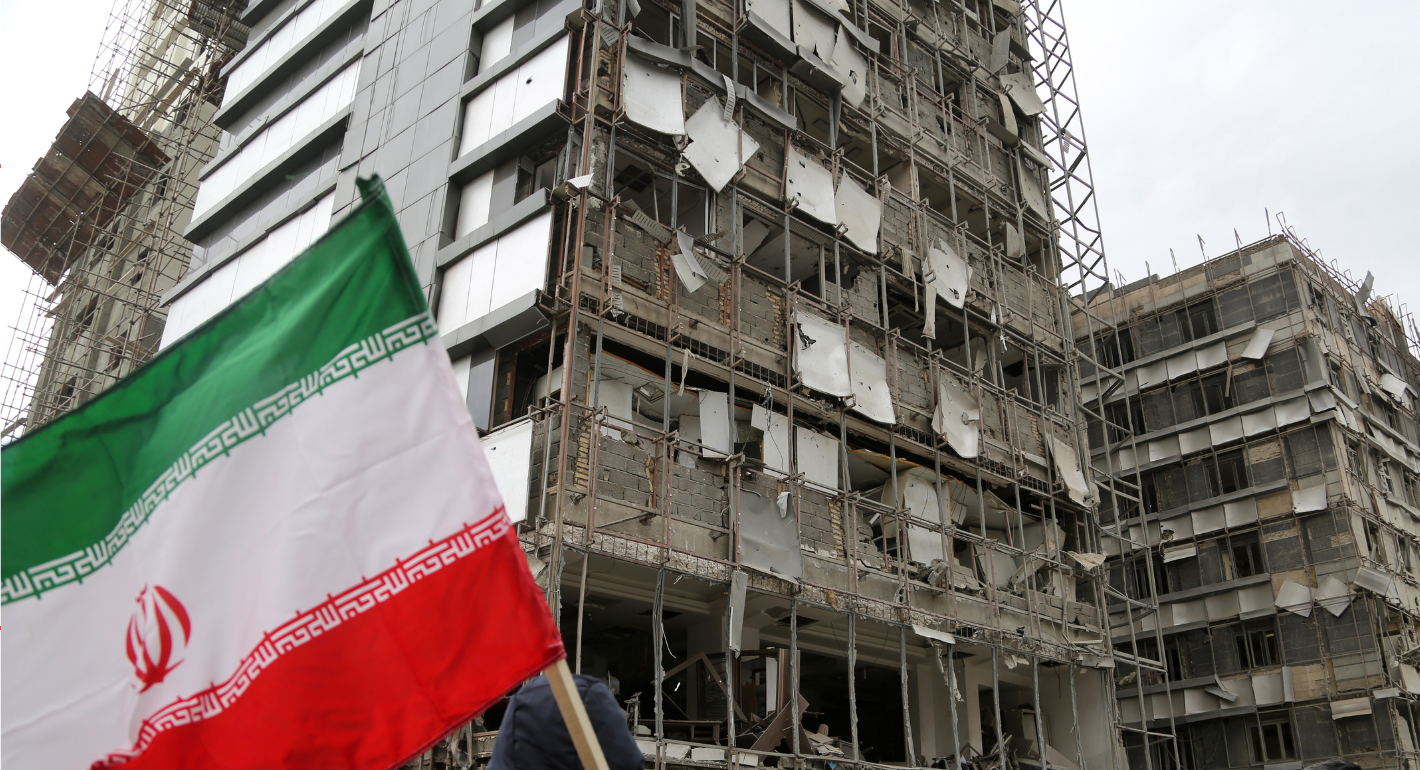
Europe’s reaction to the war in Iran has been disunited and meek, a far cry from its previously leading role in diplomacy with Tehran. To avoid being condemned to the sidelines while escalation continues, Brussels needs to stand up for international law.

Pierre Vimont
France has stopped clinging to notions of being a great power and is embracing the middle power moment. But Emmanuel Macron has his work cut out if he is to secure his country’s global standing before his term in office ends.
Rym Momtaz