

Commentary
Before the next wave of EU enlargement takes place, the union needs to grapple with thorny questions of how power is distributed among its members.
Emil Sondaj Hansen, Ditte Brasso Sørensen
{
  "authors": [
    "Alexander Baunov",
    "Oksana Boyko"
  ],
  "type": "legacyinthemedia",
  "centerAffiliationAll": "dc",
  "centers": [
    "Carnegie Endowment for International Peace",
    "Carnegie Russia Eurasia Center"
  ],
  "collections": [
    "Inside Russia"
  ],
  "englishNewsletterAll": "ctw",
  "nonEnglishNewsletterAll": "",
  "primaryCenter": "Carnegie Endowment for International Peace",
  "programAffiliation": "russia",
  "programs": [
    "Russia and Eurasia"
  ],
  "projects": [],
  "regions": [
    "Russia"
  ],
  "topics": [
    "Political Reform"
  ]
}
Source: Getty
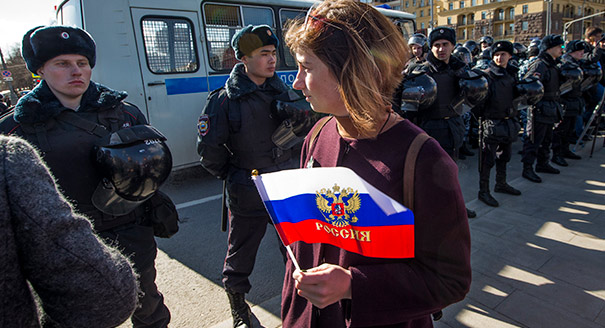
Russia has never received so much attention from the West, but perhaps for all the wrong reasons. Overshadowed by allegations of interference in Western democracies, is the story of Russia’s own social and political awakening.
Source: Russia Today
Russia has never received so much attention from the West, but perhaps for all the wrong reasons. Overshadowed by allegations of interference in Western democracies, is the story of Russia’s own social and political awakening. Will 2017 be the year when the Russian people reclaim politics from the elites? To discuss this, Oksana is joined by Alexander Baunov, senior associate at the Carnegie Moscow Center.

Senior Fellow, Editor-in-Chief, Carnegie Russia Eurasia Center
Baunov is a senior fellow and editor-in-chief at the Carnegie Russia Eurasia Center.
Oksana Boyko
Carnegie does not take institutional positions on public policy issues; the views represented herein are those of the author(s) and do not necessarily reflect the views of Carnegie, its staff, or its trustees.

Before the next wave of EU enlargement takes place, the union needs to grapple with thorny questions of how power is distributed among its members.


Emil Sondaj Hansen, Ditte Brasso Sørensen

A summer of escalation in the Black Sea has hurt Ukraine economically and is exacerbating world food security. A truce is needed—as is a broader reframing of Europe’s Ukraine strategy.

Thomas de Waal

European Commission President Ursula von der Leyen is about to give her annual address on the state of the EU. Here’s what she won’t—but should—say.

Rym Momtaz

The EU’s responses to two recent incidents expose the gulf between European perceptions and capabilities. Unless the union can bridge that gap, it will never become a real geostrategic power.
Rym Momtaz

European states control several Overseas Countries and Territories around the world that carry strategic, economic, and environmental weight. As great powers challenge the rules-based order, defending them is a geopolitical imperative for Europe.

Marc Pierini