

Paper
James M. Acton, Ankit Panda
{
  "authors": [
    "James M. Acton"
  ],
  "type": "legacyinthemedia",
  "centerAffiliationAll": "dc",
  "centers": [
    "Carnegie Endowment for International Peace",
    "Carnegie China"
  ],
  "collections": [],
  "englishNewsletterAll": "ctw",
  "nonEnglishNewsletterAll": "",
  "primaryCenter": "Carnegie Endowment for International Peace",
  "programAffiliation": "NPP",
  "programs": [
    "Nuclear Policy"
  ],
  "projects": [],
  "regions": [
    "East Asia",
    "Japan",
    "North America",
    "United States"
  ],
  "topics": [
    "Nuclear Policy"
  ]
}
Source: Getty
The Trump administration should use its leverage to address Japan’s growing piles of unused plutonium.
Source: Wall Street Journal
In international friendships as in personal ones, interventions are sometimes necessary to prevent self-destructive behavior. Japan’s nuclear policy, which calls for the U.S. to help Tokyo help itself before it’s too late, is a case in point.
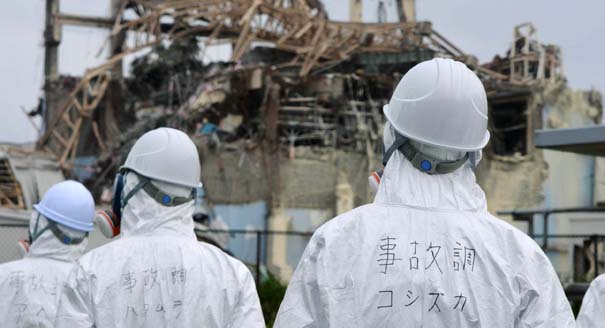
Japan already has enough plutonium to build at least 1,300 nuclear warheads. Officially, this material is to be used to fuel nuclear reactors, but almost all of Japan’s reactors have been offline since the 2011 Fukushima accident, and efforts to restart them are moving at a glacial pace. As a result, Japan has almost no capacity to consume plutonium.
Yet the country’s stockpile is poised to grow further still. Japanese leaders are under intense domestic pressure to restart the Rokkasho Nuclear Fuel Reprocessing Facility, which extracts plutonium from spent fuel. If the plant isn’t reopened soon, Rokkasho village, in the far north of Japan’s main island of Honshu, could demand the removal of the thousands of tons of spent nuclear fuel already there waiting to be processed.
A plutonium build-up contravenes Japan’s nonproliferation policies. Prime Minister Shinzo Abe recognizes that such a stockpile risks being stolen by terrorists. It also stirs tensions with China and sets a bad precedent for less trustworthy states seeking to accumulate weapons-usable nuclear material of their own.
Fortunately, the U.S. has the means to head off this challenge. But the Trump administration has only a fleeting opportunity to act.
Because Japan originally acquired most of its nuclear technology from the U.S., Tokyo agreed not to extract plutonium from spent fuel (a process known as reprocessing) without Washington’s consent. After years of negotiation, the U.S. finally granted Japan blanket permission to reprocess under a nuclear cooperation agreement that entered into force in July 1988.
This agreement stipulated that by July 2018 the U.S and Japan must have a new agreement in place or allow the existing one to remain in force. Given how favorable the 1988 agreement was to Japan, Tokyo is desperate to avoid a renegotiation.
This means the U.S. has real leverage that Washington can use to push a concrete, three-step plan for preventing the build-up of more plutonium.
First, Japan should agree not to operate its reprocessing plant until a separate facility to make reactor fuel from plutonium is operational. Without this fuel fabrication plant (which is already far behind schedule), Japan has no way of peacefully using any of the plutonium it produces.
Second, Japan should agree to operate its reprocessing plant in ways that ensure the supply of plutonium doesn’t outpace demand. The plant is designed to produce far more plutonium than Japan can plausibly use—about eight metric tons a year, almost as much as the 11 metric tons already in Japan’s stockpile. Tokyo should therefore commit to operating the plant below its design capacity to prevent any further build-up.
Third, Japan should agree to a time limit, perhaps of five years, between the extraction of new plutonium and its use. Japan already has a policy against producing excess plutonium. This policy needs strengthening because Tokyo doesn’t regard plutonium to be in excess if there is any plan to use it, no matter how far in the future.
There is a serious risk that bureaucratic neglect could deprive the U.S. of its leverage. July 2018 is far beyond Washington’s political horizon, yet in diplomatic terms the issue is already urgent.
Negotiations over nuclear cooperation are extremely complex and generally take years. U.S. State Department officials who would be essential to making and executing policy—including the undersecretary for arms control and international security, and the assistant secretary for international security and nonproliferation—have yet to be nominated, let alone confirmed.
If the Trump administration doesn’t act quickly, there will be little choice but to acquiesce to the unconditional extension of the existing agreement. That would mean the loss of a once-in-a-generation opportunity to improve Japan’s nuclear policies.
This article was originally published in The Wall Street Journal

Jessica T. Mathews Chair, Co-director, Nuclear Policy Program
Acton holds the Jessica T. Mathews Chair and is co-director of the Nuclear Policy Program at the Carnegie Endowment for International Peace.
Recent Work

James M. Acton, Ankit Panda
James M. Acton
Carnegie does not take institutional positions on public policy issues; the views represented herein are those of the author(s) and do not necessarily reflect the views of Carnegie, its staff, or its trustees.

The EU can impose sanctions but struggles to enforce them without the United States. With Washington increasingly disinterested in backing European interests, the bloc must now fend for itself.


Nicu Popescu, Tiago Antunes

Ahead of a tough winter for Ukraine, Donald Trump’s swing back toward Russia bodes ill. But instead of panicking, Kyiv’s European allies are focusing on action.

Rym Momtaz

While the EU and European governments are embracing the much-lauded middle-power moment, this entails three difficult conundrums.

Richard Youngs

Europe is facing rising populism internally as well as external pressures from Russia, China, Turkey, and the United States.

Dimitar Bechev
European NATO countries are wrestling with the possibility of U.S. disengagement from the alliance. With the continent’s security increasingly uncertain, governments must restore the credibility of their collective defense.


Hans-Dieter Lucas, Adam Thomson, Pierre Vimont