


• Research
  • Strategic Europe
  • About
  • Experts
Carnegie Europe logoCarnegie lettermark logo
EUNATO
  • Donate
{
  "authors": [
    "Richard Sokolsky",
    "Aaron David Miller"
  ],
  "type": "legacyinthemedia",
  "centerAffiliationAll": "",
  "centers": [
    "Carnegie Endowment for International Peace",
    "Malcolm H. Kerr Carnegie Middle East Center"
  ],
  "collections": [
    "Iranian Proliferation"
  ],
  "englishNewsletterAll": "",
  "nonEnglishNewsletterAll": "",
  "primaryCenter": "Carnegie Endowment for International Peace",
  "programAffiliation": "",
  "programs": [],
  "projects": [],
  "regions": [
    "North America",
    "United States",
    "Middle East",
    "Iran"
  ],
  "topics": [
    "Political Reform",
    "Foreign Policy",
    "Nuclear Policy"
  ]
}

Source: Getty

In The Media

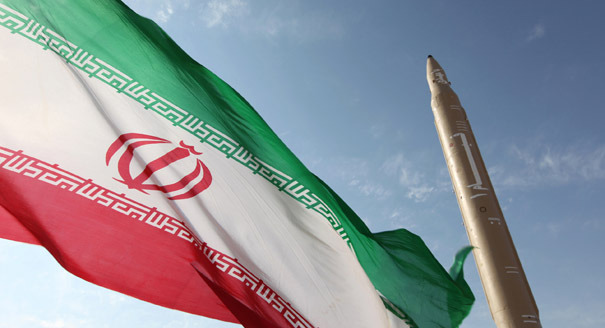
Four Good Reasons Trump Shouldn’t Scrap the Iran Nuclear Deal or Goad Iran to Pull Out

The administration needs to come up with a sensible strategy to confront Iran where it challenges core U.S. interests. But playing around with a nuclear agreement is both irresponsible and dangerous.

Link Copied
By Richard Sokolsky and Aaron David Miller
Published on Jul 18, 2017

Source: USA Today

President Trump has certified for the second time that Iran is in compliance with the 2015 nuclear accord that limits its nuclear program. But the leaks and background briefings surrounding his statement, followed by new sanctions announced Tuesday, sent unmistakable signals: The decision was taken grudgingly, Trump is increasingly unhappy with Iran and the deal, and he may be looking for a way out.

This is potentially playing with fire. The Iranian regime is repressive, a serial human rights abuser and expanding its influence in the region. Iran without nuclear weapons is a far less dangerous adversary. Unless Iran cheats big time on the agreement, there are four very good reasons why the administration would be well advised not to abandon it or take actions designed to push Iran to do so.

Signaling can be dangerous. Everything about the president’s certification, which is required every 90 days, seemed like a warning to Iran that the next time might be different. The White House put out the story that Trump spent 55 minutes of an hour-long meeting arguing against certification and that he’d been talked into approving it the first time around in April. Administration officials mentioned the additional sanctions and said they intended to strengthen enforcement policies in response to Trump’s request for a more hard-line approach...

Read Full Text

This article was originally published by USA Today.

About the Authors

Richard Sokolsky

Nonresident Senior Fellow, Russia and Eurasia Program

Richard Sokolsky is a nonresident senior fellow in Carnegie’s Russia and Eurasia Program. His work focuses on U.S. policy toward Russia in the wake of the Ukraine crisis.

Aaron David Miller

Senior Fellow, American Statecraft Program

Aaron David Miller is a senior fellow at the Carnegie Endowment for International Peace, focusing on U.S. foreign policy.

Authors

Richard Sokolsky
Nonresident Senior Fellow, Russia and Eurasia Program
Richard Sokolsky
Aaron David Miller
Senior Fellow, American Statecraft Program
Aaron David Miller
Political ReformForeign PolicyNuclear PolicyNorth AmericaUnited StatesMiddle EastIran

Carnegie does not take institutional positions on public policy issues; the views represented herein are those of the author(s) and do not necessarily reflect the views of Carnegie, its staff, or its trustees.

More Work from Carnegie Europe

  • Commentary
    Strategic Europe
    Taking the Pulse: Is the EU Ready for Rapprochement With the UK?

    Closer EU-UK ties could help address urgent European concerns. But is the EU ready for rapprochement with the United Kingdom?

      • Rym Momtaz

      Rym Momtaz, ed.

  • Commentary
    Strategic Europe
    France, Italy, and Spain Should Use Force in Lebanon

    Europe has been standing by while its Southern neighborhood is being redrawn by force. To establish a path to peace between Israel and Lebanon, it’s time for Europeans to get involved with hard power.

      • Rym Momtaz

      Rym Momtaz

  • Commentary
    Strategic Europe
    The Fog of AI War

    In Ukraine, Gaza, and Iran, AI warfare has come to dominate, with barely any oversight or accountability. Europe must lead the charge on the responsible use of new military technologies.

      Raluca Csernatoni

  • Commentary
    Strategic Europe
    How to Join the EU in Three Easy Steps

    Montenegro and Albania are frontrunners for EU enlargement in the Western Balkans, but they can’t just sit back and wait. To meet their 2030 accession ambitions, they must make a strong positive case.

      Dimitar Bechev, Iliriana Gjoni

  • Commentary
    Strategic Europe
    Taking the Pulse: Can NATO Survive the Iran War?

    Donald Trump has repeatedly bashed NATO and European allies, threatening to annex Canada and Greenland and deploring their lack of enthusiasm for his war of choice in Iran. Is this latest round of abuse the final straw?

      • Rym Momtaz

      Rym Momtaz, ed.

Get more news and analysis from
Carnegie Europe
Carnegie Europe logo, white
Rue du Congrès, 151000 Brussels, Belgium
  • Research
  • Strategic Europe
  • About
  • Experts
  • Projects
  • Events
  • Contact
  • Careers
  • Privacy
  • For Media
  • Gender Equality Plan
Get more news and analysis from
Carnegie Europe
© 2026 Carnegie Endowment for International Peace. All rights reserved.