

Commentary
Yukon Huang, Isaac B. Kardon, Matt Sheehan
{
  "authors": [
    "Yukon Huang"
  ],
  "type": "legacyinthemedia",
  "centerAffiliationAll": "dc",
  "centers": [
    "Carnegie Endowment for International Peace"
  ],
  "collections": [],
  "englishNewsletterAll": "asia",
  "nonEnglishNewsletterAll": "",
  "primaryCenter": "Carnegie Endowment for International Peace",
  "programAffiliation": "AP",
  "programs": [
    "Asia"
  ],
  "projects": [],
  "regions": [
    "East Asia",
    "China"
  ],
  "topics": [
    "Economy",
    "Trade"
  ]
}
Source: Getty
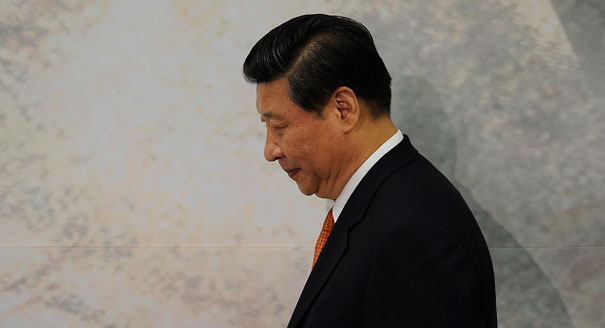
How President Xi Jinping addresses his country’s major economic challenges after the 19th Party Congress will determine whether he will be a transformative leader similar to Mao Zedong or Deng Xiaoping.
Source: South China Morning Post
China’s 19th Party Congress is primarily about the appointment of a seven-person standing committee aligned with President Xi Jinping’s power base. With recent economic indicators suggesting stable and relatively rapid growth, the new leadership may feel less pressure to signal a change in policies.
Yet, risks remain, as evidenced by the recent Standard&Poor’s ratings downgrade and the possibility that the growth slowdown could deepen. Many are hoping that more aggressive reforms will emerge in the days following the party congress.
Major challenges in recent years have included finding new sources of demand to pick up the slack in the economy, dealing with a potential financial crisis, and moderating trade and investment tensions with the West.
First, searching for new growth drivers. China’s slowdown partly reflects the reality of a maturing economy. But the slowdown has also been accentuated by the decline in global trade and decelerating construction at home. Many observers have pointed to China’s growth as being excessively unbalanced, as measured by its extremely low share of personal consumption relative to GDP, and a proportionately high share of investment. This has led to calls for China to rebalance in favour of more personal consumption to stimulate growth.
While “balanced” intrinsically sounds good and “unbalanced” bad, this view is misguided. Unbalanced growth is the result of a largely successful urbanisation-cum-industrialisation process, as workers shift from labour-intensive rural activities to capital-intensive industrial jobs in cities. In the process, the share of consumption to GDP automatically declines, although, paradoxically, consumption per person or household increases. This same “unbalanced growth” process characterised the development other East Asian success stories, including Japan and South Korea during their industrialisation.
Asking for faster growth in personal consumption in China is not realistic, since this has been growing more rapidly than in any other country for decades. The potential for increased spending lies more in increasing government expenditure for social and environmental services, since China spends relatively less on this than other comparable nations. For this, the government needs to more aggressively implement the major fiscal reform programme launched several years ago – to raise revenues for local authorities to provide such services.
Next comes deciphering and addressing the debt problem. Since the global financial crisis, markets have been fixated on China’s surging debt-to-GDP ratio and looming property bubble. Experts warn that all economies that incurred comparable increases in such debt indicators went on to experience a financial crisis, and there is no reason China should be any different.
The more optimistic observers point out that most of China’s debt is public rather than private, sourced domestically rather than externally, and household balance sheets are typically strong. But neither the optimists nor the pessimists recognise that the key to deciphering the debt issue is that China did not have a major private property market a decade ago.
Once a private property market was created, surging credit flows went to establishing market-based values for land, previously hidden under a socialist system. The ensuing fivefold increase in property prices over the past decade is what economists call “financial deepening” – with largely beneficial consequences.
Despite this price surge, current asset values are probably sustainable, since housing affordability has improved and excess inventories have declined. China’s financial problems warrant serious attention, but it is not the crisis that many suspect. The more serious concern is dealing with the sharp profitability decline among a subset of SOEs and budget problems of local governments, together causing a build-up in non-performing loans in the banking system. Thus, the financial challenge is less about banking reforms and more about state-owned enterprise restructuring and fiscal reforms.
Another issue that needs to be tackled is trade and foreign investment tensions. Sino-US trade tensions stem largely from the American belief that their huge trade deficits are closely linked with China’s large trade surpluses. Yet, there is, in fact, no direct causal relationship between the two.
As Martin Feldstein, former chairman of the US Council of Economic Advisers, wrote: “Every student of economics knows or should know that the current account balance of each country is determined within its own borders and not by its trading partners.”
Basic accounting principles tell us that the overall US trade deficit is the result of a shortage in national savings relative to spending, due to excessive government budget deficits and/or households consuming beyond their means. The countries that show up as being the source of the offsetting trade surpluses are coincidental.
Another popular American view is that too much of their foreign investment is going to China, resulting in job loss and declining competitiveness. Yet, despite the US and China being the world’s largest economies, only about 1 to 2 per cent of US investment has gone directly to China over the past decade. Consider the European Union, which is comparable to the US in economic size. Over the past decade, annual flows of EU foreign investment to and from China have been roughly two to three times that of the US, although they began at around the same levels at the start of that period.
The difference is due to the EU’s manufacturing strengths being more complementary to China’s market needs than America’s strengths, which lie in high-value services. Promoting investment flows in both directions would benefit both sides. Rather than focus on protectionist trade measures, the Trump administration should give priority to concluding an investment treaty with China that has been under negotiation for years.
Whether the new leadership moves aggressively to implement these reforms will determine whether President Xi will eventually be seen as a transformative leader in the league of Mao Zedong or Deng Xiaoping, in not only having established his full authority but also setting China firmly on the path to becoming a high-income economy.
This article was originally published in the South China Morning Post.

Senior Fellow, Asia Program
Huang is a senior fellow in the Carnegie Asia Program where his research focuses on China’s economy and its regional and global impact.
Recent Work


Yukon Huang, Isaac B. Kardon, Matt Sheehan
Yukon Huang, Genevieve Slosberg

The U.S.-sponsored TRIPP deal is driving the Armenia-Azerbaijan peace process forward. But foreign and domestic hurdles remain before connectivity and economic interdependence can open up the South Caucasus.



Thomas de Waal, Areg Kochinyan, Zaur Shiriyev

Economic growth is at the heart of a dilemma between planetary and international security.

Olivia Lazard
The war in Iran proves the United States is now a destabilizing actor for Europe and the Arab Gulf. From protect their economies and energy supplies to safeguarding their territorial integrity, both regions have much to gain from forming a new kind of partnership together.

Rym Momtaz
For years, the United States anchored global cyber diplomacy. As Washington rethinks its leadership role, the launch of the UN’s Cyber Global Mechanism may test how allies adjust their engagement.


Patryk Pawlak, Chris Painter
Europe isn’t as weak in the new geopolitics of power as many would believe. But to leverage its assets and claim a sphere of influence, Brussels must stop undercutting itself.

Dimitar Bechev