

Commentary
Tatiana Stanovaya
{
  "authors": [
    "Tatiana Stanovaya"
  ],
  "type": "commentary",
  "centerAffiliationAll": "",
  "centers": [
    "Carnegie Endowment for International Peace",
    "Carnegie Russia Eurasia Center"
  ],
  "collections": [
    "Inside Russia"
  ],
  "englishNewsletterAll": "",
  "nonEnglishNewsletterAll": "",
  "primaryCenter": "Carnegie Endowment for International Peace",
  "programAffiliation": "",
  "programs": [],
  "projects": [],
  "regions": [],
  "topics": [
    "Economy"
  ]
}
Source: Getty
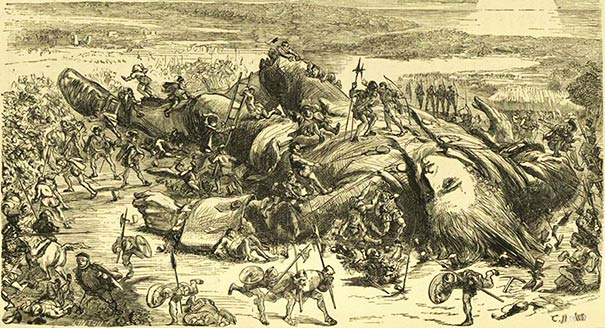
The non-system elite makes a mistake by still treating Putin and the formal state as one and the same. We are witnessing a new era in which the powerful and ambitious non-system elite will face a solid, technocratic, and emotionless power vertical stuffed with “little people.” Putin’s associates will have to learn to adjust, or they’ll find themselves in deep trouble.
Russia’s “non-system elite” is the term used to refer to a group of powerful individuals that essentially functions in a parallel administrative reality, outside of the country’s formal power vertical. Despite being outside of the official political system, the non-system elite played the key role in the country’s development—until recently.
A number of President Vladimir Putin’s associates who hold no public office—such as Yury Kovalchuk, the Rotenberg brothers, and Gennady Timchenko—are successful private businessmen deeply involved in almost all essential public infrastructure or energy projects. No one really knows how these big shots interact with the president, but his friends and associates clearly have a definitive say in the decisionmaking process.
Their participation in the process circumvents formal legal procedures, which are only used to legitimize decisions that have already been made. A case in point is the agreement between Putin and Rostec head Sergei Chemezov to bypass Western sanctions by delivering Siemens gas turbines to Crimea, which later underwent formal implementation mechanisms through the ministries of energy and trade and industry.
Until 2008, the scheme under which the non-system elite interacted with state legal mechanisms was quite simple: Putin acted as an intermediary, establishing a political monopoly within the power vertical. Of course, we are talking about managing the country’s resources here; political administration or social issues are a different subject.
That’s how the Yukos oil company was acquired by the government, and it’s also how the key state-owned corporations were formed by 2007. For instance, Chemezov’s idea to create the Rostec corporation was implemented despite the government’s negative reaction in 2006–2008. At that time, Putin personally made sure that decisions were implemented at an administrative level. His oversight reduced tensions between his associates, who stayed out of the limelight, and the state, whose institutions were gradually growing in strength.
During Dmitry Medvedev’s presidency in 2008–2012, it was possible to enter the system of government through the cabinet, which was headed by Putin as prime minister. Putin believed it was important that Medvedev have a certain autonomy and the right to implement his own agenda, so Putin’s friends laid low for a few years.
The tandemocracy seriously limited the powers of Putin’s friends: it’s enough to recall Medvedev’s controversial decision to remove government officials from the boards of state-owned companies, which was extremely painful for then deputy prime minister Igor Sechin, who was forced to leave the board of directors of Rosneft oil giant in 2011.
In 2012, when Putin returned to the presidency, Medvedev and his technocratic ministers took control of the cabinet, the main body of the executive branch. This was the first time that technocrats—specialists with little political experience and a lack of political and ideological agenda—had entered the government in large numbers.
The technocratic government resulted from the erosion of its political dimension. Key government structures stopped playing an independent political role and became merely instrumental, expert, or mechanical parts of the state. This process had already happened to the State Duma back in 2003, and would later take place in presidential structures (in 2016) and among regional governors (in 2017).
This political erosion means that genuinely influential forces are distancing themselves from formal government bodies, thereby avoiding the political responsibility that comes with high-ranking positions. As a result, small-time, obscure officials fill government positions. One might think that the non-system elite would like the current situation, but this trend has created a serious problem.
In 2004–2007, government ministers were appointed by Putin. If one of the president’s associates needed to resolve an issue, Putin’s approval was enough for everything else to be a mere formality. But that’s not how the current cabinet and presidential administration operate. If you need to get your issue resolved, you’re not likely to even get to the president, who is too busy with global politics now. And a Medvedev-appointed government minister may not want to get involved.
It’s possible that these quiet executives with no political resources or experience will actually consolidate the power vertical. The new-generation neutral technocrats are more pragmatic, and Putin trusts them more because of their expertise and neutrality. They are a priori less biased than in-system liberals or members of Putin’s inner circle, whose ambitions and incessant requests exhaust the president.
We can suppose, therefore, that the technocrats who now fill the positions of power from top to bottom will gradually become a more significant source of support for the president than his informal entourage, the non-system elite. Putin’s friends will need to adapt and find a new strategy of building relations with the state.
This could be a strategy of implicitly privatizing some of the vertical, such as Chemezov’s creation of Rostec, or it could be done through the building of parallel structures, such as the Presidential Commission on the Fuel and Energy Complex, whose creation was lobbied for by Sechin—now Rosneft’s CEO. Soft integration at the level of ministries is also possible and already happens: Chemezov’s protégés in ministries make decisions that accommodate Rostec’s corporate interests.
Yet promoting one’s interests at a time of crisis is getting increasingly difficult. A case in point is Sechin’s futile attempts to force the energy industry to order from the Zvezda shipyard. The president nods approvingly, but nothing is happening.
The bottom line is you can’t fight the revamped technocratic vertical, as Sechin tried to do when he pitted Rosneft’s interests against those of the government. Rosneft tried to prove that it was the right buyer for Bashneft, a mid-sized oil company, but the government disagreed. When Sechin failed to secure Putin’s unequivocal support on the issue, he was forced to push the decision through the cabinet, which led to the arrest of then economic development minister Alexei Ulyukaev, who was charged with extorting a bribe from Rosneft in exchange for dropping his opposition to the deal.
The minister’s arrest doesn’t just stem from disagreements over who should get which oil assets; it also proceeded from the crisis in relations between part of the non-system elite and the formal power vertical that refused to yield as much as Sechin wanted it to. Sechin came from a position of strength, but a year later he is the weaker figure: the criminal case against Ulyukaev (who maintains that Sechin set him up and that he thought he was accepting a basket of sausages, not cash) has not gone according to plan, negatively impacting Rosneft’s corporate interests.
Тhe non-system elite makes a mistake by still treating Putin and the formal state as one and the same. They believe that the president’s initial approval of a certain project (which isn’t always synonymous with final approval) means that the system will automatically accept it. But underestimating the institutional importance of the state for the president inevitably leads to conflicts.
The new technocrats in power will not be caught out by sausages. It’s not that they’re particularly honest, but they simply live by different rules, trying to avoid anything that smacks of provocation. We are witnessing a new era in which the powerful and ambitious non-system elite will face a solid, technocratic, and emotionless power vertical stuffed with “little people.” Putin’s associates will have to learn to adjust, or they’ll find themselves in deep trouble.

Senior Fellow, Carnegie Russia Eurasia Center
Tatiana Stanovaya is a senior fellow at the Carnegie Russia Eurasia Center.
Recent Work
Tatiana Stanovaya
Tatiana Stanovaya
Carnegie does not take institutional positions on public policy issues; the views represented herein are those of the author(s) and do not necessarily reflect the views of Carnegie, its staff, or its trustees.
Integrating AI into the workplace will increase job insecurity, fundamentally reshaping labor markets. To anticipate and manage this transition, the EU must build public trust, provide training infrastructures, and establish social protections.
Amanda Coakley
EU member states clash over how to boost the union’s competitiveness: Some want to favor European industries in public procurement, while others worry this could deter foreign investment. So, can the EU simultaneously attract global capital and reduce dependencies?

Rym Momtaz, ed.
The EU lacks leadership and strategic planning in the South Caucasus, while the United States is leading the charge. To secure its geopolitical interests, Brussels must invest in new connectivity for the region.

Zaur Shiriyev
As European leadership prepares for the sixteenth EU-India Summit, both sides must reckon with trade-offs in order to secure a mutually beneficial Free Trade Agreement.
Dinakar Peri
Beset by an increasingly hostile United States, internal divisions, and the threat of Russian aggression, the EU finds itself in a make-or-break moment. U.S. President Donald Trump calls it a decaying group of nations headed by weak leaders. Is Europe able to prove him wrong?

Thomas de Waal